
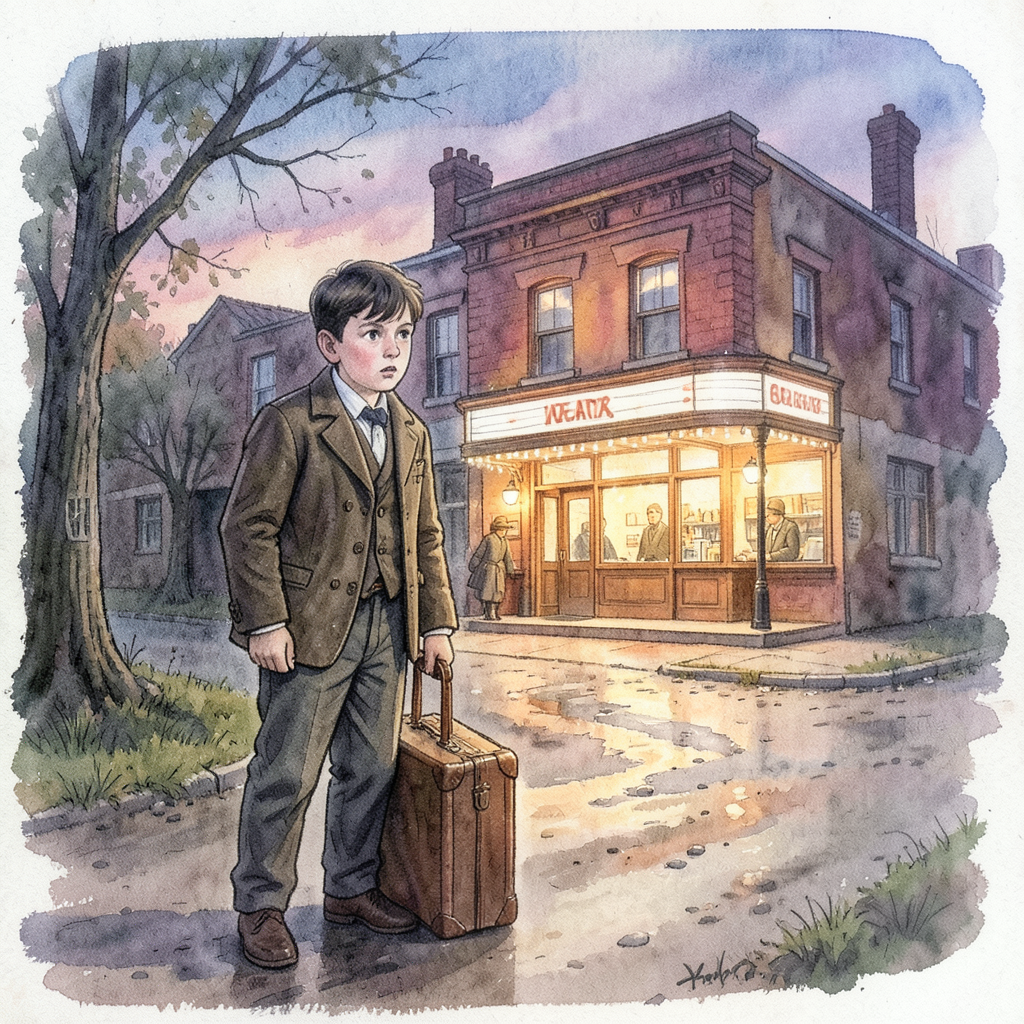
Bud, Not Buddy
About This Book
Ten-year-old Bud Caldwell has been in and out of foster homes since his mother died, and he carries a suitcase full of rules for surviving, a few precious photographs, and a dream that a jazz musician named Herman E. Calloway might be his father. Christopher Paul Curtis's Newbery Medal novel set during the Great Depression is funny, sharp, and suffused with the healing power of music and found family.
Themes
FamilyResilienceHistory
Best For
- Children who love history told through a compelling personal story rather than a textbook
- Kids who enjoy humor woven into emotional narratives
- Classroom or homeschool units on the Great Depression or the Harlem Renaissance era
- Young readers ready to move from early chapter books to meatier middle-grade fiction
- Families who want to spark conversations about resilience, foster care, or the meaning of family
Why Parents Love This Book
Christopher Paul Curtis wrote Bud, Not Buddy with a rare combination of wit and heartbreak that keeps readers of all ages completely absorbed. Ten-year-old Bud Caldwell is one of children's literature's most memorable narrators — his "Rules and Things for Having a Funner Life and Making a Better Liar Out of Yourself" are genuinely funny, but they also quietly reveal a boy who has learned to protect himself from the pain of repeated abandonment. Set during the Great Depression, the novel never lets history feel like a lesson; instead, it breathes through Bud's voice, his hunger, his stubborn hope. The jazz band sequences give the story warmth and community, showing readers that family is something you can discover rather than simply inherit. Curtis trusts young readers to hold humor and grief at the same time, and that trust is exactly what makes this book endure more than two decades after it won the Newbery Medal.
Reading Tips for Parents
Before you begin, give children a brief sense of the Great Depression — breadlines, unemployment, children in orphanages — so the stakes of Bud's journey feel real rather than confusing. As you read together, pause when Bud adds a new rule to his list and ask your child what experience they think made him invent it; this habit builds inference skills naturally. The story moves quickly, so reluctant readers can sustain momentum on their own, but even strong independent readers benefit from discussing the jazz scenes together — what the music means to the characters, and why Herman E. Calloway seems so prickly at first. Keep a simple timeline or map of Bud's route through Michigan; it helps children track the geography and reinforces the feeling of how far a ten-year-old walked alone.
Awards & Recognition
- Newbery Medal, 2000
- Coretta Scott King Author Award, 2000
Educational Value
This book helps children develop skills across multiple areas:
- Historical thinking: Introduces the Great Depression and the Great Migration through a child's lived experience, making macroeconomic hardship personal and comprehensible.
- Vocabulary: Rich period-specific language — 'Hooverville,' 'shantytown,' 'breadline' — alongside jazz terminology that opens natural research conversations.
- Social-emotional learning: Models resilience, self-regulation, and the creation of coping strategies through Bud's rules, giving children language for their own difficult feelings.
- Literary analysis: First-person unreliable narration and dramatic irony (readers often see what Bud misses) offer a strong entry point for older elementary readers studying point of view.
- Cultural appreciation: Jazz music is portrayed as a living tradition and a source of dignity for Black Americans during segregation, inviting further listening and exploration.
- Media literacy: Comparing the novel to the 1999 historical context encourages students to think about how authors research and reconstruct the past.
Discussion Questions
Use these questions to spark conversation before, during, or after reading:
- Why do you think Bud keeps a list of rules? Have you ever made up your own rules to help you through a hard situation?
- Bud is absolutely certain that Herman E. Calloway is his father. What clues convince him, and do you think he handles his hope wisely or unwisely?
- The members of the Dusky Devastators treat Bud like family almost immediately. What does the book suggest about what makes someone family?
- The story is set during the Great Depression. What details made that time period feel real to you, and what surprised you most about how people lived?
- If you could add one of Bud's rules to your own life, which would you choose and why?
Content Notes for Parents
The novel deals honestly with child abandonment, the death of a parent, foster care hardship (including one frightening foster sibling who threatens Bud), and the poverty of the Great Depression, including brief scenes of hunger and homelessness. None of these elements are graphic, but sensitive children around ages 8-9 may want a trusted adult nearby for the early chapters.
Frequently Asked Questions
What age is Bud, Not Buddy best suited for?
The book is generally recommended for ages 8 to 12. Most children read it independently around grades 4 or 5, but the themes of loss and belonging resonate well into middle school. Younger readers in the 8-9 range benefit most from reading it alongside a parent, particularly in the early chapters where Bud's circumstances feel most bleak.
Is the content too dark or sad for younger readers?
The story deals with the death of Bud's mother, foster care, and Great Depression-era poverty, so there is real emotional weight here. However, Curtis balances this with genuine humor and an ultimately hopeful resolution. Most children ages 9 and up handle the tone well; if your child is particularly sensitive to stories about orphans or absent parents, preview the first two chapters before handing it over.
Does the book have anything to say about race?
Yes, and it does so honestly without being heavy-handed. The story is set in 1936, and Bud's experiences as a Black child in Depression-era Michigan — including the role of a Black jazz band in a segregated society — are central to the novel. This makes it an excellent springboard for conversations about racial history, the dignity of Black cultural life, and how ordinary people navigated an unjust system.
What books would my child enjoy if they love Bud, Not Buddy?
Readers who connect with this novel often enjoy other Christopher Paul Curtis titles such as The Watsons Go to Birmingham — 1963 and Elijah of Buxton. Beyond Curtis, Roll of Thunder, Hear My Cry by Mildred D. Taylor offers similar historical depth, and Esperanza Rising by Pam Munoz Ryan gives a comparable portrait of a child navigating economic hardship with resilience.
Can this book be used for a school project or history unit?
It is exceptionally well-suited for classroom use. The novel is a standard text in many fourth- and fifth-grade curricula and pairs naturally with non-fiction material on the Great Depression, the Harlem Renaissance, and African American history. The jazz music thread also opens cross-disciplinary connections to music class. A simple extension activity is having students research one jazz musician mentioned or implied in the story.