A Sick Day for Amos McGee
About This Book
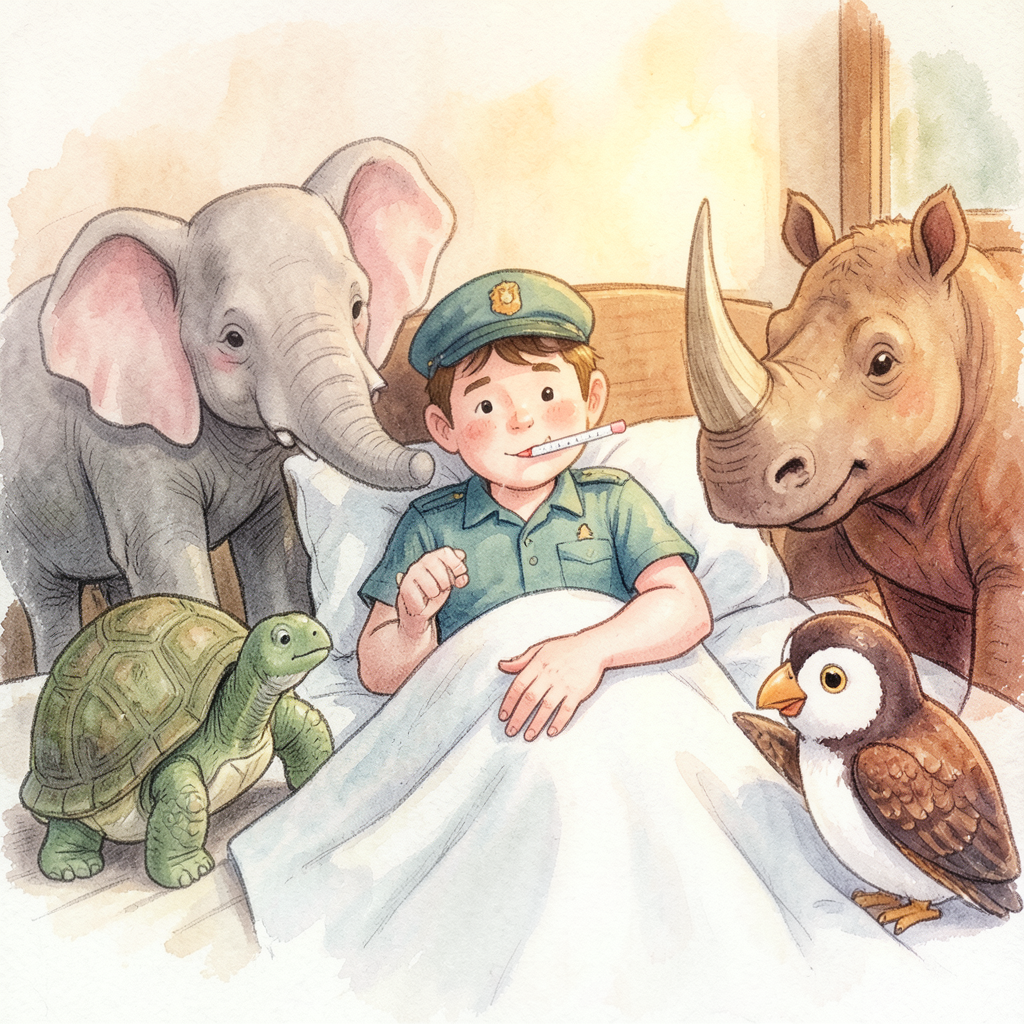
Every day, zookeeper Amos McGee makes time for his animal friends — playing chess with the elephant, sitting quietly with the shy penguin, and lending a handkerchief to the runny-nosed rhinoceros. When Amos wakes up too sick to go to work, his animal friends take the bus to return the kindness.
Themes
FriendshipKindnessReciprocity
Best For
- Children who are home sick and need a cozy, comforting read
- Introducing the concept of reciprocity and friendship to preschool and kindergarten-age children
- Quiet bedtime reading when you want a slow, warm story without high excitement
- Classroom use when discussing emotions, friendship, and caring for others
- Gift for ages 4-6 — accessible enough for younger listeners, rich enough to reward older readers
Why Parents Love This Book
A Sick Day for Amos McGee is a quiet, tender gem that earns its place among the classics of children's literature. What sets it apart is the way it portrays friendship as a two-way street — Amos doesn't just care for his animal friends, they care right back. Each relationship is drawn with its own particular warmth: chess with the elephant, companionable silence with the shy penguin, a handkerchief for the rhinoceros. These small, unhurried acts of kindness feel deeply true to how real affection works. Erin E. Stead's beeswax-and-pencil illustrations give the whole book a soft, golden quality, like a memory seen through gentle light. Philip C. Stead's text is spare without being cold — every word chosen with care. Together they create a world where kindness circulates naturally and no good deed goes unnoticed. Children encounter a model of friendship built on attentiveness and reciprocity, not grand gestures.
Reading Tips for Parents
Before reading, invite your child to notice the illustrations carefully — Erin Stead's textured, softly lit artwork rewards slow looking. Pause on the spreads where Amos visits each animal and ask your child what Amos is doing for each friend. On the second read, notice how each animal repays that exact kindness when Amos is sick. This parallel structure is a wonderful teaching moment about reciprocity that children can follow without explanation. The book also opens naturally to conversations about what your child does when they or a loved one is unwell. Keep the pace slow and comfortable — this is not a fast-paced story and benefits from being read without rushing. It works especially well at bedtime or during a quiet afternoon, and is a lovely choice when a child in your household is actually under the weather.
Awards & Recognition
- Caldecott Medal, 2011 (American Library Association)
- Charlotte Zolotow Award, 2011
Educational Value
This book helps children develop skills across multiple areas:
- Social-emotional: Demonstrates reciprocity in friendship — children see that caring relationships involve giving and receiving kindness in turn.
- Vocabulary: Introduces words like 'rhinoceros,' 'tortoise,' and 'penguin' in context, and models gentle descriptive language throughout.
- Sequencing: The story follows a clear daily routine and then mirrors it in reverse, giving children practice recognizing patterns and narrative structure.
- Empathy: Each animal has a distinct personality and need, encouraging children to think about how different friends require different kinds of care.
- Health literacy: Normalizes being sick and staying home to rest, helping children understand illness as a temporary state that calls for kindness — not fear.
Discussion Questions
Use these questions to spark conversation before, during, or after reading:
- What does Amos do for each of his animal friends every day? Can you remember one thing he does for each of them?
- When Amos got sick, how did his friends help him? Did they do anything that reminded you of what Amos had done for them?
- Why do you think the penguin liked sitting quietly with Amos? Do you have a friend you like just being near without doing anything?
- If you were feeling sick and your friends came to visit, what would you want them to bring or do for you?
- What do you think makes Amos such a good friend? What is one thing you could do this week to be a good friend to someone?
Content Notes for Parents
There are no scary, sad, or mature elements in this book. Amos's illness is mild and resolved warmly by the story's end, making it a reassuring rather than worrying read.
Frequently Asked Questions
What age is this book best suited for?
A Sick Day for Amos McGee is most often recommended for ages 4 to 7. The language is gentle and accessible for preschoolers, while the themes of reciprocity and friendship resonate strongly with kindergartners and first-graders. Many families find it holds up across multiple years as children pick up new layers of meaning on each reread.
Is the topic of illness handled in a way that might worry a young child?
Not at all. Amos's sickness is presented lightly — he stays home with a runny nose and a low fever — and the focus quickly shifts to the warmth of his friends coming to help. There is nothing frightening or medically detailed. In fact, the book is often recommended as a comforting read for children who are themselves feeling under the weather.
What makes the illustrations special enough to win the Caldecott Medal?
Erin E. Stead used a distinctive beeswax-and-pencil technique that gives each page a soft, luminous quality unlike most children's books. The colors are muted and warm, and the figures have a gentle, handcrafted feel. Young children are often drawn to running their fingers across the page, and parents tend to find the artwork as appealing as their children do.
Are there similar books you would recommend if my child loves this one?
If your child enjoys A Sick Day for Amos McGee, look for Bear Has a Story to Tell and Sebastian and the Balloon, also by Philip and Erin Stead. For thematically similar books about quiet friendship and kindness, Arnold Lobel's Frog and Toad series and Kevin Henkes's Lilly's Purple Plastic Purse are excellent companions.
Can this book be used in a classroom setting?
Yes, it is a strong classroom read-aloud for preschool through first grade. Teachers often use it to open discussions about what makes a good friend and how we can notice what others need. The mirroring structure — Amos cares for the animals, then they care for him — lends itself well to simple graphic organizers and sequencing activities.