The Rainbow Fish
About This Book
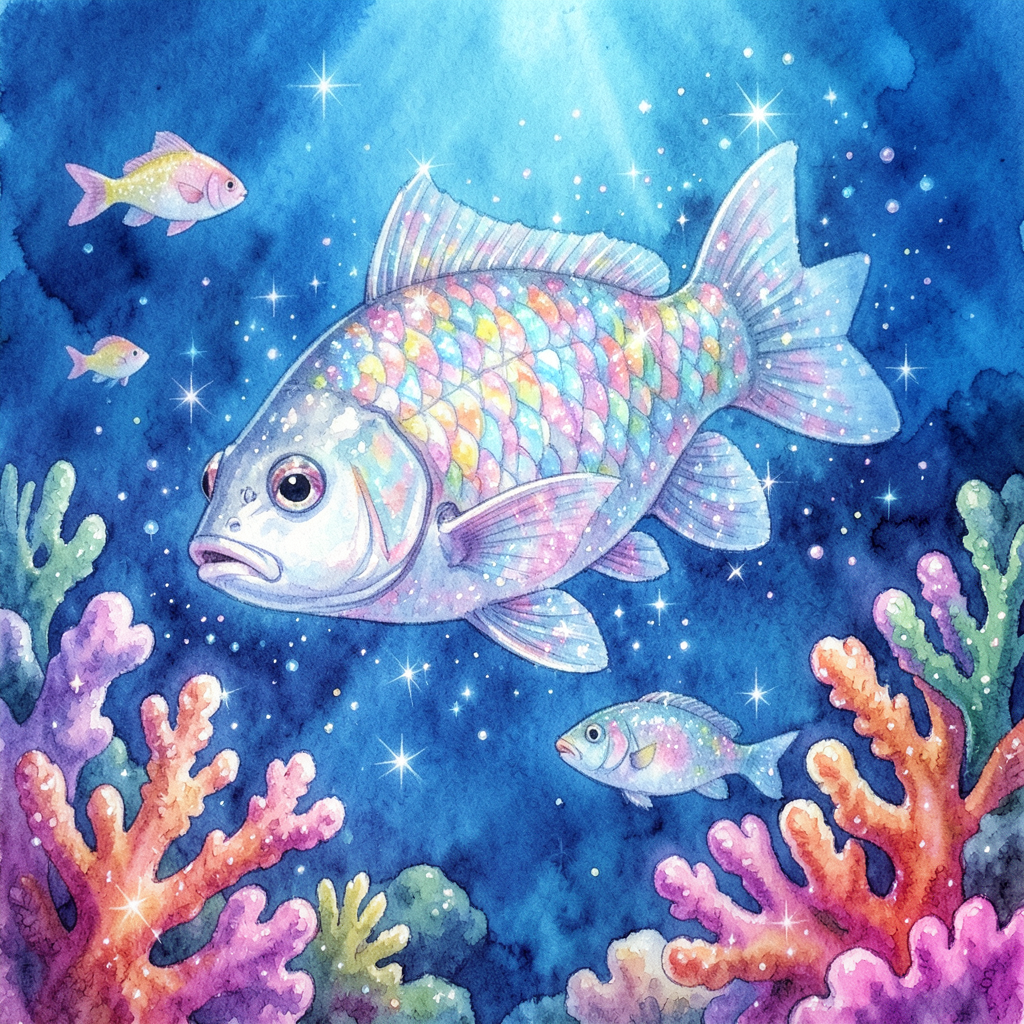
The most beautiful fish in the ocean has shimmering, iridescent scales but no friends. When a wise octopus suggests he share his special scales, he discovers that giving away what makes him outwardly unique brings him something far more valuable — friendship and happiness.
Themes
SharingFriendshipKindness
Best For
- Children ages 4-6 who are navigating sharing conflicts with siblings or classmates
- Classroom read-alouds launching a unit on community or kindness
- Bedtime reading when a child has had a difficult social day and needs a gentle, affirming story
- Gift-giving for new preschoolers entering group care settings for the first time
- Families who enjoy books with distinctive physical features that make reading a sensory experience
Why Parents Love This Book
The Rainbow Fish has captivated children and parents since 1992 for one simple reason: Marcus Pfister found a way to make generosity feel genuinely joyful rather than obligatory. The story follows the most dazzling fish in the ocean — covered in shimmering, iridescent scales — who discovers that hoarding his beauty leaves him lonely and hollow. What makes this book truly special is Pfister's use of actual foil-stamped holographic scales embedded in the illustrations, a production choice that transforms reading into a tactile, visually magical experience. Children can literally see and touch what makes Rainbow Fish unique, which makes his eventual decision to give those scales away feel emotionally real and significant. The arc is honest: sharing is hard, and Rainbow Fish resists at first. That reluctance makes the payoff — a whole school of friends, each carrying one glittering scale — all the more earned. It is a book that invites children to feel the warmth of generosity rather than simply being told to practice it.
Reading Tips for Parents
Before reading, let children touch the foil scales in the illustrations and ask what they notice. This grounds them in the physical detail the story pivots on. As you read, slow down at the moment Rainbow Fish refuses to share — resist the urge to editorialize. Let children sit with his choice before the story moves on. After finishing, avoid asking "What should you share?" which can feel like a lecture. Instead ask what Rainbow Fish looked like at the beginning versus the end, and whether he seems happier. For children who struggle with sharing toys or belongings, this book works best as a conversation starter after a conflict has settled, not in the heat of the moment. The octopus's advice is memorable enough that children will often quote it back to you unprompted in real-life situations.
Awards & Recognition
- New York Times Bestseller
- Publishers Weekly Bestselling Children's Picture Book
- Christopher Award (1993)
Educational Value
This book helps children develop skills across multiple areas:
- Social-emotional learning: Explores the tension between pride in what we have and the loneliness that comes from not sharing it, helping children develop empathy and emotional vocabulary around generosity.
- Vocabulary: Introduces words like iridescent, shimmering, envy, and solitude in a context where illustrations make meaning immediately clear.
- Sequencing: The story follows a clear problem-attempt-solution arc that helps beginning readers practice narrative structure and cause-and-effect thinking.
- Self-regulation: Rainbow Fish's initial refusal models the impulse children often feel, giving parents and educators a non-threatening entry point to discuss managing that impulse.
- Visual literacy: Pfister's use of foil-stamped illustrations teaches children to notice how illustrators make deliberate choices — here, a production technique carries emotional weight.
- Math readiness: Counting how many scales Rainbow Fish gives away and how many fish he ends up befriending offers a simple, story-embedded counting exercise for younger readers.
Discussion Questions
Use these questions to spark conversation before, during, or after reading:
- Why do you think none of the other fish wanted to be Rainbow Fish's friend at the beginning, even though he was so beautiful?
- How did Rainbow Fish feel after he gave away his first scale? How do you think he felt after giving away almost all of them?
- The octopus told Rainbow Fish to share his scales. Do you think that was good advice? Was it easy for Rainbow Fish to follow it?
- Have you ever shared something that was hard to give away? How did it feel afterward?
- If you had one magical scale to give to someone, who would you give it to and why?
Content Notes for Parents
There are no scary, violent, or mature elements in this book. Some children and educators have debated whether the story's message — give away what makes you special to fit in — is the right lesson, so parents may want to guide discussion toward generosity as abundance rather than conformity.
Frequently Asked Questions
What age is The Rainbow Fish best for?
The book is ideal for ages 4 to 7. The vocabulary and story length suit preschool and kindergarten listeners well, while early readers in first grade can begin tackling it independently. Younger children around age 3 will enjoy the illustrations and foil scales but may not fully grasp the emotional arc.
Is there a deeper message parents should be aware of before reading?
Some parents and educators have noted that the story can be read as pressuring a child to give up individuality in order to be liked. It is worth framing the discussion around the joy of generosity rather than the need to conform. Asking 'Did Rainbow Fish lose something important, or did he gain something better?' opens that conversation naturally.
Is this book appropriate for classroom use?
Yes, it is one of the most widely used picture books in early childhood classrooms and is a staple of social-emotional learning curricula. Teachers often pair it with activities where children decorate and trade paper 'scales' to practice generosity in a hands-on way.
Are there other books in the series?
Marcus Pfister wrote several follow-up books including Rainbow Fish to the Rescue, The Rainbow Fish and the Big Blue Whale, and others. These sequels extend the character into new social situations but the original remains the strongest entry and works well as a standalone.
My child gets upset about sharing. Will this book help?
It can, but timing matters. This book works best as a conversation-opener after a conflict has passed, not as a corrective tool in the middle of one. Children who identify with Rainbow Fish's initial resistance — rather than feeling judged for it — are more likely to internalize the message.