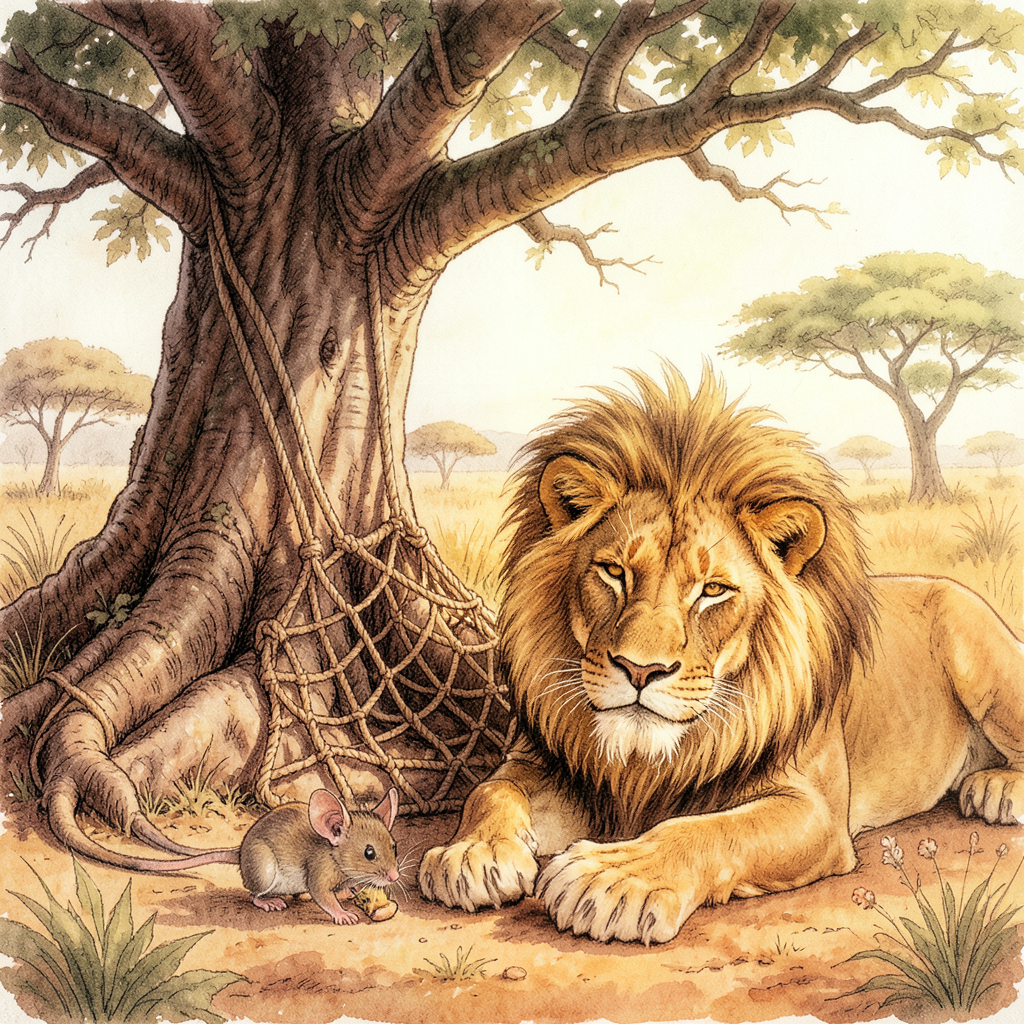
The Lion & the Mouse
About This Book
In this nearly wordless Caldecott Medal-winning retelling of Aesop's fable, a tiny mouse accidentally wakes a mighty lion on the African savanna. The lion spares the mouse, and when the lion is later caught in a hunter's net, the small mouse gnaws through the ropes to free him.
Themes
KindnessCourageFriendship
Best For
- Reluctant or emergent readers who are not yet ready for text-heavy books
- Multilingual households where a wordless format removes language barriers
- Classroom read-alouds that invite every child to participate in narrating
- Teaching empathy and kindness in a concrete, story-driven way
- Children who love animals and detailed nature illustration
Why Parents Love This Book
Jerry Pinkney's "The Lion and the Mouse" is a masterwork of visual storytelling — a nearly wordless picture book that proves illustrations alone can carry profound emotional weight. Set on the sun-drenched African savanna, Pinkney's lush, intricately detailed watercolor and pencil artwork transforms Aesop's ancient fable into a cinematic experience. Every spread bursts with wildlife — zebras, birds, and insects populate the landscape — giving young readers endless details to discover on repeat readings. The wordless format is one of the book's greatest strengths: children of all language backgrounds can engage fully, narrating the story in their own words and making it genuinely their own. The central message — that even the smallest creature can make an enormous difference — lands with quiet power precisely because it is shown, never told. This is a book that rewards patience and close looking, building both literacy and visual intelligence in one gorgeous package.
Reading Tips for Parents
Because this book is nearly wordless, your role as the reader shifts from narrator to conversation partner. Let your child lead — ask them what is happening on each page before you say anything. Point to details in the margins: the birds watching from a tree, the insects in the grass. On a second reading, encourage your child to tell the whole story back to you in their own words; this builds oral language and sequencing skills naturally. Pause at the moment the lion decides to spare the mouse and ask why. The turning point — when the tiny mouse saves the mighty lion — is perfect for discussing how helping others can come back to us in unexpected ways. This book works well at bedtime because the warm palette and quiet pacing have a naturally calming effect.
Awards & Recognition
- Caldecott Medal, 2010 (American Library Association)
- New York Times Best Illustrated Children's Book, 2009
Educational Value
This book helps children develop skills across multiple areas:
- Social-emotional learning: Explores kindness, empathy, and the idea that acts of mercy can be repaid — helping children understand reciprocity and compassion.
- Vocabulary: Though nearly wordless, discussions sparked by the art introduce rich words like 'savanna,' 'predator,' 'ensnared,' and 'gnaw' in a meaningful context.
- Visual literacy: Trains children to read sequential images, track cause and effect, and infer character emotions entirely from facial expressions and body language.
- Narrative sequencing: The wordless format challenges children to organize and retell story events in their own words, building oral language and story structure awareness.
- Science and nature: Detailed illustrations of African wildlife provide a springboard for learning about savanna ecosystems, animal behavior, and the food chain.
- Character analysis: The contrast between the lion's initial power and eventual vulnerability opens rich conversations about strength, humility, and interdependence.
Discussion Questions
Use these questions to spark conversation before, during, or after reading:
- Why do you think the lion decided to let the mouse go instead of hurting him?
- How did the mouse feel when the lion was trapped in the net? What would you have done in the mouse's place?
- The mouse is very small and the lion is very big. Does size matter when it comes to being helpful or brave? Why or why not?
- Can you retell the whole story just by looking at the pictures, without any words?
- Have you ever helped someone even though you were scared? What happened?
Content Notes for Parents
A hunter's net traps the lion, which may be briefly tense for sensitive children, but there is no violence and the resolution is entirely positive. No content concerns for the target age group.
Frequently Asked Questions
What age is this book best suited for?
The book is recommended for ages 4 to 7, but its nearly wordless format makes it accessible even to younger toddlers who enjoy looking at detailed pictures. Older children up to age 9 or 10 can also engage meaningfully with the art and the moral lesson, especially if challenged to write or narrate their own version of the story.
Are there any words in the book at all?
The book is almost entirely wordless — there are no sentences or narration. A few small sound effects appear in the art, but the story is told completely through Jerry Pinkney's illustrations. This is actually one of its greatest strengths, as it invites children to become the storytellers themselves.
Is there anything scary or upsetting in the book?
The scene where the lion is caught in a hunter's net could feel tense for very sensitive children, but it is handled visually without any graphic content. The story resolves happily with the mouse freeing the lion, so there is no distressing ending.
How does this compare to other versions of the Aesop fable?
This retelling stands apart because of its wordless, illustration-driven approach and its African savanna setting, which grounds the ancient fable in a specific and beautifully rendered world. Other picture book versions (such as those by Bernadette Watts or Ed Young) use text, making Pinkney's version uniquely suited for visual learners and pre-readers.
Can this book be used in a classroom setting?
Absolutely — it is an excellent classroom resource. Its wordless format naturally invites group storytelling and discussion, and the Caldecott pedigree makes it a trusted choice for school libraries. It pairs well with lessons on Aesop's fables, African wildlife, and social-emotional learning themes like kindness and courage.