Alexander and the Terrible, Horrible, No Good, Very Bad Day
About This Book
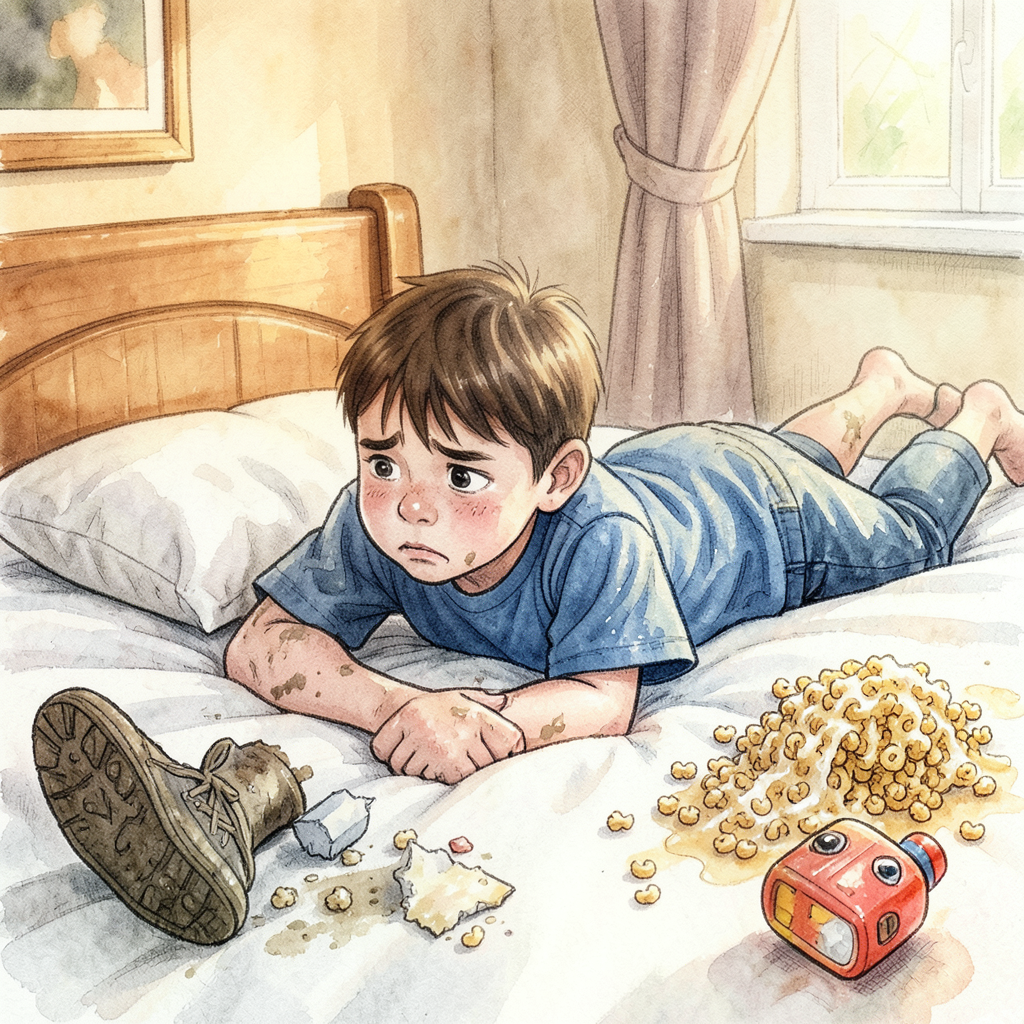
Alexander wakes up with gum in his hair and from there his day only gets worse — no prize in his cereal, a cavity at the dentist, lima beans for dinner, and kissing on TV. He keeps threatening to move to Australia, but learns that some days are just like that.
Themes
EmotionsResilienceHumor
Best For
- Reading with a child who is having a rough day or recovering from one
- Classroom morning meetings focused on emotions and self-expression
- Children who need permission to feel frustrated without being told to cheer up
- Families who use humor as a way to process hard moments together
- Beginning readers working on fluency, thanks to the book's strong rhythm and repetition
Why Parents Love This Book
Published in 1972, Judith Viorst's Alexander and the Terrible, Horrible, No Good, Very Bad Day has endured for over fifty years because it captures something every child — and every adult — knows intimately: the day where absolutely nothing goes right. From gum in his hair at breakfast to lima beans at dinner to kissing on TV at bedtime, Alexander's woes pile up in a perfectly escalating rhythm that makes the whole thing absurdly funny. What sets this book apart is Viorst's refusal to offer a tidy fix. Nobody swoops in to rescue Alexander. Instead, his mother delivers the quietly profound reassurance that some days are just like that — even in Australia. That honest, unsentimental ending is what gives the book its staying power. Children feel genuinely seen by Alexander's outrage, and the humor gives them permission to laugh at their own bad days. It is one of the rare picture books that works just as well for a grumpy parent reading aloud as it does for the child listening.
Reading Tips for Parents
Read this book on an ordinary day, not just when your child is having a meltdown — it builds emotional vocabulary before the hard moments arrive. When reading aloud, lean into the repetition of the full title phrase; children love chanting it together. After finishing, ask your child to name one bad thing that happened to them recently, then one thing that ended up being okay. Point out that Alexander's mother validates his feelings without trying to fix everything — this is worth naming for children: "She didn't make his day better, but she made him feel less alone." The book also invites humor as a coping tool; encourage kids to notice how Viorst makes even awful things funny by listing them all together. Suitable for one-on-one reads or classroom sharing.
Awards & Recognition
- New York Times Outstanding Books of the Year (1972)
- One of the 100 Best Children's Books of the past 100 years — School Library Journal
- New York Times Best Seller — sustained bestseller status across multiple decades
Educational Value
This book helps children develop skills across multiple areas:
- Social-emotional learning: Helps children name and validate frustration, disappointment, and the feeling that everything is going wrong at once.
- Vocabulary: Introduces the word 'terrible,' 'horrible,' and descriptive complaint language, showing children how to articulate bad feelings with specificity and even humor.
- Sequencing: Alexander's day moves from morning to night in clear chronological order, making it a strong model for understanding narrative structure and time.
- Resilience: The book normalizes having hard days without needing a rescue or a lesson, building tolerance for discomfort and disappointment.
- Humor and perspective: Shows children that a series of small frustrations can be funny when you step back, planting early seeds of self-awareness and coping through laughter.
- Oral language: The long, repetitive title phrase and rhythm of the text invite children to predict, repeat, and participate — building fluency and phonemic awareness.
Discussion Questions
Use these questions to spark conversation before, during, or after reading:
- What was the very first thing that went wrong for Alexander, and why do you think it made the rest of the day feel worse?
- Alexander keeps saying he wants to move to Australia. Do you think moving would really fix his bad day? Why or why not?
- Have you ever had a terrible, horrible, no good, very bad day? What happened, and what helped you feel a little better?
- At the end, Alexander's mom says some days are just like that. Do you think that is a good answer? What would you have said if you were Alexander's mom?
- If you could add one more terrible thing to Alexander's day, what would it be?
Content Notes for Parents
No scary, violent, or mature content. The book deals with mild childhood frustrations — a dental cavity, a bad haircut, lima beans — all handled with humor. Parents of especially sensitive children should note that Alexander's feelings are validated without resolution, which may momentarily feel unsatisfying but is generally well-received by children.
Frequently Asked Questions
What age is this book best for?
The book is written for ages 4 to 7 and works beautifully across that range. Younger children in the 4-5 range love the humor and repetition, while 6- and 7-year-olds can engage more deeply with Alexander's perspective-taking and the book's understated ending. Many parents find it resonates with their own kids well into early elementary school.
Is this a good book to read when my child is actually upset?
Yes, with a light touch. Reading it during or right after a meltdown can feel validating — Alexander's frustrations are treated as real and worthy of acknowledgment. That said, it works just as well on calm days as a way to build emotional vocabulary before a bad day arrives. Try both approaches and see what lands better with your child.
Does the book teach a lesson or have a moral?
Not in a preachy way, which is part of why it has lasted fifty years. Alexander's mother tells him that some days are just like that — even in Australia. The book does not promise that good behavior or a positive attitude will fix a bad day. This honest, unresolved ending is intentional, and most children find it more comforting than a tidy moral would be.
Are there similar books you would recommend alongside this one?
If your child loves Alexander, try Viorst's follow-up Alexander, Who Used to Be Rich Last Sunday for more of the same humor and voice. For related emotional themes with a different tone, The Bad Seed by Jory John and Pete the Cat: I Love My White Shoes both explore resilience with humor. Knuffle Bunny by Mo Willems is another strong companion for the 4-5 age range dealing with big feelings in funny ways.
My child keeps quoting the title phrase constantly. Is that normal?
Completely normal and actually a sign of healthy engagement. Children repeat language from books they connect with, and the full title — 'terrible, horrible, no good, very bad' — is rhythmically satisfying to say. Lean into it. You can use it as a lighthearted shorthand at home when small things go wrong, which helps children develop perspective and even laugh at frustrating moments.