The True Story of the Three Little Pigs
About This Book
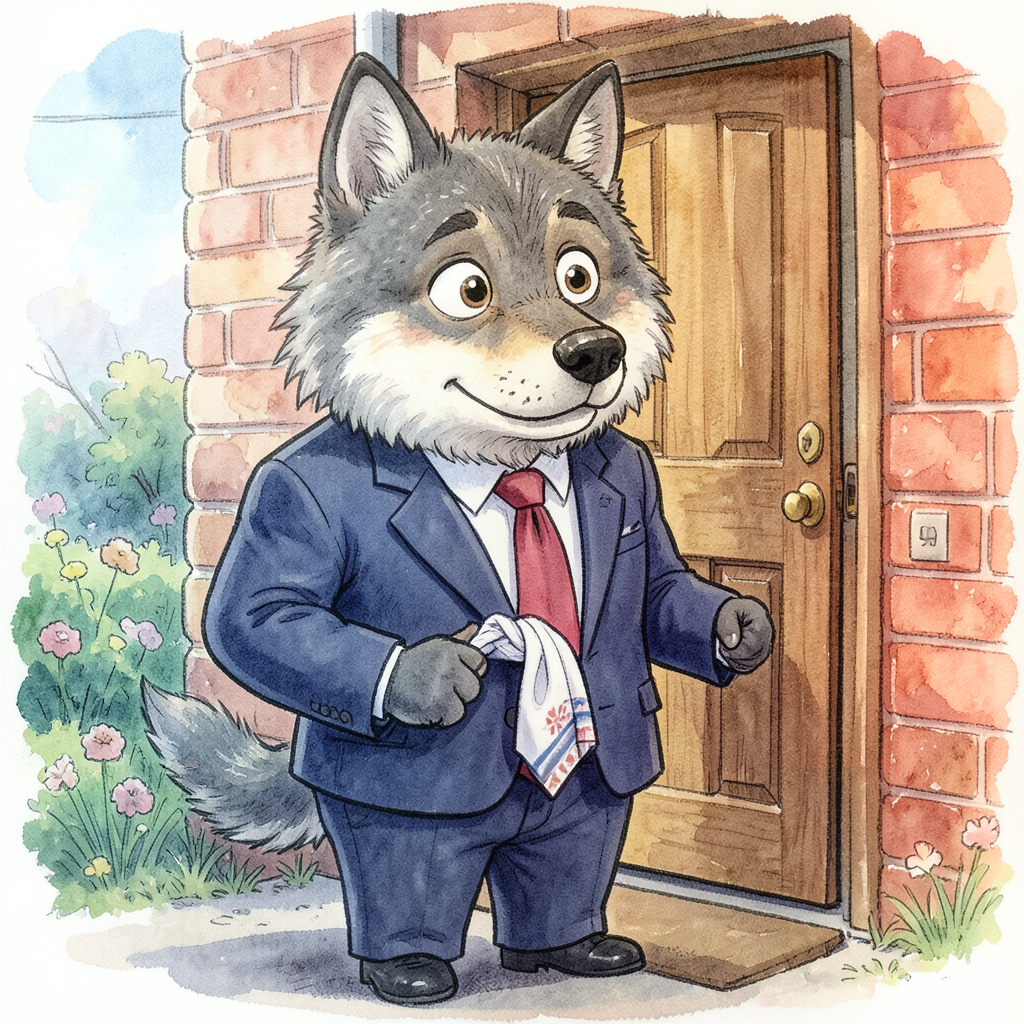
Alexander T. Wolf tells his side of the famous fairy tale. According to him, he was simply trying to borrow a cup of sugar for his granny's birthday cake when a terrible cold made him sneeze — accidentally blowing down the pigs' houses. He insists he's been framed.
Themes
PerspectiveHumorStorytelling
Best For
- Children who already love the original Three Little Pigs and are ready to see it turned upside down
- Family read-alouds where parents can ham up the wolf's unreliable narration for comic effect
- Classroom settings introducing the concept of point of view or persuasive writing
- Kids who enjoy humor and a little irreverence in their stories
- Older siblings reading to younger ones — the layered jokes give older readers something extra to enjoy
Why Parents Love This Book
Jon Scieszka's 1989 classic is one of the most clever picture books ever written, and it holds up beautifully more than three decades later. By handing the microphone to Alexander T. Wolf — the supposed villain of the original fairy tale — Scieszka delivers a masterclass in narrative perspective. Al's story is completely plausible on its own terms: he just needed sugar for Granny's birthday cake, and he had a terrible cold. The sneezing was purely accidental. The fact that the pigs happened to be home is, really, not his fault at all. Lane Smith's darkly textured, almost gothic illustrations add layers of visual humor and irony that adults will catch on re-reads. The book works on two levels simultaneously: as a genuinely funny romp for young children, and as a sly introduction to the idea that every story has more than one side. It is one of those rare books that parents actually look forward to reading aloud again.
Reading Tips for Parents
Before reading, make sure your child already knows the original Three Little Pigs story — the humor and the entire premise depend on that familiarity. If they haven't heard it yet, read the original first and give it a few days to settle. When you read aloud, lean into Al's voice: make him sound sympathetic, even a little put-upon. Pause at moments where Al's version seems reasonable and ask, "Do you believe him?" Lane Smith's illustrations often contradict or undercut what Al is saying, so slow down on the pictures — they reward careful looking. This book is an excellent springboard for talking about how point of view works in everyday life, not just in stories. Plan for multiple readings; children who have absorbed Al's logic start finding new jokes each time.
Awards & Recognition
- New York Times Best Illustrated Children's Books of the Year, 1989
- ALA Notable Children's Book
Educational Value
This book helps children develop skills across multiple areas:
- Perspective-taking: The entire book is structured around a single event retold from the villain's point of view, making it one of the best early introductions to the concept that narrator reliability matters.
- Vocabulary: Words like 'framed,' 'sneeze,' 'granny,' and 'borrow' take on comic weight in context, and the storytelling voice introduces slightly elevated, formal language that expands a child's sense of register.
- Critical thinking: Children must weigh competing accounts of the same event and decide what they believe, an early exercise in evaluating evidence and claims.
- Media literacy: The book plants the seed that every news story, argument, or account has a perspective behind it — a foundational concept for navigating information.
- Story structure: Because children must hold the original fairy tale in mind while reading this version, they practice comparing and contrasting two narratives simultaneously.
- Humor and irony: Lane Smith's illustrations often tell a different story than Al's words, teaching children that images and text can contradict each other in meaningful ways.
Discussion Questions
Use these questions to spark conversation before, during, or after reading:
- Do you think Alexander T. Wolf is telling the truth? What parts of his story seem believable, and what parts seem a little fishy?
- Why do you think the wolf was put in jail if he says the whole thing was an accident? Is that fair?
- If you were one of the three little pigs, how would YOU tell the story? What would be different?
- Have you ever been blamed for something that was an accident? How did that feel?
- What does it mean that two people can tell the same story in very different ways? Can both versions be true at the same time?
Content Notes for Parents
The wolf does eat the pigs who happen to be dead when he finds them after his sneezing collapses their houses — this is played for comic irony rather than horror, but parents of sensitive children may want to acknowledge it briefly. The overall tone is comedic and lighthearted; there is nothing here that most children ages 4 and up will find genuinely frightening.
Frequently Asked Questions
What age is this book actually right for?
The book is aimed at ages 4 to 7, but it works best when children already know the original fairy tale. Most 5- and 6-year-olds who are familiar with Three Little Pigs will get the joke immediately and find it hilarious. Younger children who don't know the source material will be confused rather than delighted, so the original story is a genuine prerequisite.
Is the wolf eating the pigs too scary or dark for young children?
The eating is handled with a light, comic touch — Al frames it as not wanting to waste a perfectly good ham dinner after the pigs' houses collapsed on them. It is played for irony, not horror, and most children find it funny rather than upsetting. That said, if your child is particularly sensitive about animal death or violence in any form, it is worth a quick preview read before sharing it.
How do I use this book to talk about perspective with my child?
The simplest approach is to pause mid-book and ask 'Does Al seem like a bad guy so far?' Then after finishing, ask whether they changed their mind. From there you can connect it to real life: 'Has someone ever told a story about something that happened differently than how you remember it?' Children grasp the concept intuitively when it is grounded in the fairy tale they already love.
My child wants more books like this — what should we read next?
Jon Scieszka and Lane Smith made several other books together that share this same irreverent, meta humor, including The Stinky Cheese Man and Other Fairly Stupid Tales and Math Curse. For more fractured fairy tales, The Three Little Wolves and the Big Bad Pig by Eugene Trivizas flips the original in a different direction and pairs beautifully with this one.
Is this a good classroom book?
It is one of the most widely used picture books in elementary classrooms precisely because it makes point of view concrete and funny. Teachers regularly use it as an anchor text for persuasive writing units, asking students to write their own 'true story' from a character's perspective. The combination of a familiar source text and an accessible but layered retelling makes it genuinely versatile for grades K through 3.