Fateh Singh and the Shortcut
About This Book
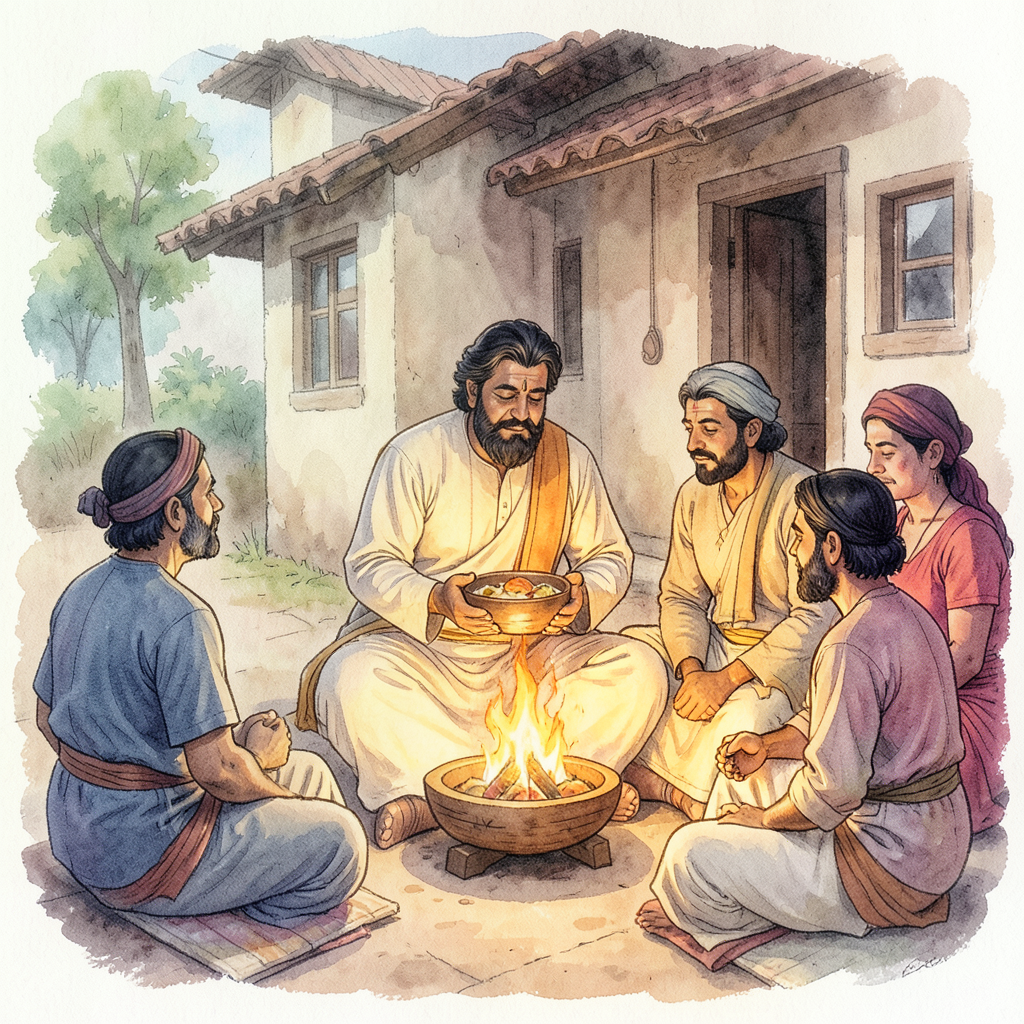
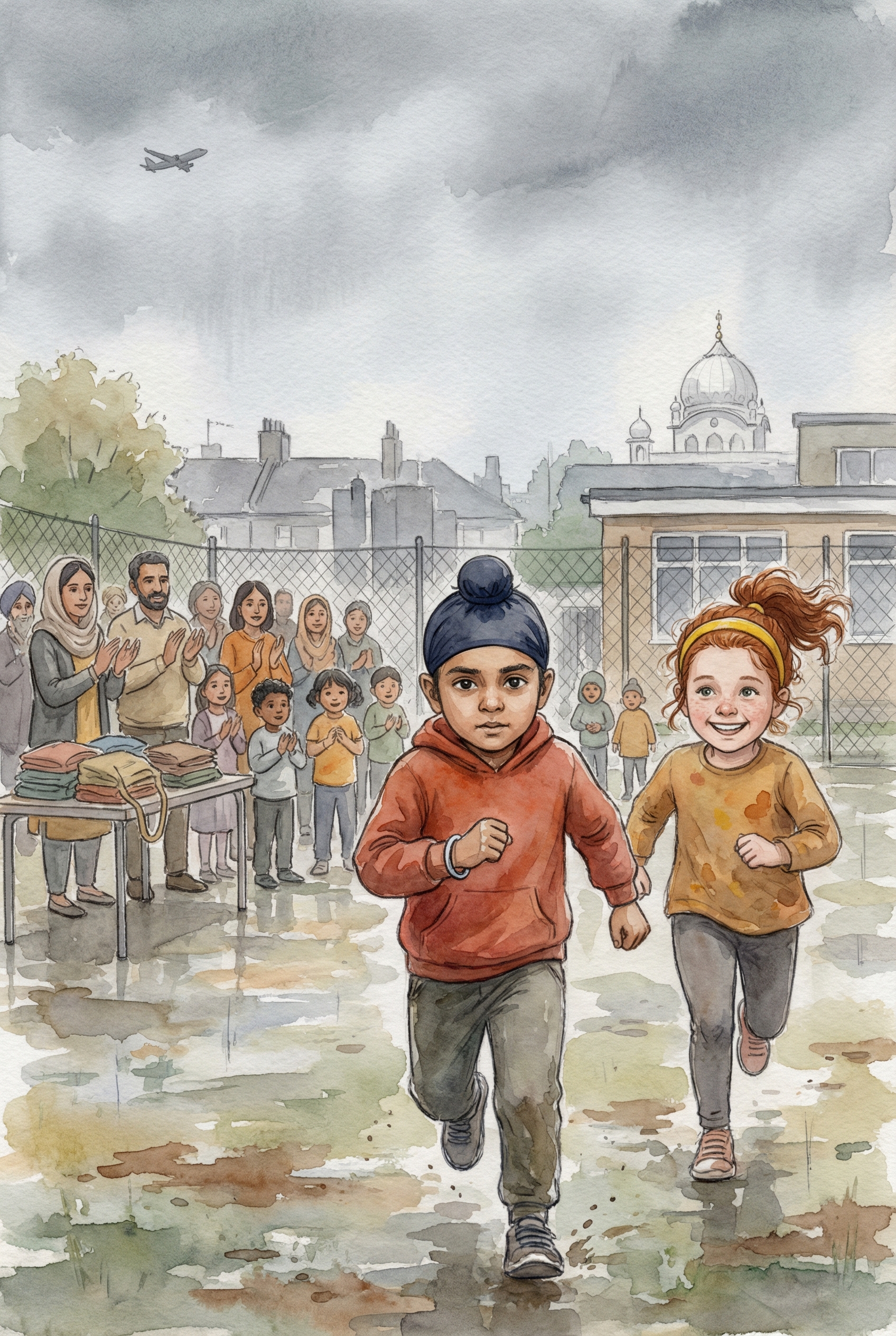
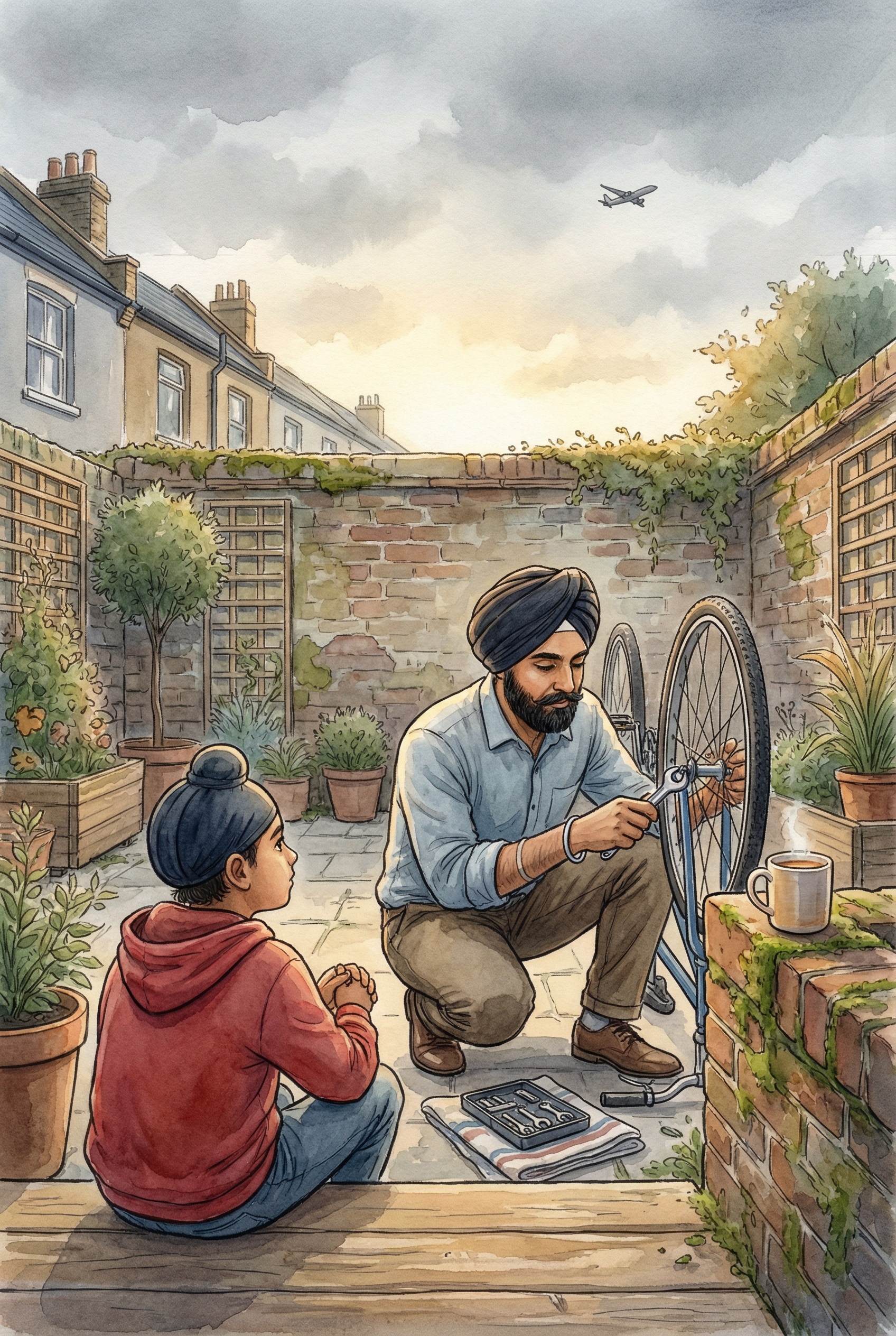
Fateh Singh is tempted to cut corners on a school project when he discovers an easier way that is not quite his own work. Through the old sakhi of Bhai Lalo and the honest carpenter, he learns the Sikh teaching of Kirat Karni — that honest labour, however plain, tastes sweeter than any shortcut. A story about integrity, effort, and doing things the right way.
Themes
HonestyHard WorkSikh Values
Best For
- Children who are beginning to navigate homework, school projects, or competitive situations where cutting corners feels appealing
- Families wanting to introduce Sikh values and history through story rather than direct instruction
- Classroom or Sunday school settings exploring honesty and integrity
- Bedtime read-aloud for ages 4-7 that naturally leads to a short reflective conversation
- Children who respond well to historical story-within-a-story structures
Why Parents Love This Book
Fateh Singh and the Shortcut tackles one of the most relatable dilemmas children face: the temptation to take the easy way out. What makes this picture book stand apart is how it roots a universal childhood struggle in Sikh teaching without feeling preachy. The story weaves in the traditional sakhi of Bhai Lalo, the humble carpenter whose honest bread was blessed, and Malik Bhago, whose lavish feast was not — giving children a meaningful historical anchor for an idea they encounter every single day. Fateh Singh is not a perfect child. He is genuinely tempted, and that honesty makes him someone young readers can root for. The concept of Kirat Karni — earning through honest effort — is introduced naturally through the story's flow rather than through a lecture. By the end, children understand not just that cheating is wrong, but why honest work carries a different kind of pride. This is a book that opens a real conversation.
Reading Tips for Parents
Before reading, ask your child if they have ever wanted to skip a hard step to finish something faster — this primes them to connect with Fateh Singh immediately. As you read, pause when Fateh Singh discovers the shortcut and ask your child what they think he should do before turning the page. When the Bhai Lalo sakhi is introduced, take a moment to explain that it is a real story from Sikh history, which helps children understand that the lesson has deep roots. After finishing, invite your child to recall a time they worked hard on something — a drawing, a puzzle, a chore — and how it felt. Keep the Kirat Karni phrase handy; it becomes a gentle, non-shaming reminder you can return to in everyday moments throughout the week.
Awards & Recognition
- No major awards listed at time of publication (2024)
- Published by Maastarji as part of a series of Sikh values picture books for children
Educational Value
This book helps children develop skills across multiple areas:
- Social-emotional learning: Builds the capacity to resist peer pressure and internal temptation, and to sit with discomfort rather than avoid it.
- Character development: Introduces the Sikh principle of Kirat Karni — honest, dignified labour — as a lived value rather than an abstract rule.
- Cultural literacy: Exposes children to the historical sakhi of Bhai Lalo and Malik Bhago, a foundational story from the Sikh tradition.
- Critical thinking: Encourages children to weigh short-term ease against long-term integrity, a reasoning skill applicable well beyond the classroom.
- Vocabulary: Introduces the Punjabi term Kirat Karni in context, helping children acquire culturally rooted language naturally.
- Reading comprehension: The parallel between Fateh Singh's modern dilemma and the historical sakhi gives children practice in connecting two storylines and drawing meaning across them.
Discussion Questions
Use these questions to spark conversation before, during, or after reading:
- Why was Fateh Singh tempted by the shortcut? Have you ever felt that way when something was hard?
- In the Bhai Lalo sakhi, why did honest bread taste sweeter even though it was plain? What do you think that means?
- How do you think Fateh Singh felt after he chose to do the work himself? How is that different from how he might have felt if he had taken the shortcut?
- What is something you worked really hard at? Did it feel special when you finished it?
- If a friend asked you to let them copy your work, what would you say? How could you help them without doing the work for them?
Content Notes for Parents
This book contains no scary, violent, or mature content and is fully appropriate for its 4-7 age range. The central tension — the temptation to cheat on a school project — may prompt honest conversation if a child has recently struggled with a similar situation, but this is a feature, not a concern.
Frequently Asked Questions
What age is this book best suited for?
The book is written for children aged 4 to 7 and is listed as a Beginning Reader level. Younger children in that range will enjoy it as a read-aloud, while children closer to 6 or 7 may be able to read it with some support. The themes are accessible to this age group without being simplified to the point of losing meaning.
Do we need to be Sikh to connect with this book?
Not at all. The core message — that honest effort brings real satisfaction, while shortcuts leave you feeling hollow — is universal. The Sikh context and the Bhai Lalo sakhi add depth and cultural richness, and non-Sikh families will find the historical story easy to engage with. It is a natural opportunity to introduce children to a faith tradition through a values story they can immediately relate to.
Is the Bhai Lalo story explained in the book, or do I need to know it in advance?
The sakhi of Bhai Lalo is introduced within the story itself, so no prior knowledge is needed. Parents who want to go deeper can easily find the full historical account online afterward, and many children will ask to hear more, which makes it a wonderful entry point into Sikh history.
My child has recently been caught copying or cheating. Is this a good book to read right now?
Yes, but approach it with care. Rather than using the book as a correction tool immediately after the incident, give a day or two and then read it together as a shared story rather than a lesson aimed at them. Let Fateh Singh carry the message — children are far more receptive when they feel they are discovering an idea rather than being lectured.
Are there similar books you would recommend alongside this one?
Families who enjoy this book will find similar values-grounded picture books in the Maastarji series. More broadly, books like The Empty Pot by Demi explore honesty under pressure, and those who want more Sikh history woven into story can look for other titles in the Maastarji catalog covering figures like Guru Nanak and Bhai Ghanaya.