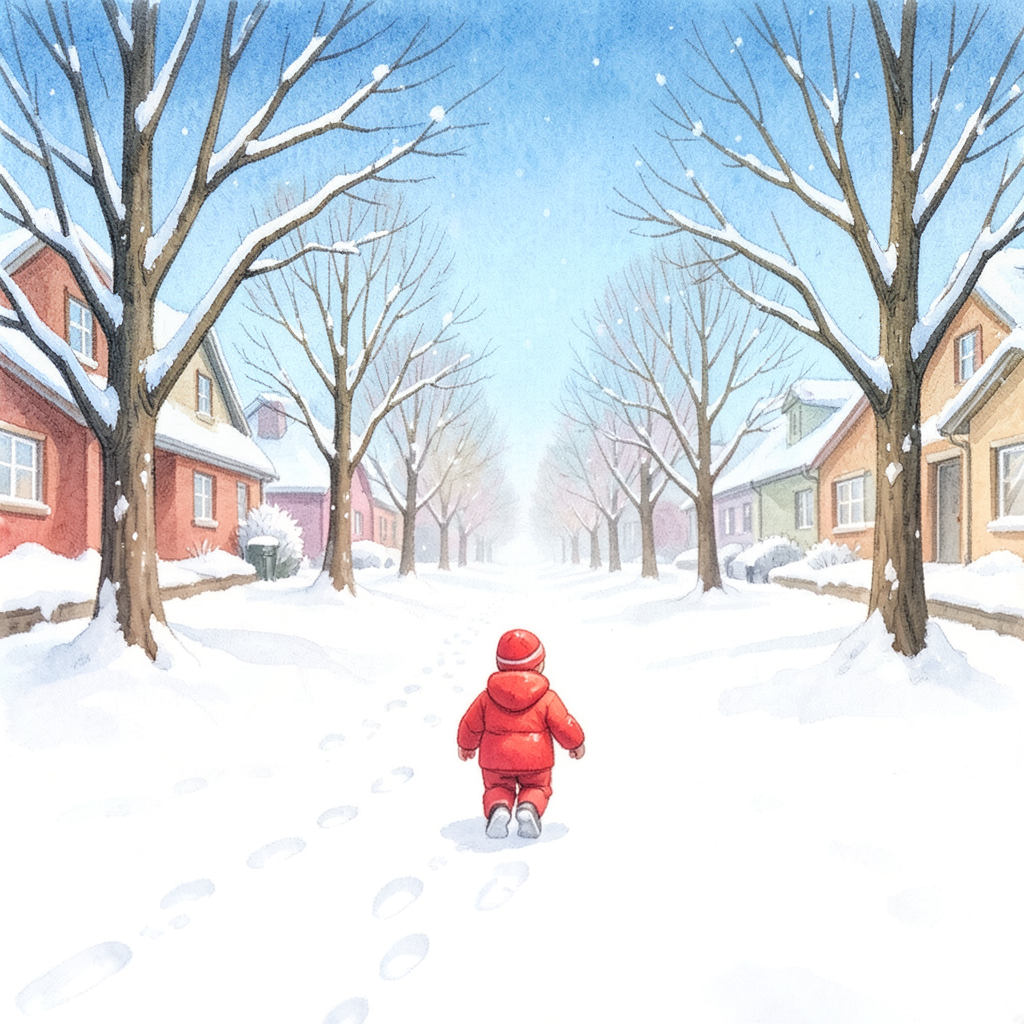
The Snowy Day
About This Book
Young Peter wakes up to find his neighborhood blanketed in snow and spends the day exploring — making tracks, smacking snow off a tree, and trying to save a snowball in his pocket. This Caldecott Medal winner was groundbreaking as one of the first mainstream picture books to feature an African American protagonist.
Themes
AdventureNatureChildhood
Best For
- First snow of the season — read the night before or the morning of a snowfall for maximum magic
- Bedtime read-alouds for ages 3-6 who enjoy calm, quietly joyful stories
- Classroom or library story time during winter months
- Children who love outdoor play and nature exploration
- Introducing young readers to classic, award-winning picture book illustration
Why Parents Love This Book
Published in 1962, The Snowy Day by Ezra Jack Keats captures something rare: the pure, unhurried joy of a child exploring the world on his own terms. Peter wakes to a snow-covered neighborhood and spends the entire day in wonder — dragging a stick to make tracks, smacking a snow-laden branch, trying to climb a mountain of plowed snow, and tucking a precious snowball into his pocket for safekeeping. What makes this book endure more than six decades later is its emotional precision. Keats understood that children experience small things with enormous feeling, and every moment — the disappointment of a melted snowball, the warmth of a bath after a cold day — rings absolutely true. The collage-style artwork is joyful and tactile, with textures that beg to be touched. And Peter himself is simply a child, curious and delighted, in a story that belongs to every child who has ever crunched through fresh snow and felt the world was theirs.
Reading Tips for Parents
Read this one slowly — this is not a plot-driven book, and rushing it misses the point. Pause on each spread and ask your child what Peter is doing or feeling before turning the page. The illustrations reward close looking: notice the patterns Keats used for snow, clothing, and walls. If you are reading this in winter, consider following the book with your own snowy-day walk. Before the read, ask your child what they like to do outside in cold weather. After, try the snowball experiment from the book: pack some snow (or even ice cubes) in a bag in their coat pocket and see what happens. This kind of hands-on connection turns a story into a memory. The language is simple enough for early readers to follow along while you read aloud.
Awards & Recognition
- Caldecott Medal, 1963 (American Library Association — awarded for distinguished illustration in an American picture book)
- Named to the New York Public Library's list of 100 most important children's books of the 20th century
Educational Value
This book helps children develop skills across multiple areas:
- Vocabulary: Introduces descriptive winter words like tracks, trudge, and slope in meaningful context, helping children build nature and weather vocabulary.
- Science: The melted snowball is a natural, memorable introduction to the concept that ice and snow change state when they warm up.
- Social-emotional: Peter's independent outdoor adventure models curiosity, self-sufficiency, and the ability to find joy in simple, everyday experiences.
- Narrative sequencing: The story follows a clear morning-to-night structure that helps children practice retelling events in order.
- Art appreciation: Keats's collage technique — layering painted paper, fabric textures, and stamped patterns — exposes children to mixed-media art in an accessible way.
- Cultural representation: As one of the first mainstream picture books with an African American protagonist, the book opens natural conversation about seeing yourself in stories.
Discussion Questions
Use these questions to spark conversation before, during, or after reading:
- What was your favorite thing Peter did in the snow? Have you ever done something like that?
- Peter tried to save his snowball by putting it in his pocket. What do you think happened to it, and why?
- Peter went exploring all by himself. How do you think he felt being outside alone in the snow?
- If you had a whole snowy day to yourself, what would you do first?
- At the end of the book, Peter sees more snow has fallen overnight. How do you think he feels when he looks out the window?
Content Notes for Parents
There are no scary, sad, or mature elements in this book. The mild disappointment Peter feels when his snowball melts is handled gently and is fully resolved by morning, making it an ideal choice for sensitive readers.
Frequently Asked Questions
What age is The Snowy Day best for?
The book is ideal for children ages 3 to 6. The vocabulary and sentence length are accessible even for very young children, and the story's focus on a single child's day of play resonates strongly with preschool and kindergarten-age readers. Older children in early elementary may also enjoy it, especially as an introduction to Caldecott Medal books.
Is there anything in this book that might upset a young child?
No. The only mild emotional moment is Peter's disappointment when his snowball melts overnight, but this is handled with great sensitivity and the story ends on a hopeful, joyful note. It is widely considered one of the gentlest and most reassuring picture books in the canon.
Why is this book considered historically significant?
When The Snowy Day was published in 1962, mainstream American picture books almost never featured Black children as protagonists. Ezra Jack Keats changed that with Peter, who is simply a curious, happy child — not defined by race, but genuinely represented. The book is frequently cited as a milestone in diverse children's literature.
What books are similar to The Snowy Day?
If your child loves The Snowy Day, try other books in Ezra Jack Keats's Peter series, including Whistle for Willie and A Letter to Amy. For a similar quiet, child-centered outdoor adventure feel, look for Owl at Home by Arnold Lobel or The Mitten by Jan Brett.
Can I use this book to teach my child about seasons or weather?
Absolutely. The book is a natural springboard for talking about winter, snow, and what happens when ice melts. You can extend the learning by doing the snowball-in-your-pocket experiment, drawing your own snowy-day tracks, or keeping a simple weather journal together after reading.