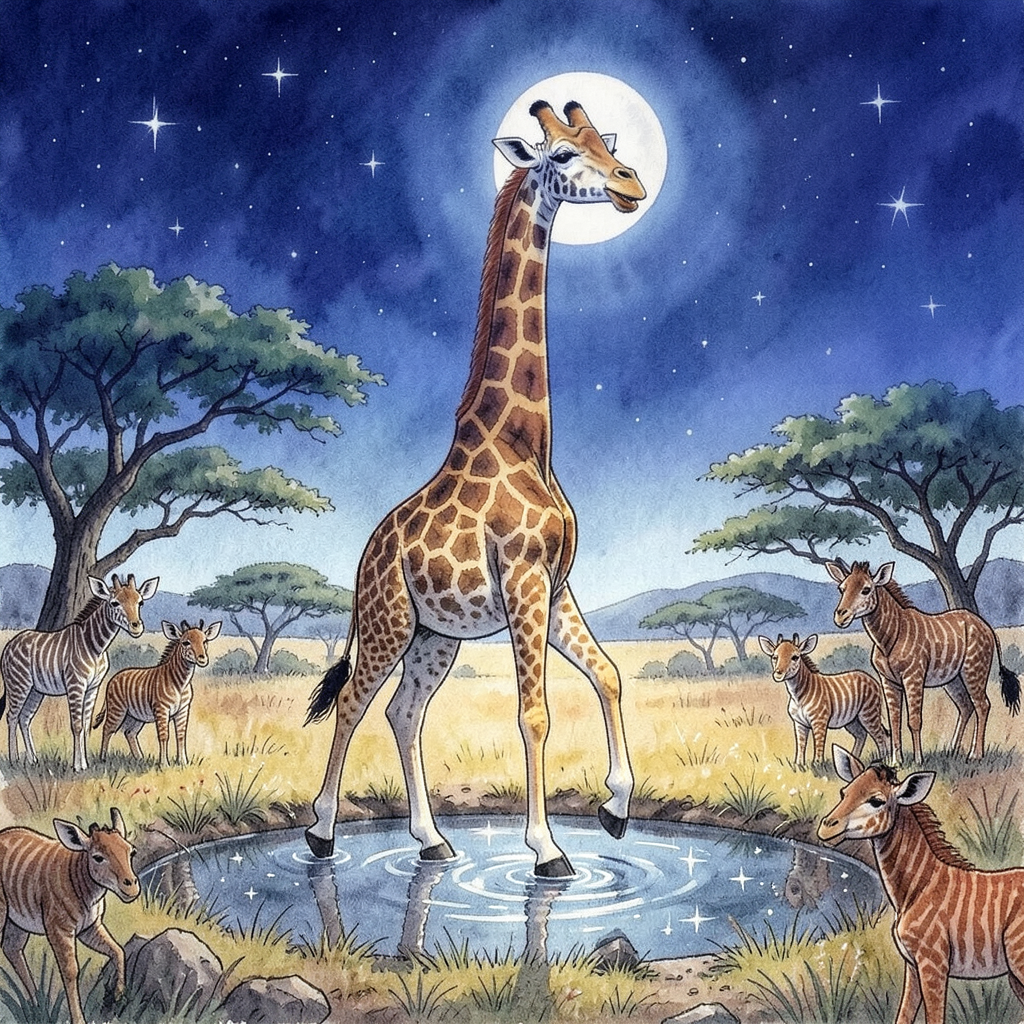
Giraffes Can't Dance
About This Book
Gerald the giraffe wants to join the annual Jungle Dance, but his legs are too skinny and his knees are too crooked. The other animals laugh at his clumsy attempts. A wise cricket helps Gerald find his own music and discover that everyone can dance — they just need the right song.
Themes
Self-AcceptanceCourageIndividuality
Best For
- Children who are feeling left out or different from their peers
- Toddler and preschool storytime — the rhyming text holds attention beautifully in group settings
- Families working through a transition where a child is struggling to find their footing (new school, new sibling, learning a new skill)
- Bedtime reading when a child has had a hard social day and needs reassurance
- Read-aloud pairing with movement — clear a little space and let kids dance at the end
Why Parents Love This Book
Giraffes Can't Dance has endured for over two decades because it speaks directly to a feeling every child knows: the sting of being told you are not good enough. Gerald's journey from humiliated outcast to joyful dancer is told through Giles Andreae's bouncy, rhyming text that practically begs to be read aloud, and Guy Parker-Rees's bright, kinetic illustrations that fill every spread with color and movement. What sets this book apart from other confidence stories is the cricket's wisdom: Gerald does not succeed by suddenly becoming like the other animals. He finds his own rhythm, his own song, his own way of moving through the world. That distinction — that the goal is self-discovery rather than conformity — gives the book genuine depth. Children who feel different in any way, whether in how they learn, how they look, or how they play, see themselves in Gerald's awkward, long-legged hopefulness. The satisfying ending, where the same animals who mocked Gerald applaud his unique style, lands with just the right emotional punch without feeling preachy.
Reading Tips for Parents
Read this one with full dramatic commitment. Lean into the rhyme and rhythm — Andreae's text has a natural bounce, so let yourself speed up during the excited parts and slow down when Gerald feels sad. Pause on the spread where the animals laugh at Gerald and simply ask your child how that feels before turning the page. On subsequent readings, invite your child to dance along with Gerald at the end; the book practically calls for it. If your child is going through a moment of feeling left out — new daycare, a sibling getting more attention, struggling with a skill — this is the perfect time to reach for this title. After reading, you can revisit the cricket's key line about finding your own song and apply it to whatever your child is working through. Ages 2 and up will enjoy the animals and rhythm; ages 3 to 5 will grasp the emotional arc most fully.
Awards & Recognition
- New York Times Bestseller
- Publishers Weekly Bestselling Children's Book — has appeared on bestseller lists continuously since publication in 1999
Educational Value
This book helps children develop skills across multiple areas:
- Social-emotional learning: Builds emotional vocabulary around shame, exclusion, and self-acceptance in a concrete, story-based way that very young children can absorb.
- Vocabulary: Introduces expressive words like 'crooked,' 'wobbly,' 'swayed,' and 'graceful,' expanding descriptive language in context.
- Rhyme and phonological awareness: The consistent rhyme scheme sharpens early listening skills and helps children predict patterns in language — a foundational pre-reading skill.
- Music and movement: Encourages children to connect feeling and movement, supporting creative physical expression and body awareness.
- Critical thinking: The cricket's reframe — that Gerald needs a different song, not different legs — introduces the idea that problems can be solved by changing perspective rather than changing yourself.
Discussion Questions
Use these questions to spark conversation before, during, or after reading:
- How do you think Gerald felt when the other animals laughed at him? Have you ever felt that way?
- What did the cricket say that helped Gerald? Why do you think those words worked?
- Gerald dances best when he listens to his own special music. What is something YOU do in your own special way?
- At the end, the other animals cheer for Gerald. Do you think they were good friends at the beginning of the story? What changed?
- If you could dance with any animal from the Jungle Dance, which one would you pick and why?
Content Notes for Parents
The scene where the other animals openly mock Gerald may feel sad or upsetting to sensitive children, but the book resolves warmly and the mockery is used purposefully to build empathy. There are no scary, violent, or mature elements; this is a very gentle story overall.
Frequently Asked Questions
What age is this book best for?
The book is marketed for ages 3 to 6, and that range is accurate for the emotional content. Younger toddlers (ages 1 to 2) will enjoy the rhythm and the colorful animal illustrations, but the self-acceptance theme will resonate most with children aged 3 to 5 who are starting to compare themselves to peers. Many 6 and 7 year olds still love it and connect with it on a deeper level.
Is this book sad? My child is sensitive.
There is a sad section in the middle where Gerald is laughed at and walks away alone, and sensitive children may need a moment there. However, the overall arc is warm and triumphant — Gerald ends the book happy and celebrated. Most sensitive children find the ending deeply satisfying rather than distressing, and the sadness in the middle is what makes the resolution feel earned.
How can I use this book to help my child who is being teased?
Read it together during a calm moment, not immediately after an upsetting incident. Focus your conversation on the cricket's line about finding the right song — help your child identify what their 'right song' is, meaning the thing they do uniquely well or the activity where they feel most themselves. Avoid using the book to lecture; let the story do the work and follow your child's lead in the conversation.
Are there similar books you would recommend?
If your child loves Giraffes Can't Dance, look for 'The Dot' by Peter H. Reynolds for another gentle creativity and self-belief story, 'It's Okay to Be Different' by Todd Parr for a more direct take on individuality, or 'Enemy Pie' by Derek Munson for an older follow-up on friendship and belonging. All share the same spirit of affirming children who feel outside the group.
Is this a good book to read at school or daycare group time?
It is an excellent group read. The rhyming text keeps a roomful of toddlers and preschoolers engaged, and the animal characters are immediately appealing. The dance ending is a natural invitation for a group movement break, making it especially useful for teachers who want to pair literacy with physical activity. The bullying theme is handled at a level that sparks good classroom conversation without being overwhelming for young children.