The Napping House
About This Book
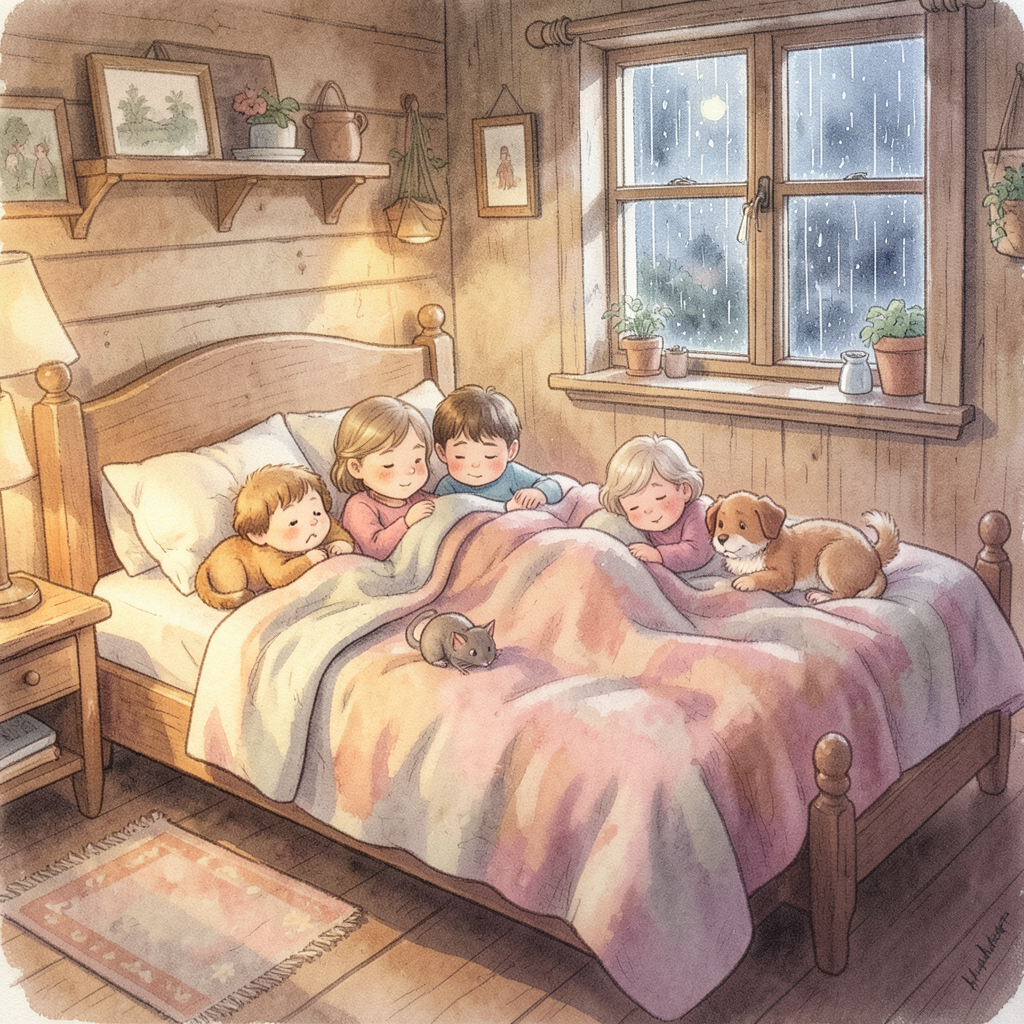
In a cozy house on a rainy afternoon, a snoring granny, a dreaming child, a dozing dog, a snoozing cat, and a slumbering mouse pile on top of each other in bed. Then a wakeful flea bites the mouse and sets off a chain reaction that wakes everyone up.
Themes
HumorBedtimePatterns
Best For
- Bedtime routines with toddlers who need a calm, cozy wind-down story
- Read-aloud sessions where you want children actively participating in repeating the refrain
- Rainy-day reading that matches the book's own rainy-afternoon atmosphere
- Introducing very young children to cause-and-effect storytelling in a funny, low-stakes way
- Families looking for a classic that holds up for multiple rereads across the toddler years
Why Parents Love This Book
Published in 1984, The Napping House has charmed generations of young readers with its perfect blend of cumulative storytelling, gentle humor, and lush illustrations. Audrey Wood's text is a masterclass in building tension through repetition — each new sleeper added to the pile raises the stakes just a little more, until the whole precarious stack is poised for comic collapse. Don Wood's paintings are a visual delight, shifting from cool blue-purple tones as everyone sleeps to warm yellow light as the chaos unfolds. That color shift is something children notice again and again, and it teaches them that pictures tell a story just as words do. The flea — tiny, wakeful, and unstoppable — is the perfect comic villain. The pileup of characters invites children to predict what comes next and to rehearse the increasingly long list of nappers. Decades after its debut, The Napping House remains a genuine read-aloud pleasure, funny for parents and irresistible for toddlers.
Reading Tips for Parents
Read this one slowly and let your child soak in Don Wood's illustrations before you turn each page. Point to the flea on every spread — it appears before it "officially" enters the story, which toddlers find thrilling. Use a drowsy, mumbling voice for the sleeping characters and a rising, surprised voice as the chain reaction unfolds; the contrast lands every time. Once your child knows the book, pause before each new animal and let them fill in the name. For bedtime use, stop at the peak of the pile and close the book — it works as a cozy sleep cue. For morning reading, let the full chaotic ending play out and talk about what just happened. The cumulative refrain is short enough for two-year-olds to memorize, so expect your child to "read" it back to you within a few sessions.
Awards & Recognition
- New York Times Best Illustrated Children's Book of the Year (1984)
- School Library Journal Best Book of the Year (1984)
Educational Value
This book helps children develop skills across multiple areas:
- Vocabulary: Introduces rich sleep-related synonyms — snoozing, dozing, slumbering, dreaming — expanding descriptive language well beyond simple words.
- Sequencing: The cumulative structure teaches children to track a specific order of events, building memory and narrative comprehension.
- Cause and Effect: The flea-bites-mouse chain reaction is an accessible and memorable introduction to the concept that small actions can have big consequences.
- Counting and Patterns: Children can count characters as they pile up and predict the repeating pattern, laying groundwork for early math thinking.
- Visual Literacy: Don Wood's deliberate shift from cool to warm color palettes across the book teaches children to read mood and meaning through illustration.
- Social-Emotional: The cozy pileup of family and pets models comfort, closeness, and the feeling of being safe and snug at rest.
Discussion Questions
Use these questions to spark conversation before, during, or after reading:
- Why do you think everyone in the house fell asleep? What makes you feel sleepy?
- Who do you think is the most important character in the whole story — the granny, or the flea? Why?
- The pictures change color during the book. Can you find where they go from blue to sunny yellow? Why do you think the artist did that?
- What do you think happened next, after everyone woke up? Do you think they all went back to sleep?
- If you could add one more animal to the pile, what would it be and where would it fit?
Content Notes for Parents
No content concerns. This is a warm, gently comic bedtime story with no scary, sad, or mature elements — the only "conflict" is a tiny flea causing a funny wake-up, which resolves happily.
Frequently Asked Questions
What age is The Napping House best for?
The book is ideal for children ages 2 to 5. Toddlers love the repetition and the silly pileup, while preschoolers start noticing the color changes in the illustrations and can retell the whole story from memory. It also works well as a lap book for babies who enjoy hearing a rhythmic, flowing read-aloud voice.
Is this a good book to read at bedtime?
It works beautifully at bedtime, especially if you read it in a slow, drowsy voice and stop just as the full pile is established. Some parents prefer it for morning because the chaotic, funny ending wakes everyone up laughing. Either way, it is a short enough read that you can do it twice in one sitting.
Are there any scary or upsetting parts I should know about?
There are no scary or upsetting moments. The flea biting the mouse might prompt a brief question about bug bites, but it is played entirely for comedy and the book ends with everyone cheerful and awake. It is one of the gentlest picture books in the cumulative-story tradition.
What books are similar to The Napping House that my child might also enjoy?
If your child loves the cumulative build-up, try There Was an Old Lady Who Swallowed a Fly or If You Give a Mouse a Cookie. For more Audrey and Don Wood collaborations with the same lush illustration style, look for Heckedy Peg and King Bidgood's in the Bathtub. For another gentle, cozy sleep-themed book, Goodnight Moon is a natural companion.
My child wants me to read this every single night. Is that okay?
Absolutely — repetition is how young children learn language, story structure, and the pleasure of reading. When a child requests the same book repeatedly, it means they are actively processing and internalizing it. You will likely find that within a few weeks your child can recite the refrain right along with you, which is a genuine early literacy milestone.