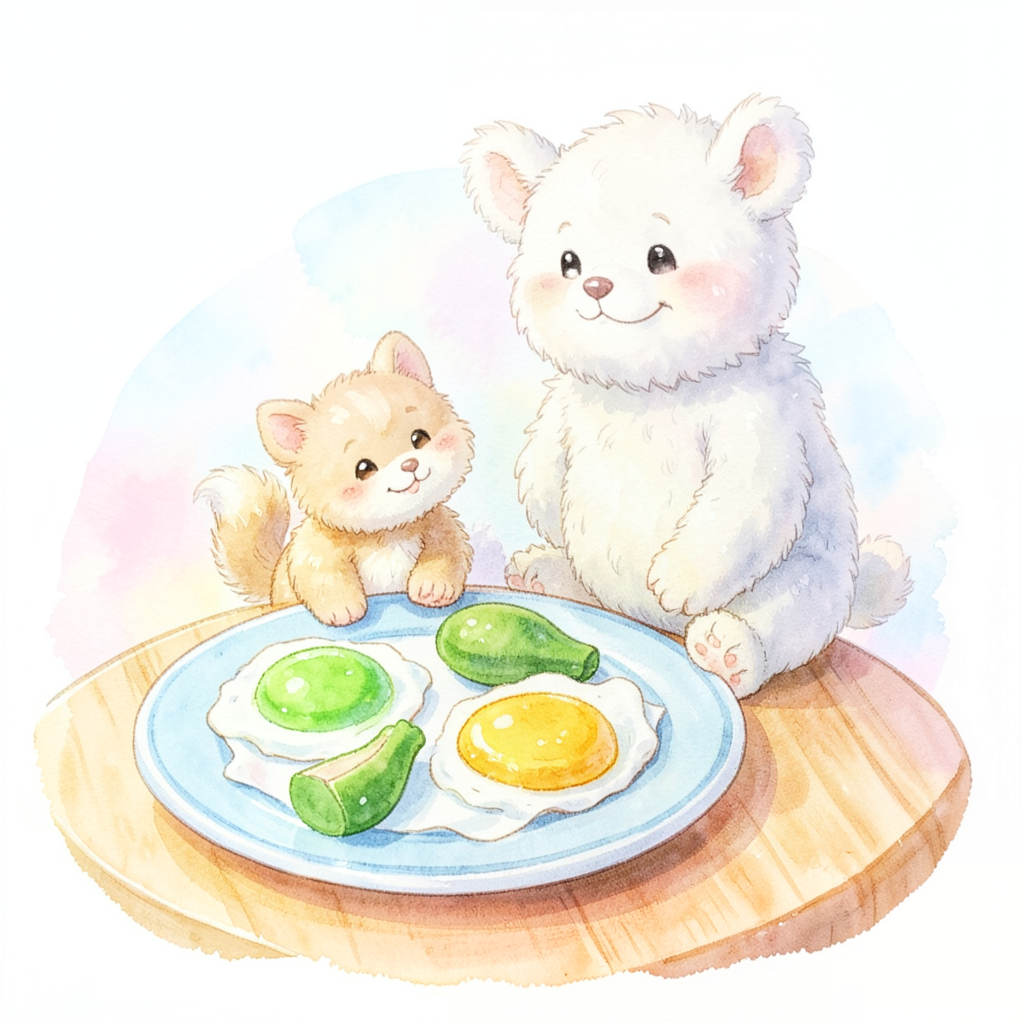
Green Eggs and Ham
About This Book
Sam-I-Am persistently offers green eggs and ham to a grumpy character who refuses to try them — in a house, with a mouse, in a box, with a fox — until he finally gives in and discovers he actually loves them. Written with only 50 different words, it's a masterclass in early reader engagement.
Themes
Trying New ThingsPersistenceHumor
Best For
- Children who are just beginning to read independently and need a confidence-building first book
- Picky eaters who need a light-hearted, low-pressure conversation starter about trying new foods
- Bedtime read-alouds that benefit from a strong rhythm and a satisfying, upbeat ending
- Families looking for a book that holds up to dozens of re-readings without losing its appeal
Why Parents Love This Book
Green Eggs and Ham has earned its place as one of the most beloved early readers of all time, and the reason is simple: it is genuinely funny, relentlessly rhythmic, and tells a story children understand at a gut level. Sam-I-Am is the world's most enthusiastic salesperson, and the grumpy unnamed narrator is every child who has ever pushed a vegetable to the edge of the plate. Dr. Seuss wrote the entire book using only 50 different words — a deliberate constraint that makes it perfect for brand-new readers while creating a propulsive, almost musical quality that makes reading aloud irresistible. The escalating absurdity of the settings (a boat, a train, in the rain, with a goat) builds genuine comic momentum, and the payoff — that he actually loves them — lands with a satisfying emotional punch. After more than six decades in print, it remains as fresh and funny as it did in 1960.
Reading Tips for Parents
Because this book uses only 50 unique words, it is an exceptional tool for children just beginning to decode text. Point to individual words as you read and let your child chime in once they recognize repeated phrases — "not in a box, not with a fox" will be memorized quickly. Pause before the final reveal and ask your child what they think will happen. After reading, connect the story to real life: ask if there is a food they have never tried. Many families report that this book has genuinely convinced reluctant eaters to sample something new, so have a snack on hand. For early readers ready to try solo reading, the limited vocabulary makes this one of the best first independent books — celebrate that milestone when it happens.
Awards & Recognition
- New York Times Best Seller — debuted at #1 and remained on the list for years after publication
- One of the best-selling children's books of all time, with over 200 million copies sold worldwide
Educational Value
This book helps children develop skills across multiple areas:
- Early reading: Written with only 50 unique words, the book is specifically designed to build reading confidence in beginning readers through repetition and pattern recognition.
- Phonics and rhyme: The consistent rhyme scheme (house/mouse, box/fox, train/rain) reinforces phonemic awareness and helps children hear how word families work.
- Vocabulary: Repeated exposure to simple, high-frequency words in varied sentence contexts helps cement early sight-word recognition.
- Social-emotional: The story models openness to new experiences and demonstrates that first impressions — and firm opinions — can turn out to be wrong.
- Persistence: Sam-I-Am shows children that gentle, enthusiastic persistence can open doors, a lesson relevant to both social situations and learning challenges.
- Sequencing and memory: The cumulative, repetitive structure of the story (adding new settings each round) builds early memory and narrative sequencing skills.
Discussion Questions
Use these questions to spark conversation before, during, or after reading:
- Why do you think the narrator kept saying no to Sam-I-Am? Have you ever said no to something before you tried it?
- Sam-I-Am never gave up. Was that a good thing or an annoying thing? Why?
- The story visits lots of silly places — a boat, a train, a house with a mouse. Which setting was your favorite, and why?
- At the end, the narrator loves green eggs and ham. Has there ever been a food or activity you thought you would hate, but ended up liking?
- If you were Sam-I-Am, what strange food would you want everyone to try?
Content Notes for Parents
There are no scary, sad, or mature elements in this book. The humor is gentle and wholly age-appropriate, and nothing in the content requires a parental heads-up.
Frequently Asked Questions
What age is Green Eggs and Ham best for?
The book is ideal for ages 4 through 7. Younger children (4-5) will love it as a read-aloud thanks to its rhythm and humor, while children aged 5-7 who are beginning to read will find the 50-word vocabulary genuinely manageable for solo reading. Many families return to it again and again across several years.
Can my child actually read this on their own?
Yes — this is one of the best first independent reading books available. Dr. Seuss wrote it in direct response to a challenge to create a compelling story using fewer than 50 words, so the vocabulary is deliberately controlled. A child who knows basic sight words and has some phonics foundation can typically work through most of this book with minimal help.
Is there anything in the book I should be aware of before reading it to my child?
Nothing at all. Green Eggs and Ham is gentle, funny, and entirely free of scary, sad, or mature content. It is one of the rare books that parents and children tend to enjoy equally.
Will this book actually help with picky eating?
Many parents report that it does — not as a magic fix, but as a natural opening for conversation. The story validates the feeling of not wanting to try something unfamiliar, then shows a relatable character discovering he was wrong. Pairing the book with a low-stakes tasting of something new (even a silly green-colored food) can make the connection concrete and fun.
What books should we read next if we love this one?
Other Dr. Seuss early readers in a similar spirit include 'Hop on Pop' for even earlier readers, 'One Fish Two Fish Red Fish Blue Fish' for comparable vocabulary, and 'The Cat in the Hat' as a natural next step up in length and complexity. Outside of Seuss, 'Elephant and Piggie' books by Mo Willems offer a similar blend of humor and accessible vocabulary.