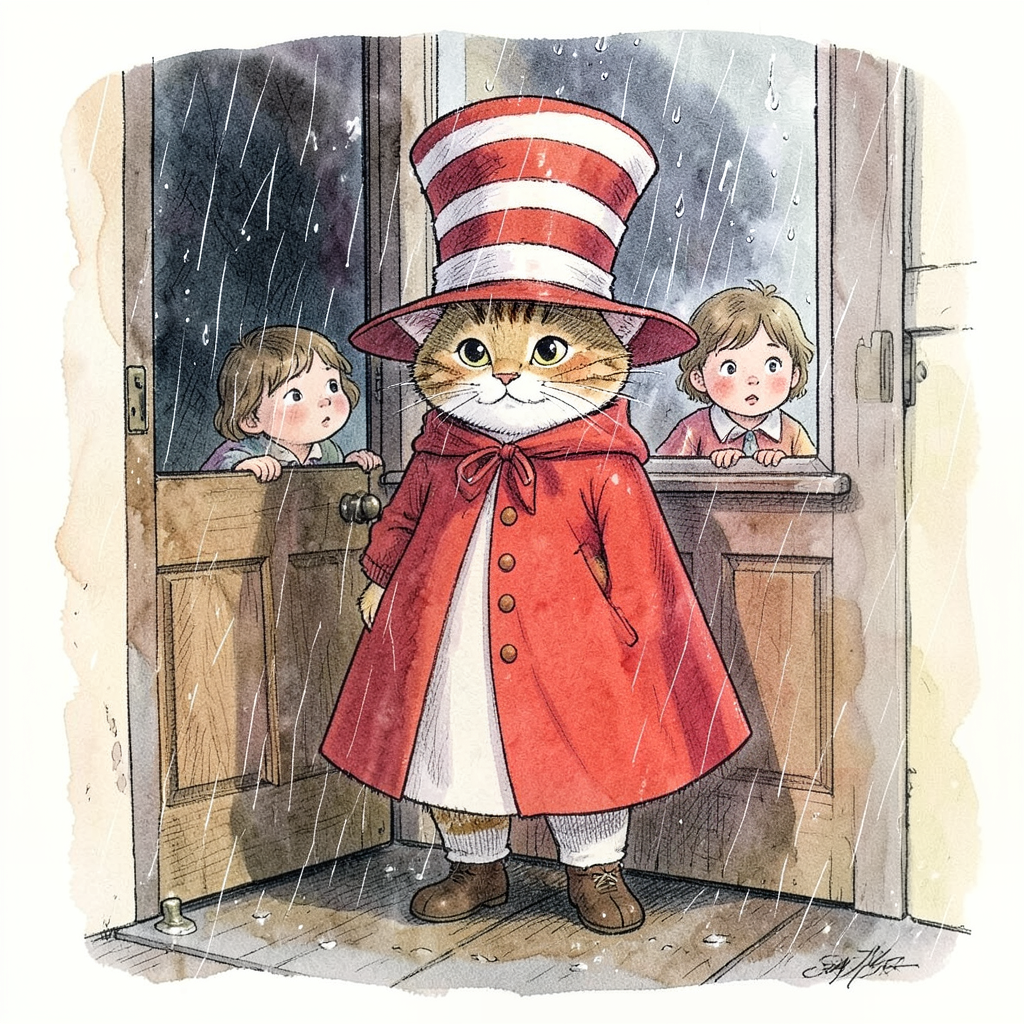
The Cat in the Hat
About This Book
On a rainy afternoon, two bored children receive an unexpected visit from a tall, mischievous cat wearing a striped hat, who proceeds to turn their house upside down with his outrageous games and his companions, Thing One and Thing Two.
Themes
HumorMischiefImagination
Best For
- Rainy-day reading when children are restless and need a story that matches their energy
- First independent reading milestones for early readers building decoding confidence
- Bedtime reads when you want a complete, satisfying story in a single short session
- Introducing reluctant readers to the idea that books can be genuinely funny and surprising
- Sparking conversations about rules, mischief, and responsibility with preschool and kindergarten-age children
Why Parents Love This Book
The Cat in the Hat has captivated children for nearly seven decades, and the reason is simple: it treats kids as capable readers without boring them to tears. Dr. Seuss wrote this book in 1957 as a direct challenge to the dull, repetitive primers of the era, using a deliberately limited vocabulary of around 236 words while still crafting a story with genuine narrative tension and laugh-out-loud humor. The Cat himself is a masterpiece of comic invention — anarchic, charming, and slightly alarming — and the push-pull between his wild energy and the children's growing anxiety about their mother's return creates real dramatic stakes. Thing One and Thing Two unleash glorious chaos, while the fish plays the voice of anxious reason that many children will secretly recognize in themselves. The ending, where the Cat tidies everything up and vanishes, rewards the child reader with a satisfying resolution that also poses a genuinely interesting moral question. It is a book that respects children's intelligence while never losing its sense of play.
Reading Tips for Parents
Read this one with energy — the Cat's rhyming couplets have a bouncy, theatrical rhythm that rewards vocal performance. Pause before turning pages so your child can predict the rhyme; this builds phonemic awareness naturally. Point out that the fish keeps objecting throughout the story and ask your child whether they agree with the fish or the Cat — this sparks surprisingly rich conversations about rules, fun, and responsibility. For early readers attempting the book independently, the controlled vocabulary makes it genuinely accessible; encourage them to run their finger under each line. The book is short enough to finish in a single sitting, making it ideal for an end-of-day read when attention spans are shorter. After reading, ask whether they would let the Cat into their house — the answers are always entertaining.
Awards & Recognition
- Selected for the American Library Association's list of most frequently banned or challenged books (reflecting its cultural impact)
- Named one of the 100 most important books of the 20th century by multiple publications including the New York Public Library
- Publishers Weekly ranked it among the best-selling children's books of all time
Educational Value
This book helps children develop skills across multiple areas:
- Vocabulary: Introduces playful, inventive language and demonstrates how rhyme and rhythm carry meaning, building phonemic awareness in early readers.
- Reading fluency: The controlled vocabulary of roughly 236 words is specifically designed to build decoding confidence in beginning readers without sacrificing story quality.
- Social-emotional: Explores the tension between following rules and giving in to fun, helping children think through concepts of responsibility and consequences.
- Critical thinking: The fish's running commentary invites children to evaluate competing perspectives and form their own moral judgments about the Cat's behavior.
- Narrative structure: The story has a clear beginning, escalating middle, and satisfying resolution, helping young children internalize how stories are shaped.
- Creativity and imagination: Thing One, Thing Two, and the Cat's inventions model imaginative, expansive play and encourage children to dream up their own wild scenarios.
Discussion Questions
Use these questions to spark conversation before, during, or after reading:
- Why do you think the fish was so worried about what the Cat was doing? Do you think the fish was right?
- If you were home alone on a rainy day and the Cat knocked on your door, would you let him in? Why or why not?
- The Cat cleaned everything up before Mom came home. Does that make the mischief okay, or was it still wrong?
- What game or trick would you invent if you had a magic box like the Cat's?
- How did the children feel at the beginning of the story when it was raining? Have you ever felt that way on a boring day?
Content Notes for Parents
There are no scary, sad, or violent elements in this book. The mischief escalates but is fully resolved by the end, and the overall tone is warm and comedic throughout.
Frequently Asked Questions
What age is The Cat in the Hat best for?
The book is ideal for ages 4 to 7. Younger children in the 4-5 range will love being read to and joining in on the rhymes, while children ages 5-7 who are beginning to read independently will find the controlled vocabulary genuinely accessible as a first solo read. Many children return to it happily well past age 7 for the pure fun of it.
Is this book appropriate for sensitive children who might find the chaos upsetting?
The mischief is loud and escalating, but the book wraps up with a complete and tidy resolution — the Cat cleans everything, and order is fully restored. There is nothing frightening, sad, or violent. Sensitive children may identify with the anxious fish, which can itself be a useful conversation starter about different personalities and comfort levels with rule-breaking.
Can my 5-year-old actually read this independently?
Yes, and that was very much Dr. Seuss's intention. The book was written using a restricted list of about 236 words chosen for early-reader vocabulary, which makes it one of the most genuinely readable beginner books available. A child who knows letter sounds and has done some early reading practice should be able to work through most of the text with only occasional help.
What books are similar to The Cat in the Hat that we could read next?
Other Dr. Seuss titles are the natural next step — Green Eggs and Ham uses an even smaller vocabulary and is slightly easier, while One Fish Two Fish Red Fish Blue Fish offers similar wordplay. Outside of Seuss, Mo Willems's Elephant and Piggie series shares the humor and accessible language. For children ready to move up slightly, Arnold Lobel's Frog and Toad books offer a similar warmth with more complex sentences.
Does the book have any educational value beyond entertainment?
Absolutely. Beyond the well-documented reading fluency benefits of its controlled vocabulary, the story gives children a rich framework for discussing rules, responsibility, and imagination. The fish's ongoing objections provide a natural entry point for ethical conversations that feel age-appropriate and fun rather than preachy. Many teachers use it in kindergarten and first-grade classrooms for exactly these reasons.