Hug
About This Book
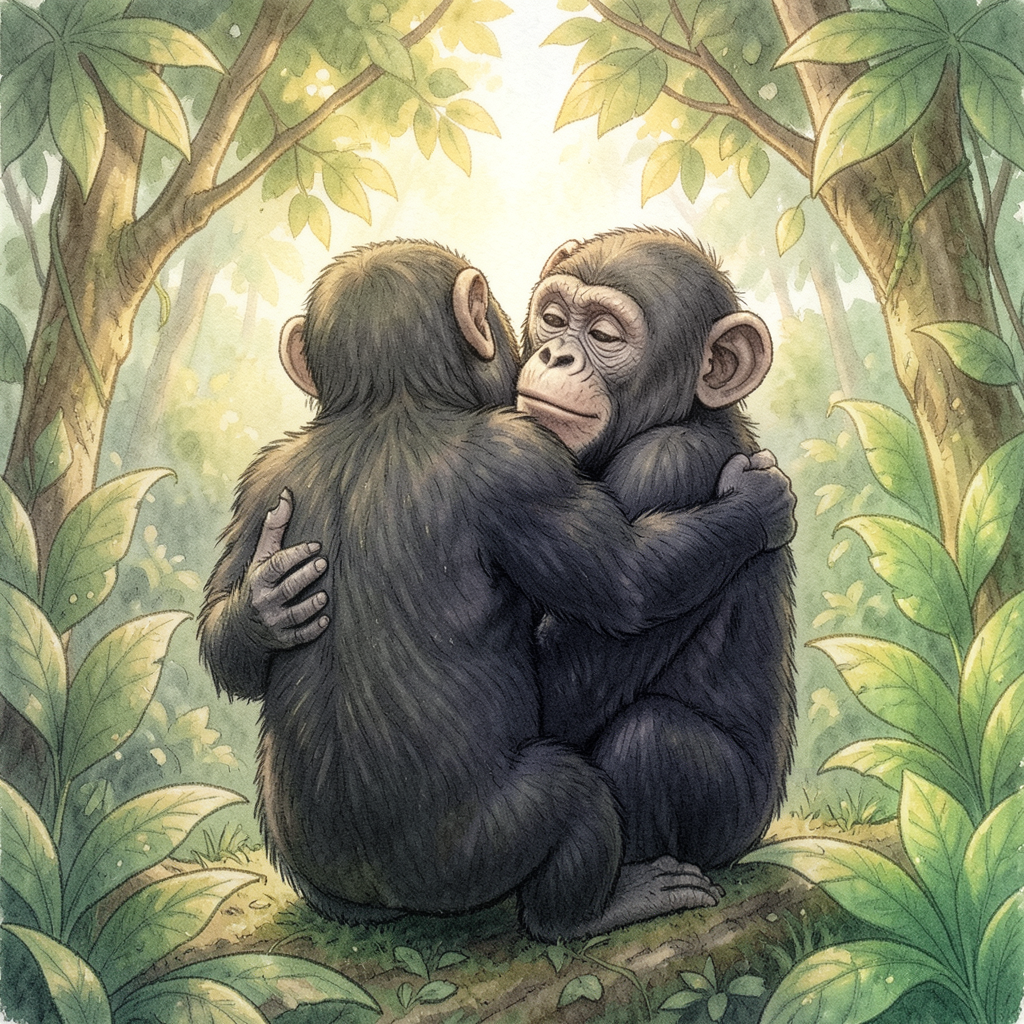
Bobo the chimpanzee wanders through the jungle watching every animal hug the one they love — and all he wants is a hug of his own. With almost no text beyond the single word 'Hug' (and eventually 'Mama'), Jez Alborough's expressive illustrations tell a universal story about longing and love that moves toddlers and parents alike.
Themes
LoveFamilyAnimals
Best For
- Bedtime reading, especially as a calming, love-affirming close to the day
- Children experiencing separation anxiety or starting daycare
- Very young toddlers and pre-readers who are not yet ready for text-heavy books
- Reading aloud in groups where children can point at and react to illustrations together
- Parents looking for a wordless or near-wordless book to build picture-reading skills
Why Parents Love This Book
Jez Alborough's "Hug" is a masterclass in minimalist storytelling. With a vocabulary of essentially two words — "hug" and "mama" — the entire emotional arc of longing, searching, and belonging is carried almost entirely by illustration. Bobo the chimpanzee's expressive face does extraordinary work, moving from wistful observation to mounting distress to pure joy, and even the youngest readers can follow every beat without a single explanatory sentence. The jungle setting gives Alborough room to parade a wonderfully diverse cast of animal pairs — elephants, hippos, giraffes, snakes — each locked in their own tender embrace, which only deepens Bobo's isolation. What makes the book genuinely enduring is its emotional honesty: Bobo's need for his mother is not softened or hurried. Children who have ever felt left out or longed for a parent recognize themselves immediately. The payoff — Mama's arms finally around Bobo — lands with a warmth that makes toddlers and parents alike want to read it one more time.
Reading Tips for Parents
Because the text is so spare, let the pictures lead. Slow down on each spread and give your child time to study the animals before turning the page. Point to Bobo's face and name his feeling — "He looks sad, doesn't he?" — to build emotional vocabulary naturally. When Mama finally appears, mirror the reunion with your own voice: a big exhale or a warm "there she is!" amplifies the emotional payoff. The book works beautifully as a bedtime read because it ends in comfort and closeness. After finishing, a real hug reinforces the story's message in the most tangible way. For children going through any kind of separation anxiety — starting daycare, a parent traveling — this book normalizes the feeling and reassures them that reunion always comes.
Awards & Recognition
- Shortlisted for the Kate Greenaway Medal (2000)
- New York Times Notable Children's Book
Educational Value
This book helps children develop skills across multiple areas:
- Social-emotional: Helps toddlers identify and name feelings like longing, sadness, and joy by reading facial expressions and body language in the illustrations.
- Vocabulary: Introduces the concept that a single word can carry enormous emotional meaning, laying groundwork for expressive language.
- Animal recognition: Features a rich variety of jungle animals — elephants, hippos, giraffes, crocodiles, snakes — offering natural opportunities for naming and learning.
- Pre-literacy: Demonstrates that pictures tell stories, building visual literacy and the habit of reading illustrations alongside (or instead of) text.
- Social-emotional: Validates separation anxiety and the deep need for parental comfort, giving children language and narrative to process those feelings.
Discussion Questions
Use these questions to spark conversation before, during, or after reading:
- Why do you think Bobo feels sad when he watches the other animals?
- Can you point to which animal you think gives the best hug?
- How does Bobo's face change from the beginning of the book to the end?
- Who do you want to hug right now, and why?
- What do you think Bobo and his mama will do after their big hug?
Content Notes for Parents
There are no scary, violent, or mature elements in this book. Bobo does become visibly distressed and cries before finding his mother, which is emotionally honest but age-appropriate and quickly resolved with a warm reunion.
Frequently Asked Questions
What age is this book best for?
Hug is ideal for children from about 9 months through age 3. Because it relies almost entirely on illustrations, even pre-verbal babies can engage with the expressive faces and colorful animals. Older toddlers often love 'reading' it independently by narrating what they see.
Is there too much text for a very young baby?
Not at all — the entire book contains only the words 'hug' and 'mama,' repeated a handful of times. It is one of the most accessible picture books ever published precisely because the story is told through pictures. There is no risk of losing a young child's attention to dense text.
My toddler is going through separation anxiety. Will this book help or make it worse?
Most parents find it helps. The book directly mirrors the feeling of wanting a parent and not having them right there, which validates what the child is experiencing. Crucially, it always ends in reunion and warmth, providing the reassurance that the parent will come back. Reading it together is itself a moment of closeness that reinforces the message.
Are there similar books to read alongside this one?
If your child loves Hug, try Alborough's other Bobo books — 'Yes' and 'Tall' — which use the same near-wordless style. 'Owl Babies' by Martin Waddell tackles separation anxiety with slightly more text for slightly older readers, and 'Mama, Do You Love Me?' by Barbara Joosse is another warm choice on the same theme.
Can this book work for a storytime group at a library or preschool?
It works exceptionally well in groups because the large, expressive illustrations read clearly from a distance. The near-absence of text means the reader can improvise narration to match the room's energy, and children naturally call out animal names and emotions as each page turns. It holds attention well even in groups of 10 to 15 toddlers.