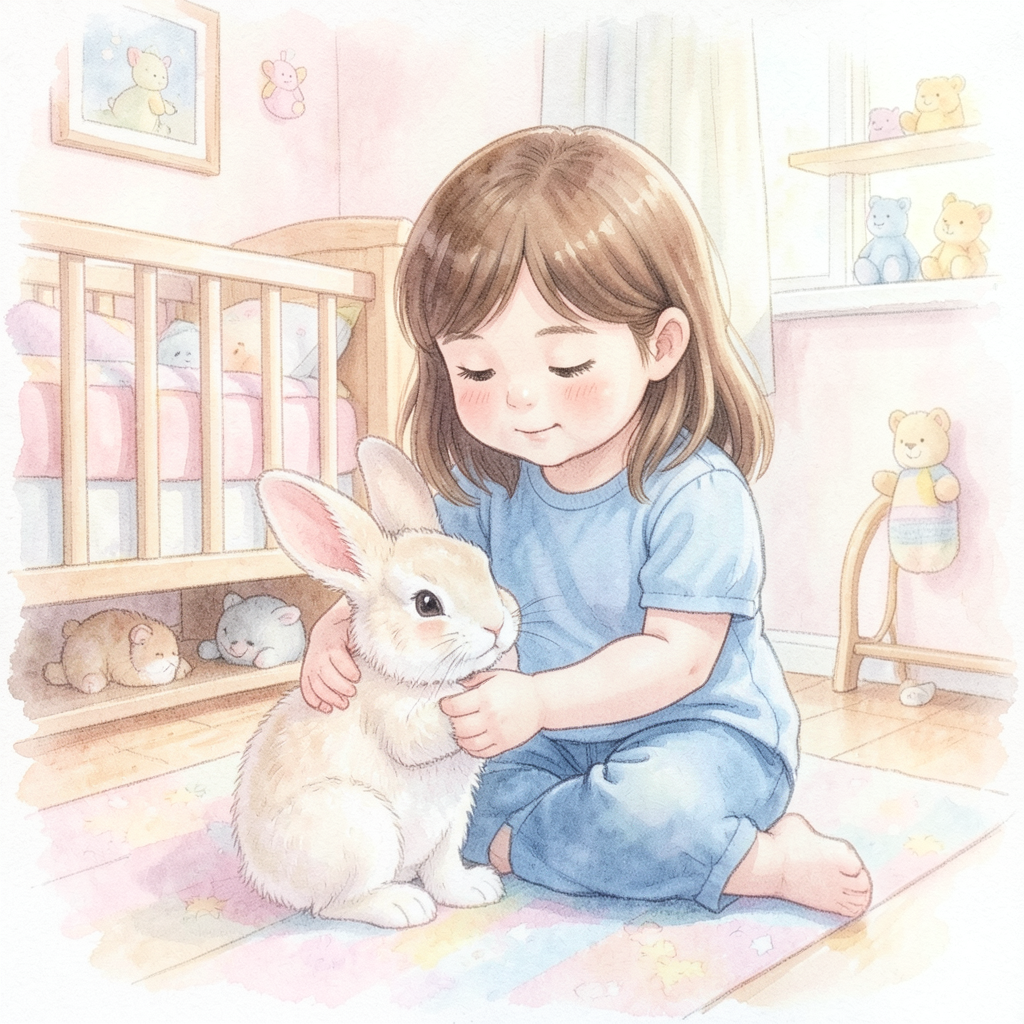
Pat the Bunny
About This Book
This interactive touch-and-feel book invites babies to pat a soft bunny, look in a mirror, feel daddy's scratchy face, and play peek-a-boo. One of the first interactive books ever published, it engages multiple senses and encourages active participation from the very youngest readers.
Themes
SensoryPlayFamily
Best For
- Infants from birth through 18 months
- Developing tactile and sensory awareness
- First interactive reading experiences
- Building parent-infant bonding through shared play
- Babies who are too young for narrative stories but love physical interaction
Why Parents Love This Book
Pat the Bunny is arguably the world's first truly interactive children's book, published in 1940 and still in print — a testament to its enduring genius. Dorothy Kunhardt understood something revolutionary: that infants learn through touch, not just sight. The book invites babies to pat a soft bunny, smell flowers, feel daddy's rough face, and play peek-a-boo. Each sensory activity maps to a real experience in a baby's daily life, making the book feel like an extension of play rather than "storytime." For parents, it's also a script — each page tells you exactly how to interact with your baby.
Reading Tips for Parents
Let your baby set the pace. Some pages will be favorites — many babies return obsessively to the soft bunny patch for months. That's perfect. The book doesn't need to be read front-to-back; it's more of a sensory toy than a narrative. The scratchy "daddy's face" page delights many babies precisely because it's surprising. For young infants, simply describe each sensation in your own words as they explore with their hands.
Awards & Recognition
- Over 6 million copies sold — one of the best-selling children's books of the 20th century
- New York Times Notable Books list
- Named one of the most influential children's books of all time by multiple publications
- Inducted into the Golden Dozen: Books That Changed Children's Literature
Educational Value
This book helps children develop skills across multiple areas:
- Tactile sensory development: soft, rough, and textured surfaces build sensory awareness
- Object permanence: peek-a-boo activity directly develops this key cognitive milestone
- Language acquisition: each page names a texture, action, or sensory experience
- Fine motor skills: lifting flaps, patting surfaces, and turning pages strengthen finger control
- Emotional bonding: shared interactive reading builds parent-infant attachment
- Cause and effect: pressing, patting, and lifting reveal responses — early logical thinking
Discussion Questions
Use these questions to spark conversation before, during, or after reading:
- Which page is your favorite to touch? Why does it feel that way?
- Can you find something soft like the bunny somewhere in your room?
- Who in our family might have a scratchy face like Daddy in the book?
- What do the flowers smell like to you?
- Can you play peek-a-boo with me like Paul does in the book?
Content Notes for Parents
No content concerns. This is a gentle, warm sensory book for the very youngest children. All content is wholesome and depicts loving family interactions.
Frequently Asked Questions
What age is Pat the Bunny appropriate for?
Pat the Bunny is designed for infants from birth through about 2 years old. Even newborns benefit from a parent reading and describing the textures while guiding tiny hands. The interactive elements become most engaging from around 4–6 months as babies develop intentional reaching and grasping. By 18–24 months, most toddlers begin exploring more complex books alongside it.
Is Pat the Bunny durable enough for babies to handle?
The board book edition is designed for baby hands, but the soft bunny patch and other interactive elements do show wear over time with very enthusiastic use. It's best treated as a supervised-reading book rather than a chewing toy. The delicate interactive elements — particularly the mirror and the flap — benefit from gentle guidance. Most copies last through the baby years with normal use.
Why is there a mirror in Pat the Bunny?
The mirror page ("Judy can see herself in the mirror") taps into one of the most captivating things for infants: their own face. Babies around 4–6 months begin to recognize faces, and a small mirror in a book creates a moment of delighted self-recognition that many infants return to repeatedly. It's also a gentle introduction to self-awareness — a key developmental milestone.
Are there other books similar to Pat the Bunny?
Yes — "That's Not My..." series by Usborne Books offers similar tactile experiences with bumpy, scratchy, and smooth textures for each animal. "Baby Touch and Feel" series by DK covers animals, faces, and objects with similar interactive patches. For older infants, "Dear Zoo" by Rod Campbell introduces lift-the-flap mechanics that build on the interactive skills developed with Pat the Bunny.