Knuffle Bunny
About This Book
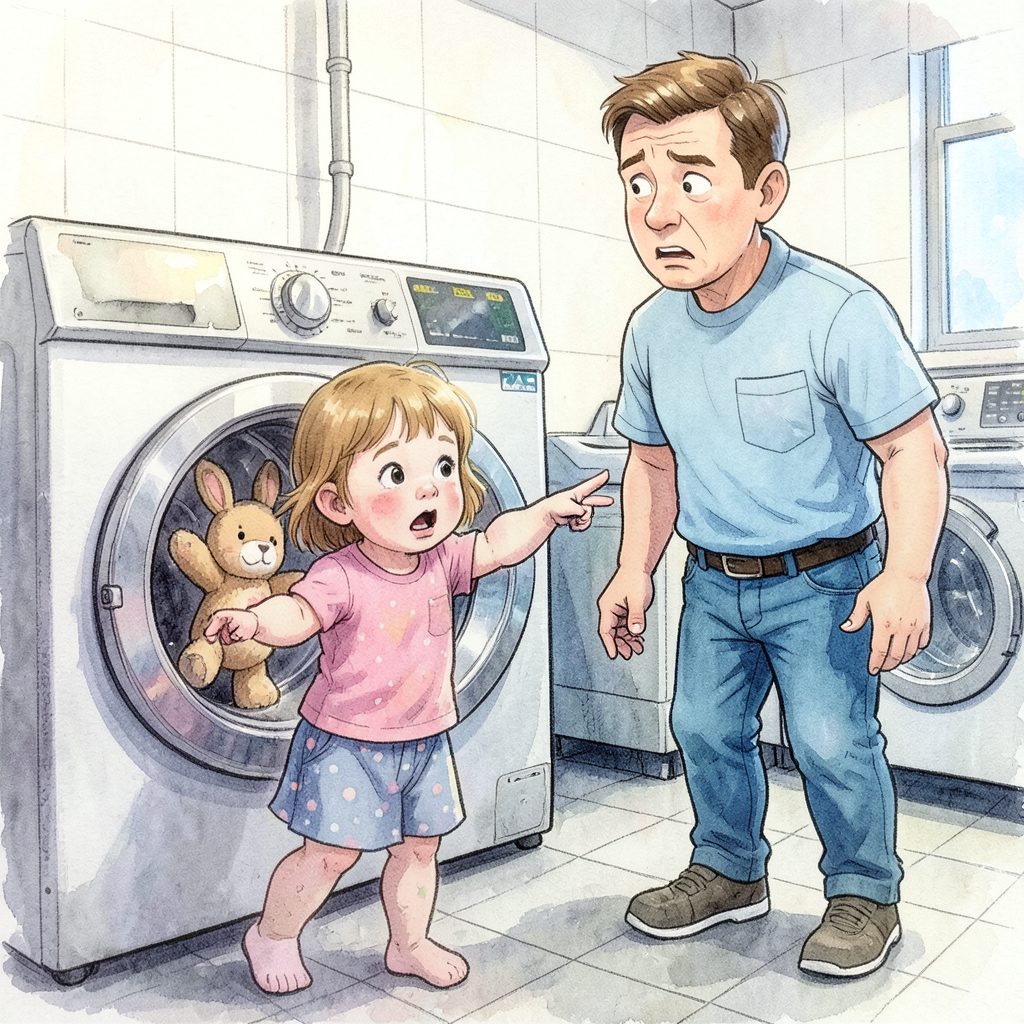
Trixie and her daddy go on an errand to the laundromat. On the way home, Trixie realizes something is wrong — her beloved Knuffle Bunny is missing! She tries to tell her daddy, but since she can't talk yet, she goes 'boneless' and babbles desperately until they rush back to find the stuffed bunny in the washing machine.
Themes
FamilyCommunicationHumor
Best For
- Toddlers who are going through the pre-verbal or early-verbal stage and struggle to communicate their needs
- Children who have a beloved comfort object like a stuffed animal or blanket
- Parents looking for a book that acknowledges toddler frustration without talking down to the child
- Bedtime or storytime reads that are short enough to hold a one- to three-year-old's attention
- Families who enjoy silly read-alouds with sound effects and participation
Why Parents Love This Book
Knuffle Bunny works because it captures something achingly true about toddlerhood: the total frustration of having urgent feelings and no words to express them. Mo Willems blends sepia-toned photographs of his Brooklyn neighborhood with cartoon characters drawn on top, creating a visual style that is instantly distinctive and surprisingly warm. The result feels both rooted in real life and delightfully exaggerated. Trixie going "boneless" — that limp, dramatic collapse every parent recognizes — is one of the funniest and most accurate depictions of toddler behavior in picture book history. Daddy is portrayed as genuinely well-meaning but clueless, which makes the eventual lightbulb moment deeply satisfying. There is also something quietly remarkable about the book centering a pre-verbal child as a full protagonist with real agency, even if that agency is expressed entirely in gibberish. The story is short enough for restless toddlers and funny enough that parents actually enjoy the tenth read-through.
Reading Tips for Parents
This book is ideal for reading aloud with children ages one through four. When you reach the pages where Trixie babbles, try imitating her sounds out loud — toddlers light up when adults play along. Pause on the spread where Daddy misreads Trixie's distress and ask your child what they think she is trying to say. If your child has a special stuffed animal or comfort object, connect the story to that toy by name. The sepia photograph backgrounds are great for pointing out neighborhood details: the sidewalk, the laundromat machines, the park. For children who are just starting to talk, this book naturally opens a conversation about learning to use words. A follow-up prompt like "What do you do when I don't understand you?" can spark meaningful dialogue even with very young children.
Awards & Recognition
- Caldecott Honor Book, 2005
- New York Times Bestseller
Educational Value
This book helps children develop skills across multiple areas:
- Vocabulary: Introduces expressive words like 'boneless,' 'laundromat,' and 'errand,' giving toddlers and early readers new language for everyday experiences.
- Social-emotional: Validates the frustration of not being understood, helping children feel seen during a very real developmental challenge.
- Communication: Demonstrates that communication is a two-way effort and that being misunderstood is a shared human experience, not a personal failure.
- Visual literacy: The mixed-media artwork — photographs layered with cartoons — encourages children to look closely and distinguish between drawn figures and real backgrounds.
- Family dynamics: Shows a loving, imperfect parent-child relationship where Daddy tries his best and eventually gets it right, modeling realistic family interactions.
- Humor and resilience: The comic resolution teaches children that overwhelming moments can have happy endings, and that humor is a healthy way to process big feelings.
Discussion Questions
Use these questions to spark conversation before, during, or after reading:
- Why do you think Trixie couldn't make Daddy understand what was wrong? What was she trying to tell him?
- Have you ever felt like no one understood what you were saying or what you needed? What did that feel like?
- Trixie goes 'boneless' when she is very upset. What do you do when you feel really frustrated?
- If you lost your favorite toy or stuffed animal, what would you do to find it?
- Why do you think Daddy finally understood when they got home? What changed?
Content Notes for Parents
There are no scary, violent, or mature elements in this book. The only emotional intensity is Trixie's toddler distress at losing her bunny, which is played for humor and resolves happily — this is actually a feature, not a concern, as it helps children feel their own big feelings are normal and manageable.
Frequently Asked Questions
What age is Knuffle Bunny best for?
The sweet spot is roughly ages one to four. Very young toddlers respond to the expressive faces and sounds, while three- and four-year-olds can follow the full story and often find Trixie's meltdown genuinely funny. Older children who are early readers also enjoy it, particularly if they remember being pre-verbal.
Is this book too long for a one-year-old?
No — the story moves quickly and the pages are visually interesting. Most one-year-olds will engage for at least part of it. You can also read selectively, lingering on the funny spreads and moving quickly through the quieter pages to match your child's attention span that day.
Are there any scary moments I should prepare my child for?
Not at all. Trixie is clearly distressed when she cannot find Knuffle Bunny, but the tone is comedic throughout and the bunny is found within a few pages. Children who are sensitive about lost toys may briefly feel worried, but the reassuring resolution comes quickly.
Is there a sequel?
Yes — Mo Willems wrote two sequels: Knuffle Bunny Too: A Case of Mistaken Identity (2007), a Caldecott Honor Book, and Knuffle Bunny Free: An Unexpected Diversion (2010), which brings the trilogy to a bittersweet and memorable close. The sequels follow Trixie as she grows older, so they work beautifully read in order.
What makes the artwork unusual compared to other picture books?
Mo Willems photographed his actual Brooklyn neighborhood and then drew the cartoon characters on top of the real photos. The result is a unique mix of documentary realism and playful illustration that stands out immediately. Children often enjoy spotting real-world details — street signs, storefronts, laundromat machines — alongside the drawn figures.