Make Way for Ducklings
About This Book
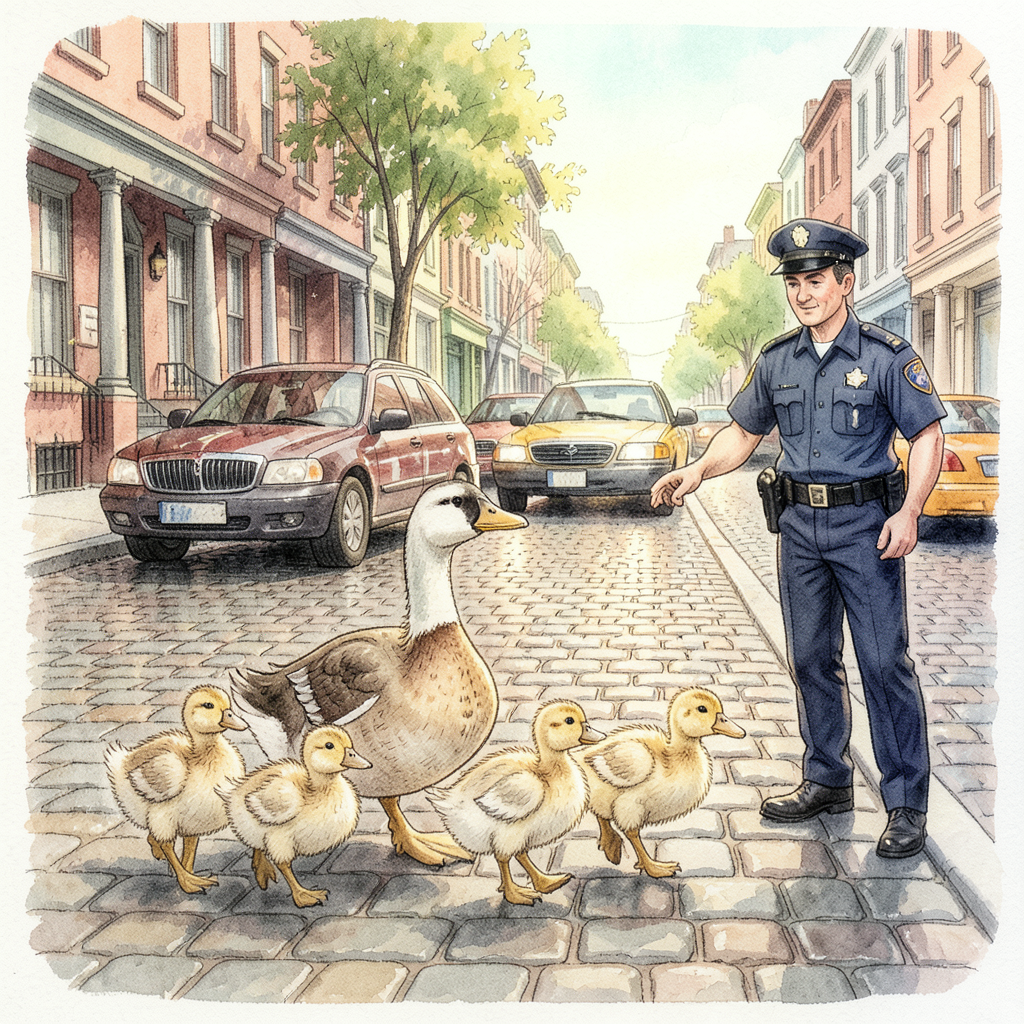
Mr. and Mrs. Mallard search for the perfect place to raise their family in Boston. After settling on an island in the Charles River and hatching eight ducklings, Mrs. Mallard leads her brood through the busy streets to the Public Garden, with a friendly policeman stopping traffic for them.
Themes
FamilyNatureCommunity
Best For
- Bedtime read-alouds for ages 3-6 who enjoy repetition and animal characters
- Introducing young children to the concept of family teamwork and finding a home
- Classroom or library story time when studying community helpers or city life
- Families visiting or living in Boston who want a literary connection to the city
- Children who are about to move or start somewhere new and need a gentle story about finding the right place
Why Parents Love This Book
Robert McCloskey's Make Way for Ducklings has charmed readers since 1941, and the reasons are as clear as ever. At its heart, this is a story about two devoted parents doing whatever it takes to find a safe home for their family — a theme that resonates deeply with young children and the adults reading aloud to them. The Mallards scout Boston with the determination of any house-hunting couple, and when Mrs. Mallard leads her eight ducklings — Jack, Kack, Lack, Mack, Nack, Ouack, Pack, and Quack — through the city streets, the procession is both hilarious and genuinely moving. McCloskey's sweeping pencil illustrations capture the scale of Boston with warmth and precision, making the city feel alive. The book also gives children a rare gift: animal characters who are competent and brave rather than helpless. Mrs. Mallard knows exactly where she is going, and she gets there. That quiet confidence, wrapped in a gentle adventure through a real American city, is what keeps this book on shelves generation after generation.
Reading Tips for Parents
Read the duckling names — Jack, Kack, Lack, Mack, Nack, Ouack, Pack, and Quack — slowly and rhythmically each time they appear. Children love the pattern and will start chanting along. Pause on McCloskey's full-spread illustrations so kids can trace the ducklings' route through Boston's streets; pointing to cars, buildings, and the policeman builds visual literacy. After a first read, try asking your child to retell the story in order — the clear narrative arc makes it great for sequencing practice. If you visit or live near Boston, the real-life bronze duck statues in the Public Garden make a wonderful field trip connection. For children who are anxious about new places or transitions, the Mallards' confident search for the right home can open a reassuring conversation.
Awards & Recognition
- Caldecott Medal, 1942 — awarded by the American Library Association for distinguished illustration in an American picture book
- Ranked among the New York Public Library's 100 Great Children's Books for the 100th anniversary list
- Massachusetts designated it the official children's book of the Commonwealth in 2003
Educational Value
This book helps children develop skills across multiple areas:
- Vocabulary: Introduces words like 'molt', 'island', 'Public Garden', and 'traffic' in meaningful context, building urban and nature vocabulary simultaneously.
- Sequencing and narrative structure: The story follows a clear beginning-middle-end arc — searching, nesting, hatching, journeying — making it ideal for practicing retelling in order.
- Phonological awareness: The eight duckling names form a rhyming, patterned list that trains children's ears to hear sound similarities and differences.
- Social-emotional learning: Models cooperation between partners (Mr. and Mrs. Mallard) and community helpfulness (Michael the policeman) without being preachy.
- Geography and civic awareness: Set in identifiable Boston landmarks, the book introduces the idea that cities have parks, rivers, police officers, and public spaces designed for everyone.
- Science and nature: Depicts the mallard duck life cycle — mating, nesting, egg-laying, hatching, and raising young — accurately and accessibly for young children.
Discussion Questions
Use these questions to spark conversation before, during, or after reading:
- Why did Mr. and Mrs. Mallard keep looking for a new home instead of staying in the first place they found? What were they looking for?
- How do you think the ducklings felt walking through all those busy cars and people? Have you ever been somewhere that felt big and a little scary?
- Michael the policeman stopped traffic to help the ducks cross the street. Can you think of a time someone helped you when you needed it?
- The ducklings are named Jack, Kack, Lack, Mack, Nack, Ouack, Pack, and Quack. If you were a duckling in the family, what would your name be?
- At the end, the Mallard family lives on the island in the Public Garden. Do you think that was a good home? What makes a place a good home?
Content Notes for Parents
There are no scary, sad, or mature elements in this book. The only mild tension comes when the ducklings must cross a busy street, but a kind policeman resolves it quickly and cheerfully.
Frequently Asked Questions
What age is Make Way for Ducklings best for?
The book is most enjoyed by children ages 3 to 7. Toddlers love the duckling names and illustrations, while children in kindergarten and first grade can fully follow the plot and discuss the themes. The language is accessible but not dumbed-down, so it holds up well for multiple readings across those years.
Is the book too long for young children?
It is longer than a typical board book at around 68 pages, but the pages are largely illustration-driven and the read-aloud pace is comfortable at 10 to 15 minutes. Breaking it into two sittings is perfectly fine for younger or more restless listeners. Most children ages 4 and up can comfortably sit through it in one go.
Are there any scary or upsetting moments I should prepare my child for?
There is nothing frightening or sad in this book. The closest moment to tension is when Mrs. Mallard leads her ducklings into heavy Boston traffic, but a policeman immediately steps in to help and the scene resolves happily. It is a very gentle story overall.
My child loves this book. What should we read next?
Children who enjoy Make Way for Ducklings often love other classic picture books with animal families and gentle city or nature settings. Try Blueberries for Sal by Robert McCloskey (the same author), The Story of Ferdinand by Munro Leaf, or Ping by Marjorie Flack, which also follows a young bird on a journey.
Is this book only relevant for kids who know Boston?
Not at all. While the Boston setting adds richness for families who know the city, the story's appeal is universal — it is about parents protecting their babies and a community coming together to help. Children everywhere connect with those themes, and the detailed illustrations make Boston feel like a vivid, welcoming place rather than an unfamiliar one.