Fateh Singh and the Saturday Kitchen
About This Book
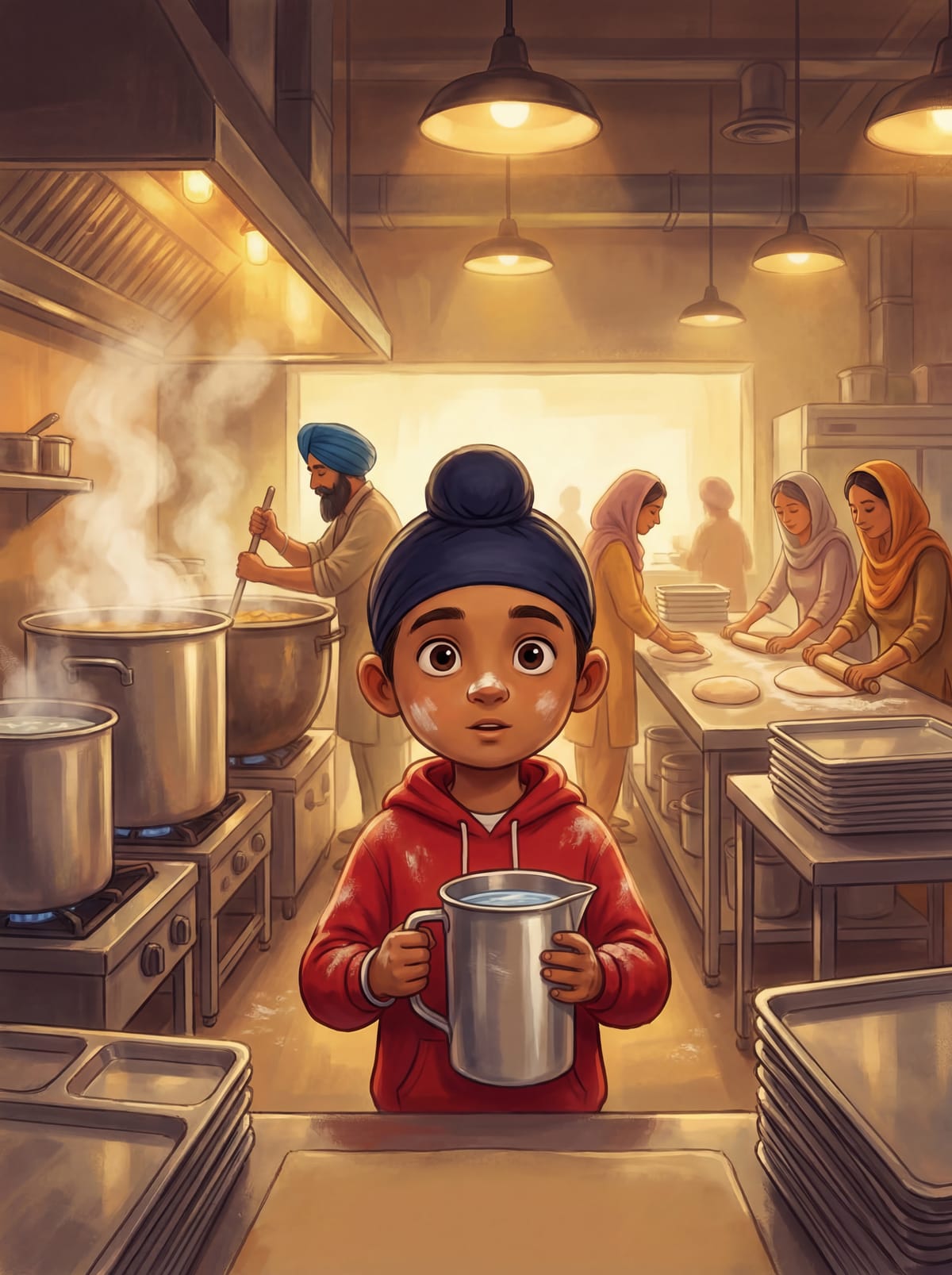
Every Saturday morning, Fateh Singh's grandmother wakes up early and heads to the community kitchen to cook for anyone who is hungry. Fateh doesn't understand — nobody asked her to, and nobody pays her. 'But why?' he asks, three times. When his grandmother finally takes him along and he sees the smiles on people's faces, Fateh begins to understand that the joy of giving doesn't need a reason. An eight-chapter story with discussion questions and a Punjabi glossary.
Themes
KindnessCommunityFamily
Best For
- Families looking for books that reflect Sikh or South Asian cultural traditions
- Parents wanting to introduce the concept of volunteering or community service to young children
- Early independent readers ready for their first chapter book
- Saturday morning read-alouds before or after a family cooking activity
- Classroom or library units on kindness, community, and giving
Why Parents Love This Book
Fateh Singh and the Saturday Kitchen captures something rare in children's literature: the quiet, unexplained generosity that children observe in their elders and struggle to make sense of. Fateh's repeated question — "But why?" — is exactly the question every curious child asks when they see an adult doing something that earns no obvious reward. The grandmother never lectures. She simply takes him along, and the smiles of strangers do the explaining. That structural choice is elegant and emotionally true. The Punjabi Sikh tradition of langar (community kitchen) forms the heart of the story without ever feeling like a culture lesson. It is a story first, and an introduction to a beautiful practice second. The eight-chapter format with discussion questions makes this book unusually versatile — it works as a read-aloud picture book for young children and as an early chapter book for newly independent readers. The Punjabi glossary adds genuine educational texture without slowing the story down.
Reading Tips for Parents
Read this book on a Saturday morning if you can — the timing makes the story feel immediate and real. Pause after each of Fateh's three "But why?" questions and let your child answer before his grandmother does. Children often surprise parents with their instinctive understanding of generosity. The Punjabi glossary at the back is worth exploring together; pronouncing the words out loud, even imperfectly, models cultural curiosity. After finishing, consider asking whether your family does anything like what the grandmother does, however small. If your child is 6 or 7 and reading independently, the eight-chapter structure makes this a satisfying first solo chapter book. Discussion questions are included in the book itself, so you do not need to prepare separately.
Awards & Recognition
- No major awards have been identified for this title as of 2024
- Verify current recognition status directly with the publisher before citing any award
Educational Value
This book helps children develop skills across multiple areas:
- Social-emotional: Explores empathy and the intrinsic motivation behind acts of service, helping children understand giving without expectation of reward.
- Vocabulary: Introduces Punjabi words through an embedded glossary, building early cross-cultural literacy and vocabulary skills.
- Character development: Fateh's journey from confusion to understanding models how children's perspectives can shift through direct experience rather than explanation.
- Community awareness: Introduces the concept of community kitchens and volunteer service in an age-appropriate, story-driven way.
- Reading stamina: The eight-chapter format helps early readers build the habit of following a longer narrative across multiple sittings.
- Critical thinking: Discussion questions included in the book invite children to connect the story to their own lives and values.
Discussion Questions
Use these questions to spark conversation before, during, or after reading:
- Why do you think Fateh asks 'But why?' three times? Have you ever done something nice for someone without being asked?
- How do you think Fateh felt when he saw the smiles on people's faces at the kitchen? What would you have felt?
- Fateh's grandmother wakes up early every Saturday. Why do you think she keeps doing it even when it is hard?
- If you could help cook or serve food to people who are hungry, what would you make?
- What does it mean to give something without expecting anything back? Can you think of a time someone did that for you?
Content Notes for Parents
This book contains no scary, sad, or mature content. It is a gentle, warmhearted story with no elements that require parental screening.
Frequently Asked Questions
What age is this book best suited for?
The publisher targets ages 4 to 7. As a read-aloud it works well from age 4, with the illustrations and simple emotional arc carrying younger listeners. Children ages 6 to 7 who are beginning to read independently will find the eight-chapter structure a satisfying early chapter book challenge.
Do we need to be Sikh or Punjabi to enjoy this book?
Not at all. The story's core question — why do people help strangers for free? — is universal. The Punjabi glossary and cultural setting add richness, and most children find it exciting to encounter new words and traditions. This book works well as a window into Sikh community values for families of any background.
Is this a picture book or a chapter book?
It sits comfortably between the two. It is structured as eight short chapters with discussion questions, making it longer than a standard picture book. It is an excellent bridge book for children moving from picture books to early chapter books, and it also works beautifully as a multi-session read-aloud.
Are there any upsetting or scary parts?
No. The book is entirely gentle in tone. There is no conflict, loss, or frightening content. The emotional weight comes from warmth and discovery rather than tension or sadness.
What books would we enjoy next if our child loves this one?
Children who connect with this book's themes of community generosity and family tradition may enjoy Last Stop on Market Street by Matt de la Pena or The Invisible String by Patrice Karst. For more Sikh and Punjabi cultural stories, look for other titles from the Maastarji catalog.