Maniac Magee
About This Book
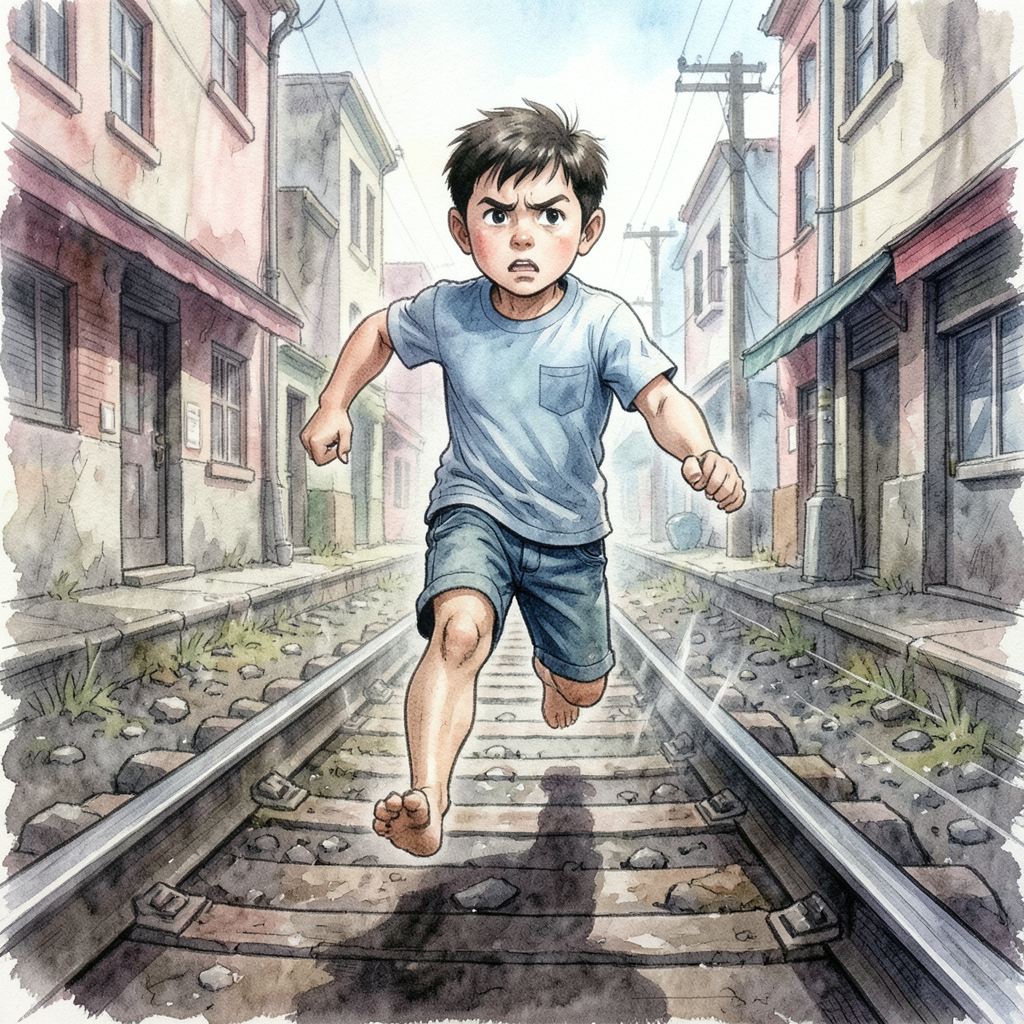
Jeffrey Lionel Magee — known everywhere as Maniac — can run faster than a legend, hit any pitch, and untie the world's most impossible knot. But what he cannot do is find a home in a town divided by race. Jerry Spinelli's Newbery Medal novel is a tall-tale fable about a boy who crosses every line people draw and asks, simply, why they were drawn in the first place.
Themes
RaceBelongingHomelessness
Best For
- Children ages 10–12 ready to grapple with questions of race, fairness, and belonging in an engaging story format
- Classroom read-alouds or book clubs where guided discussion can follow the text
- Families who want a conversation-starter about segregation and American history without a dry, textbook approach
- Readers who love underdog heroes and larger-than-life adventure woven into realistic emotional stakes
- Kids who have read Spinelli's other work (like Wringer or Loser) and want more of his voice
Why Parents Love This Book
Maniac Magee has endured for more than three decades because it does something rare: it tells the truth about racial division through the eyes of a child who simply refuses to see the lines adults have drawn. Jerry Spinelli wraps a serious subject inside an irresistible tall tale, giving readers a hero who is part myth and part lonely boy searching for a family. Jeffrey "Maniac" Magee can outrun dogs, untangle any knot, and hit any pitch — feats that feel larger than life — yet none of those gifts can protect him from a town split between the East End and the West End. That tension between Maniac's almost magical abilities and his very real vulnerability is what makes the book so emotionally honest. Spinelli never lectures; he lets Maniac's bewilderment about segregation speak louder than any sermon. The result is a story that sparks genuine conversation about fairness, belonging, and what it truly means to find a home.
Reading Tips for Parents
Before reading, briefly explain that the story is set in a Pennsylvania town where Black and white residents live in separate neighborhoods — context that helps children understand why Maniac's boundary-crossing matters. The novel's tall-tale style means some events are deliberately exaggerated; pausing to ask "could that really happen?" builds critical thinking. The themes of homelessness and loss of family are handled gently but honestly, so be ready for questions if your child has experienced family instability. Chapter lengths are short, making this a comfortable read-aloud in daily installments for ages 8–9, while strong independent readers ages 10–12 will race through it on their own. Keep a map of "Two Mills" handy — drawing East End and West End on paper helps children visualize the divide Maniac keeps crossing.
Awards & Recognition
- Newbery Medal, 1991 (American Library Association)
- Boston Globe–Horn Book Award, Fiction, 1990
Educational Value
This book helps children develop skills across multiple areas:
- Social-emotional learning: Models empathy across racial and class divides, showing how one person's open-mindedness can challenge a whole community's assumptions.
- Vocabulary: Rich, inventive language — including words like 'legend,' 'apartheid,' and 'cobbled' — expands reading comprehension for middle-grade students.
- History and social studies: Introduces the concept of de facto racial segregation in the United States in an accessible, story-driven way, prompting deeper inquiry.
- Literary analysis: The tall-tale and fable structure gives students an entry point for discussing narrative genre, hyperbole, and the difference between myth and reality.
- Character development: Maniac's arc from orphan to community bridge-builder demonstrates resilience and the courage to question social norms.
- Critical thinking: The novel's ambiguous, open-ended resolution encourages readers to form and defend their own interpretations of what 'home' and belonging mean.
Discussion Questions
Use these questions to spark conversation before, during, or after reading:
- Why do you think the people of Two Mills were so surprised every time Maniac crossed from one side of town to the other? What does that tell us about the town?
- Maniac is great at many things, but what is the one thing he wants most that he cannot seem to get? How did that make you feel?
- Grayson and Maniac form an unlikely friendship. What did each of them give the other? Have you ever had a friend who was very different from you?
- The book is written like a legend or tall tale. Which of Maniac's feats seemed the most impossible to you? Why do you think the author chose to write it that way?
- At the end of the story, do you think Maniac finally finds what he was looking for? What would home mean to you if you had no family?
Content Notes for Parents
Maniac is orphaned early in the book and spends much of the story homeless and lonely, which may be emotionally affecting for sensitive readers or children with experience of family loss. Racial prejudice is depicted honestly — characters use slurs and act in fear of people different from them — making this book a valuable but potentially heavy conversation starter for families.
Frequently Asked Questions
What age is Maniac Magee really appropriate for?
The book is generally recommended for ages 8–12, but the themes of racial prejudice, homelessness, and family loss land most powerfully — and can be discussed most fully — with readers around ages 10–12. Younger readers in the 8–9 range can enjoy the adventure and tall-tale humor, but they benefit most from a parent or teacher reading alongside them to provide context.
Does the book contain racial slurs or offensive language?
Yes. Spinelli depicts the racism of Two Mills honestly, and characters use language that reflects that prejudice. The slurs are not gratuitous — they serve to show Maniac's world as it really is — but parents should be prepared to discuss them. Many teachers and parents find this an opportunity to talk about why such language is harmful and how it was (and sometimes still is) used.
My child is a sensitive reader. Is the homelessness storyline too sad?
Maniac's longing for a home is the emotional core of the book, and it is genuinely moving. There are moments of real loss, including the death of a beloved character. Spinelli handles these with care, but if your child is particularly sensitive to stories about orphans or homelessness, read the first few chapters together so you can gauge their reaction before they continue solo.
What books are similar to Maniac Magee that we could read next?
Readers who love Maniac Magee often enjoy Bud, Not Buddy by Christopher Paul Curtis (another Newbery winner about a resourceful boy searching for family), The One and Only Ivan by Katherine Applegate for the same blend of fable and emotional depth, or Spinelli's own Wringer for more of his trademark moral courage in a young protagonist.
Is this book part of a series?
No, Maniac Magee is a standalone novel. Jerry Spinelli has written many other beloved middle-grade books — including Wringer, Loser, and Stargirl — but Maniac's story is complete in this single volume, which makes it a satisfying, self-contained read.