New Kid
About This Book
Jordan Banks wants to go to art school, but instead he finds himself at Riverdale Academy Day School — a mostly-white private school where he is always the new kid, and where fitting in means pretending to be someone he is not. Jerry Craft's Newbery Medal graphic novel captures the exhausting, funny, and deeply true experience of code-switching between worlds.
Themes
IdentityRaceSchool
Best For
- Kids starting at a new school, especially one where they feel like an outsider
- Family or classroom read-alouds that open conversations about race and identity
- Reluctant readers who respond better to graphic novel formats
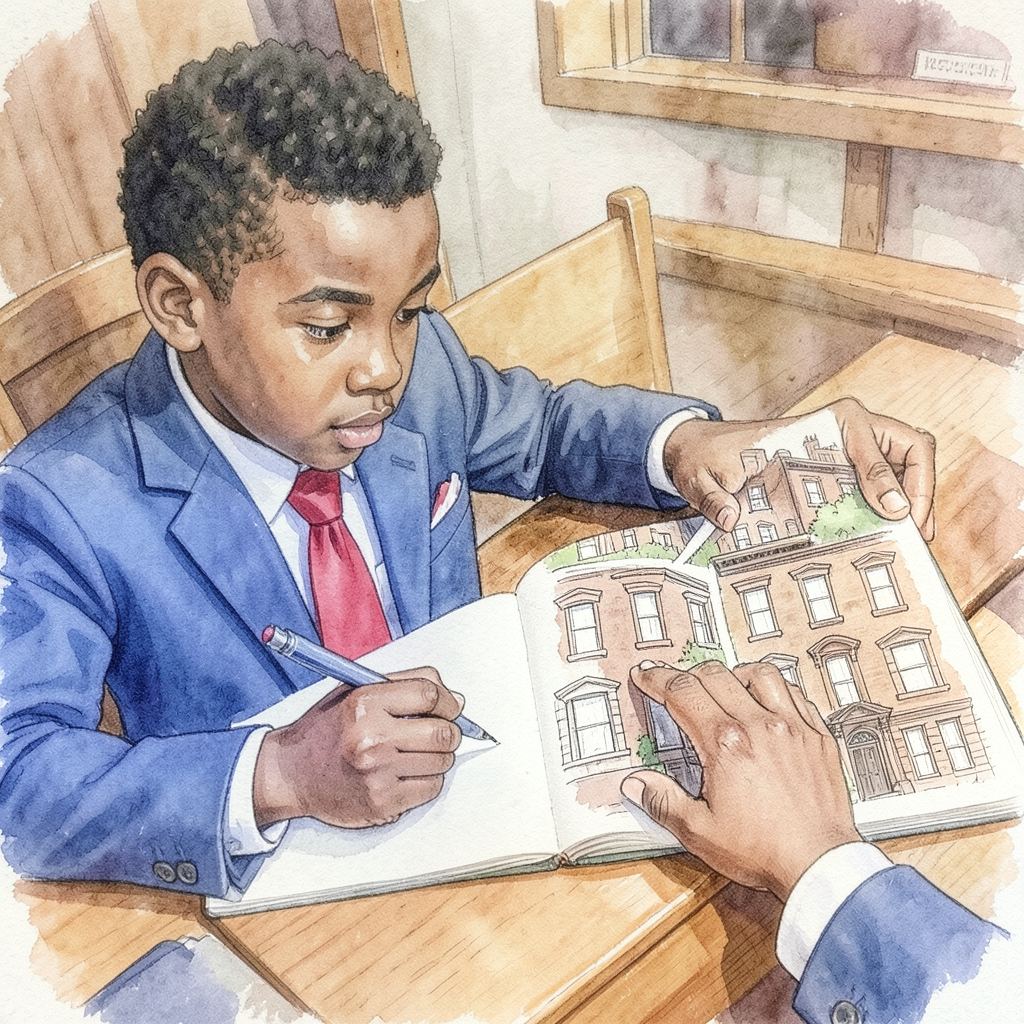
- Children who use art, writing, or other creative outlets to process their feelings
- Parents looking for an honest, age-appropriate entry point to talk about microaggressions and code-switching
Why Parents Love This Book
Jerry Craft's New Kid is a landmark graphic novel that does something rare: it captures the emotional complexity of being one of the few Black students in a predominantly white private school without reducing that experience to a single note of struggle or triumph. Jordan Banks is funny, self-aware, and deeply relatable — a kid who loves drawing comics, gets nervous about fitting in, and just wants to be seen for who he actually is. Craft uses the graphic novel format brilliantly, weaving Jordan's fantasy comic panels into the narrative to show how art becomes a coping mechanism and a way of processing the world. The humor never undercuts the serious moments — microaggressions, code-switching exhaustion, and the loneliness of being perpetually "the new kid" — and the serious moments never become preachy. This book gives Black children a mirror and gives all other children a meaningful window into an experience that deserves to be understood. It is both an excellent read and an important one.
Reading Tips for Parents
Before reading, it helps to have a brief conversation about what a private school environment might feel like if you were one of very few students who looked like you. This prepares kids to engage rather than just observe. As you read together, pause at the comic-within-a-comic panels Jordan draws — ask your child what they notice Jordan is feeling in those moments versus what he says out loud. The book's portrayal of microaggressions is specific and realistic; some children will recognize these experiences immediately, while others may need gentle guidance to understand why certain comments sting even when not intentionally mean. The ending is hopeful but not tidy, which is honest and worth discussing. This book reads quickly in one or two sittings and pairs well with a follow-up conversation about times your child has felt they had to act differently in different settings.
Awards & Recognition
- Newbery Medal, 2020
- Coretta Scott King Author Award, 2020
- New York Times Bestseller
Educational Value
This book helps children develop skills across multiple areas:
- Social-emotional learning: Builds vocabulary and awareness around code-switching, belonging, and identity — concepts children encounter in real life but rarely see named so clearly in fiction.
- Visual literacy: The graphic novel format requires readers to interpret facial expressions, panel sequencing, and color shifts to understand character emotion, building multimodal reading skills.
- Media literacy: Jordan's comic-within-a-comic strips model how storytelling can be used to process personal experience, introducing children to the idea of art as emotional expression.
- Vocabulary: Rich, contextual language around race, class, and social dynamics appears naturally in dialogue, giving readers real words for complex experiences.
- History and social studies: The book opens conversations about school segregation's legacy, affirmative action debates, and the ongoing reality of racial imbalance in elite institutions.
- Perspective-taking: Multiple supporting characters — including white classmates with their own insecurities — are drawn with enough depth to help readers practice genuine empathy across difference.
Discussion Questions
Use these questions to spark conversation before, during, or after reading:
- Why does Jordan feel like he lives in three different worlds — home in Washington Heights, Riverdale Academy, and the world inside his sketchbook? Which world do you think feels most like the real Jordan?
- Some characters at Riverdale say things that hurt Jordan without meaning to be cruel. Can you find an example? Why do you think those comments still sting even when the person didn't intend harm?
- Jordan's mom and dad have different opinions about what Riverdale can offer him. Whose point of view do you understand better, and why?
- Have you ever felt like you had to act differently around certain people or in certain places? What was that like?
- Jordan uses drawing as a way to deal with hard feelings. What do you do when you need to process something difficult?
Content Notes for Parents
There are no violent or frightening scenes, but the book honestly portrays racial microaggressions, social exclusion, and the emotional weight of being persistently misidentified or stereotyped — some of these moments may prompt strong feelings in children who have experienced similar situations. Parents of children who have faced racial bias at school should be prepared for this book to surface those memories and feelings, which is ultimately a feature, not a flaw.
Frequently Asked Questions
What age is New Kid best suited for?
The book is written for readers ages 8 to 12, and most children in that range will find it accessible thanks to the graphic novel format. The themes — identity, race, belonging — are complex, but Craft handles them in ways that feel concrete and story-grounded rather than abstract. Mature 7-year-olds with strong reading comprehension can enjoy it, and many adults find it deeply resonant as well.
Is this book appropriate for white children, or is it mainly for Black kids?
It is genuinely for all children. Black children will see their experiences reflected with unusual honesty and specificity. White children and children of other backgrounds will gain real insight into what it feels like to be one of very few people of color in a space built around different cultural norms. Teachers and librarians consistently report that New Kid sparks productive cross-racial conversations in classrooms.
My child is a reluctant reader. Will they stick with this?
New Kid is one of the best reluctant-reader choices for the 8-12 age group. The graphic novel format moves quickly, the humor lands on nearly every page, and Jordan is an immediately likeable narrator. Many parents report that children who resist chapter books read New Kid in a single day. There is also a sequel, Class Act, which follows a different character and gives kids somewhere to go after they finish.
Are there any content concerns I should know about before giving this to my child?
There is no violence, no profanity, and no sexual content. The main content to be aware of is a realistic and at times painful portrayal of racial microaggressions — comments and assumptions that sting even when not intentionally cruel. For children who have experienced racism at school, the book may surface real feelings. For children who have not, it provides important context. Either way, it is worth reading together and leaving time to talk afterward.
What books would you recommend reading alongside or after New Kid?
Jerry Craft's own sequel, Class Act, is the natural next step and follows Jordan's friend Drew. Front Desk by Kelly Yang explores similar themes of identity and belonging through an immigrant family's experience. The One and Only Ivan by Katherine Applegate and Ghost by Jason Reynolds are also strong companion reads for kids who connected with Jordan's combination of humor, heart, and artistic ambition.