My Very First Book of Colors
About This Book
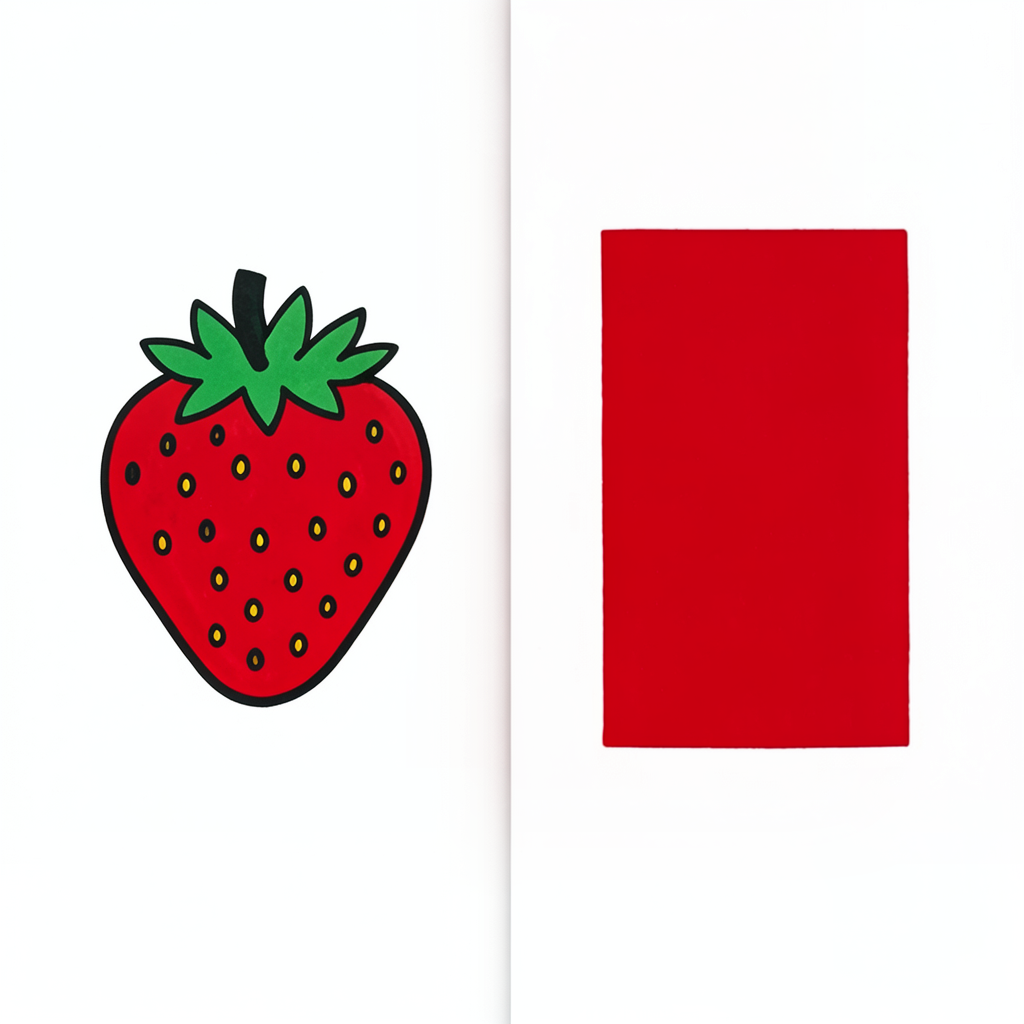
Split pages let young children match coloured strips on the top half with Eric Carle's bold tissue-paper illustrations on the bottom half, turning colour learning into an active, hands-on game. Simple, beautiful, and endlessly re-matchable, this is a first colour concept book that works equally well as a puzzle.
Themes
ColorsConceptsMatching
Best For
- Babies and toddlers 12 months and older who are just starting to notice and name colors
- Children who learn best through hands-on, tactile activities rather than passive listening
- Short attention spans — each spread takes only seconds, so it works well even during busy or restless moments
- Families who want a book that doubles as an independent puzzle activity without any loose pieces to lose
- Gift-giving for new parents looking for a first concept book with lasting replay value
Why Parents Love This Book
Eric Carle's My Very First Book of Colors has been introducing babies and toddlers to color since 1974, and its clever split-page design is the reason it has lasted this long. The top half of each page shows a solid color strip, while the bottom half presents one of Carle's signature tissue-paper collage illustrations. Children physically turn the bottom pages to find the picture that matches the color above — turning what could be a passive read-aloud into an active puzzle every single time. The hands-on mechanic suits the developmental stage perfectly: toddlers learn by doing, not just watching. Carle's artwork is warm, textured, and immediately recognizable, giving each color page a richness that flat printed swatches simply cannot match. Because the halves can be mixed and mismatched endlessly, the book stays fresh across hundreds of sittings. For families just starting to name colors together, this is as engaging and durable as a concept board book gets.
Reading Tips for Parents
Let your child lead the page-turning on the bottom half — this is the whole point of the book's design, and the physical act of matching reinforces what they are learning. Name each color clearly and slowly before your child tries to find the match: "The top says RED. Can you find the red picture?" Once your toddler knows the book well, flip the bottom half to a wrong match on purpose and ask, "Does that look right?" — the resulting giggle is half the fun. You can extend the activity off the page by pointing to a color in the book and then hunting for the same color around the room. Reading this book consistently for even a few weeks is usually enough to cement basic color names for most two-year-olds.
Awards & Recognition
- New York Times Bestselling author Eric Carle title — part of the enduring My Very First Library series that has sold millions of copies worldwide since 1974
- Frequently recommended on the American Library Association's lists of notable early childhood books
Educational Value
This book helps children develop skills across multiple areas:
- Color recognition: Directly teaches the names of basic colors through repeated visual matching across the split-page format.
- Fine motor skills: Turning the thick board-book half-pages builds grip strength and finger dexterity in babies and young toddlers.
- Cognitive matching: The puzzle mechanic requires children to hold a color in working memory and search for its match, building early concentration skills.
- Visual discrimination: Carle's textured collage illustrations train children to distinguish subtle differences in hue and pattern.
- Language development: The book provides a natural, low-pressure context for caregivers to introduce and repeat color vocabulary in every session.
- Early math reasoning: Matching one color strip to one picture lays groundwork for one-to-one correspondence, a foundational pre-math concept.
Discussion Questions
Use these questions to spark conversation before, during, or after reading:
- Can you point to something in the room that is the same color as this page?
- Which color is your favorite in the book, and why do you like it?
- What do you think would happen if we mixed the red page with the yellow picture? What color might that make?
- Eric Carle made these pictures by gluing colored tissue paper together. Can you see the different pieces in the illustration?
- If you could add one more color to this book, what would it be and what picture would you draw for it?
Content Notes for Parents
There are no scary, sad, or mature elements in this book. It is entirely appropriate for all ages within its intended 0-3 range.
Frequently Asked Questions
What age is this book best for?
The book is designed for babies and toddlers from birth through age three. In practice, children under twelve months will enjoy the bold colors and textures but won't engage with the matching mechanic yet. The puzzle element becomes genuinely interactive around 15 to 18 months, and most children will independently match all the colors correctly somewhere between ages two and three.
How is this different from a regular color board book?
Most color board books simply show a color and label it. This book splits each page horizontally so children physically turn the bottom half to match a color strip to a corresponding illustration. That active puzzle element transforms passive looking into problem-solving, which tends to hold toddler attention much longer and reinforce learning more effectively.
Are there any content concerns I should know about?
None at all. The book contains only simple color strips and Eric Carle's cheerful collage illustrations of familiar animals and objects. It is one of the gentlest and most content-safe books available for this age group.
My toddler just wants to flip the pages randomly without matching — is that okay?
Completely normal and absolutely fine. Free exploration of the split pages is how very young children first engage with the book. Over repeated readings they will naturally begin to notice when the colors match or mismatch, and the matching behavior tends to emerge on its own without any need to drill or correct them.
What books are similar to this one if my child loves it?
Eric Carle's own My Very First Book of Shapes, My Very First Book of Numbers, and My Very First Book of Animals use the same split-page format for other concepts. For color books with a different approach, Robert Crowther's pop-up color books or Tana Hoban's photographic concept books are well-regarded alternatives for the same age range.