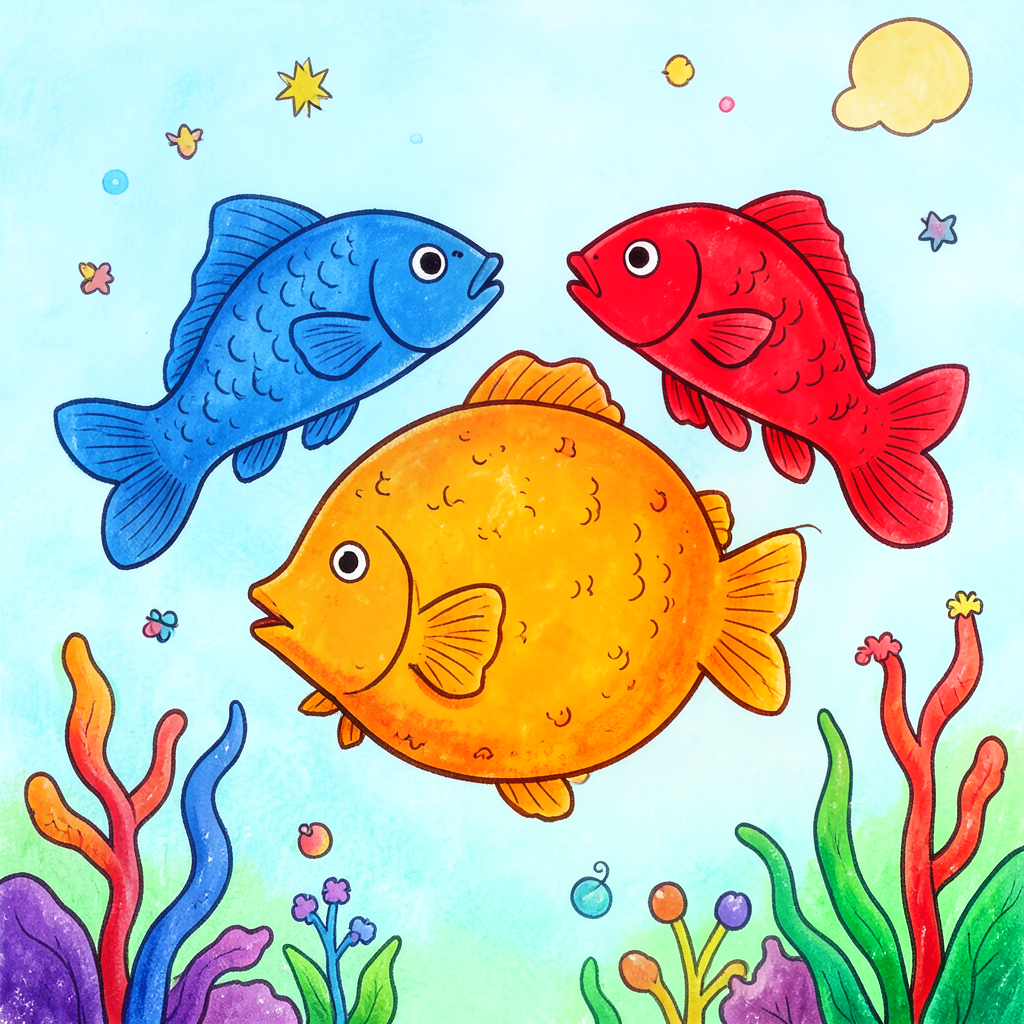
One Fish Two Fish Red Fish Blue Fish
About This Book
A collection of short, whimsical stories and rhymes featuring an assortment of fantastical creatures. From a fish with a car to a creature called a Nook, each page introduces new characters in Dr. Seuss's signature style, making learning to read feel like an adventure.
Themes
ImaginationHumorLearning
Best For
- Children who are just beginning to sound out words and need a confidence-building early reader
- Bedtime read-alouds when you want something short, funny, and low-stakes
- Road trips or waiting rooms — the vignette format means you can start and stop anywhere
- Kids who resist 'educational' books, because the humor keeps the learning invisible
- Siblings of different ages reading together, since older kids can take on more text while younger ones point at pictures
Why Parents Love This Book
First published in 1960, "One Fish Two Fish Red Fish Blue Fish" has introduced generations of children to the joy of reading through its irresistibly bouncy couplets and parade of delightfully absurd creatures. Unlike story-driven Seuss books, this one is structured as a series of vignettes — a bird named Jay, a creature called a Nook, a pet that can do tricks — each self-contained and endlessly quotable. That loose structure is a secret weapon: there is no pressure to read it cover to cover, which makes it perfect for restless toddlers and early readers alike. The rhythm is so infectious that children begin anticipating rhymes before they can actually read the words, building phonemic awareness in the most painless way imaginable. Seuss pairs each absurdity with a straightforward counting or color concept, so kids come away with real skills tucked inside the laughter. Decades on, it remains one of the most beloved gateway books to independent reading — and one parents genuinely enjoy reading aloud too.
Reading Tips for Parents
This book rewards slow, exaggerated read-alouds. Pause before each rhyming word and let your child fill it in — most kids catch on within a few readings and feel tremendous pride doing so. Point to the color words ("red," "blue") and then to the corresponding illustrations to reinforce the connection between printed word and meaning. For children just learning numbers, tap each fish as you count. Because the book is a series of short vignettes rather than one continuous story, you can open to any page without losing the thread — ideal for short attention spans or bedtime when you want just a few pages. Resist rushing through the sillier creatures; linger and ask "What do YOU think that creature eats?" to spark imaginative conversation. After several reads, try covering the last word of a couplet and asking your child to supply the rhyme.
Awards & Recognition
- New York Times Bestseller (perennial; one of the best-selling children's books of all time)
- Listed among the 100 most frequently challenged books by the American Library Association — notable for its cultural prominence, not controversy
Educational Value
This book helps children develop skills across multiple areas:
- Phonics and Rhyme: The relentless AABB couplet structure trains children to hear and predict rhyming word families (fish/dish, red/bed), a foundational phonemic awareness skill.
- Early Reading: Designed as a beginning reader, the controlled vocabulary and short sentences give early readers achievable wins that build reading confidence.
- Math - Counting and Numbers: The one/two framing on the opening pages and the repeated counting of objects throughout introduce basic number concepts in a visual, memorable way.
- Color Recognition: Color words (red, blue, black, new) appear in print alongside matching illustrations, connecting written words to visual concepts.
- Vocabulary: Invented Seuss words like 'Nook' and unexpected real words encourage children to discuss word meaning and context, stretching language curiosity.
- Social-Emotional - Humor: Recognizing and appreciating absurdist humor supports children's developing sense of playfulness and helps them understand that reading can be joyful.
Discussion Questions
Use these questions to spark conversation before, during, or after reading:
- If you could have any of the fantastical creatures in the book as a pet, which one would you pick and why?
- Can you find all the colors on this page? Which color shows up the most in the whole book?
- Dr. Seuss made up silly names for some of his creatures. Can you make up your own funny creature and give it a name that rhymes?
- The book counts one fish and two fish. Can you find other things on the pages we could count together?
- Which part of the book made you laugh the hardest? What was so funny about it?
Content Notes for Parents
There are no scary, sad, or mature elements in this book. All content is lighthearted, whimsical, and entirely appropriate for the target age range.
Frequently Asked Questions
What age is this book best suited for?
The book is designed as a beginning reader for ages 4 to 7. Younger children (ages 2-3) enjoy it as a read-aloud for the rhythm and pictures, while children in kindergarten and first grade can use it as genuine independent reading practice. The controlled vocabulary makes it accessible for early decoders without feeling babyish.
Is this a story or more of a concept book?
It is neither a traditional story nor a pure concept book — it sits somewhere in between. The book is structured as a series of short, loosely connected vignettes, each featuring a new character or situation. This makes it easy to dip in and out of rather than requiring a cover-to-cover read every time.
Are there any content concerns I should know about?
None at all. The book is entirely wholesome and playful. There are no frightening images, no conflict, and no mature themes. It is one of the most straightforwardly gentle books Dr. Seuss ever produced.
My child has already memorized this book. Is that helping them learn to read?
Yes, more than it might seem. Even when children appear to be 'reciting' from memory, they are tracking print, reinforcing left-to-right directionality, and connecting spoken sounds to written words. This kind of repeated engagement is a recognized early literacy strategy. Once they know the text cold, encourage them to point to each word as they say it.
What books should we read next after this one?
If your child loves the rhyme and humor, try other Dr. Seuss beginner readers like 'Hop on Pop' (slightly easier) or 'Green Eggs and Ham' (a step up with a simple plot). For a different author with similar phonics focus, 'Biscuit' by Alyssa Satin Capucilli or the 'Bob Books' series offer a gentler transition into independent reading.