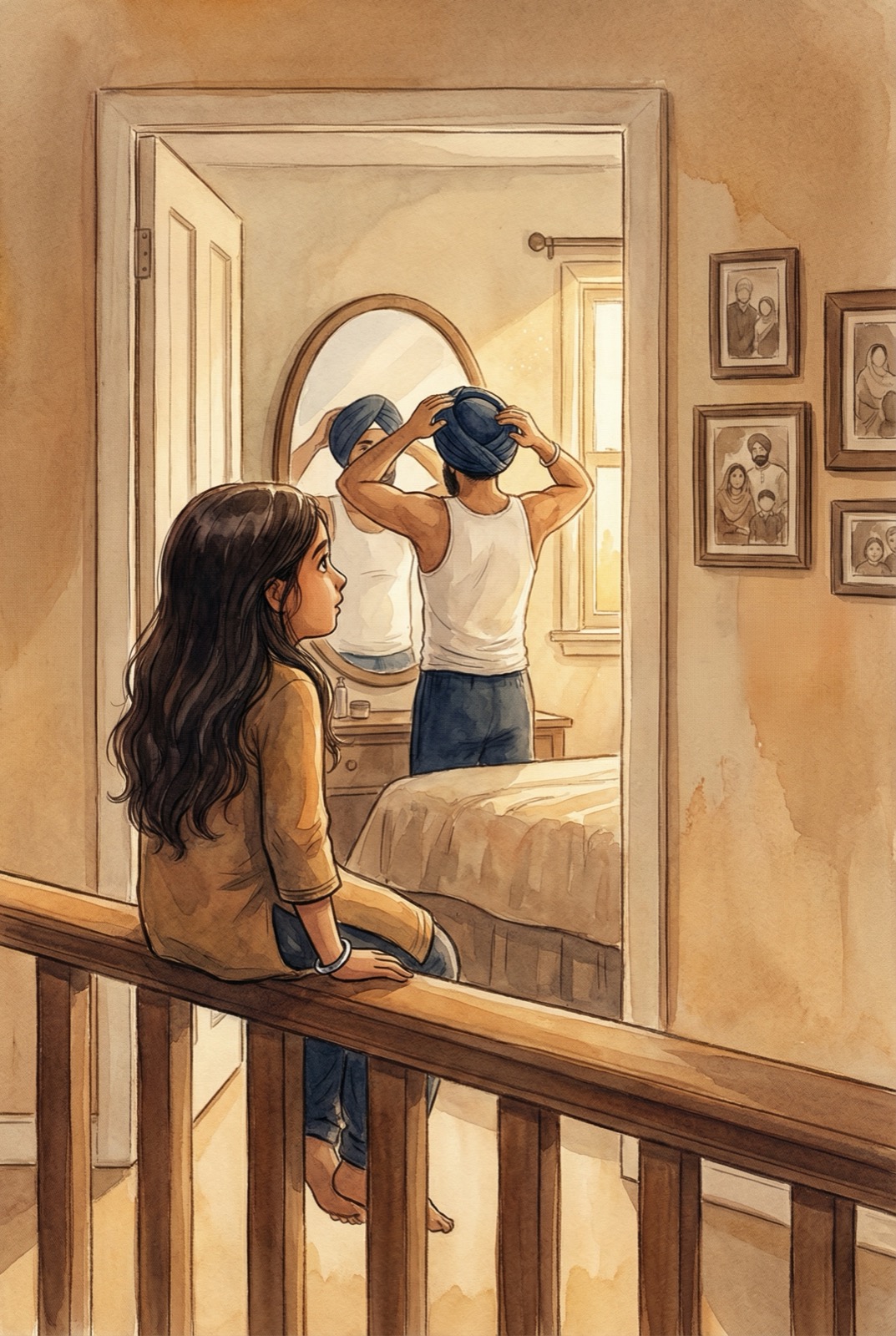
Simran Kaur and the Picture
About This Book
When a classmate asks Simran why she never cuts her hair, she isn't sure how to answer. That evening, she watches her father carefully tie his dastar in the mirror and asks him to tell her the story behind it. Through a family photograph and her father's words, Simran discovers the deep meaning of an unbroken tradition and the pride that comes with understanding where you come from.
Themes
IdentityFamilyCulture
Best For
- Sikh families looking for picture books that reflect their daily traditions and values
- Classrooms or libraries serving diverse communities that want to include Sikh representation
- Children who have faced questions about their appearance, faith, or cultural practices at school
- Family read-aloud sessions that naturally lead into conversations about heritage and identity
- Parents who want a gentle, story-based way to explain Sikh traditions to young children
Why Parents Love This Book
Simran Kaur and the Picture handles a genuinely tricky moment — a child being questioned about something deeply personal — with warmth and honesty rather than defensiveness. Simran does not have a ready answer when her classmate asks about her hair, and that moment of not-knowing feels completely real. What follows is even better: she goes home and asks her father, and the story unfolds through a family photograph and a quiet conversation. The dastar-tying scene is tender and specific, grounding the Sikh tradition in an everyday, accessible ritual. By anchoring identity in family memory rather than in rules or lectures, the book gives young readers a model for how to find their own answers. Children from Sikh families will feel seen and proud; children from other backgrounds will be invited into a loving family moment. The result is a picture book that teaches without preaching and lingers long after the last page.
Reading Tips for Parents
Before reading, ask your child if anyone has ever asked them a question they did not know how to answer — this opens the door to Simran's experience naturally. Pause on the dastar-tying scene and, if you practice this tradition, invite your child to watch or describe what they notice. If your family has a photograph similar to the one in the story, bring it out afterward and talk about the people in it. For children who may face questions about their appearance or faith at school, use the ending conversation as a starting point: practice together what Simran might say next time. This book rewards a second read-aloud because children catch new details in the family dialogue once they know where the story is going.
Awards & Recognition
- Published 2024 by Maastarji — no major award listings verified at time of writing
- No Caldecott, Newbery, or other major award nominations confirmed as of 2026
Educational Value
This book helps children develop skills across multiple areas:
- Social-emotional: Models how to handle an unexpected question about personal identity with curiosity rather than shame or defensiveness.
- Cultural literacy: Introduces the Sikh dastar and the concept of kesh (uncut hair) as part of a living, meaningful tradition.
- Family history: Shows children how photographs can be windows into the past and how asking an elder can unlock stories about their heritage.
- Vocabulary: Introduces words like tradition, dastar, and pride in a natural context that helps children absorb their meanings.
- Communication skills: Demonstrates that it is okay not to have an immediate answer, and that going home to ask a trusted adult is a strength, not a weakness.
- Identity development: Encourages children to connect personal practices to deeper family and cultural meaning rather than experiencing them as arbitrary rules.
Discussion Questions
Use these questions to spark conversation before, during, or after reading:
- Why do you think Simran did not know what to say when her classmate asked about her hair?
- What did Simran learn from looking at the family photograph with her father?
- How did Simran feel at the beginning of the story compared to the end? What changed?
- If you had a tradition in your family that someone asked you about, how would you explain it?
- What is something about your own family that you feel proud of?
Content Notes for Parents
There are no scary, sad, or mature elements in this book. The classroom moment where Simran is questioned may briefly resonate with children who have felt singled out, but the story resolves in warmth and connection.
Frequently Asked Questions
What age is this book best suited for?
The publisher targets ages 4 to 7, and the story and vocabulary align well with that range. Younger children around age 4 will enjoy the warm family dynamic, while children ages 6 and 7 will engage more deeply with Simran's emotional journey and the questions it raises about identity.
Do you need to be Sikh to connect with this book?
Not at all. While Sikh children will find direct representation here, the core experience — being asked something about yourself that you cannot immediately answer and then finding the answer through family — is universal. Non-Sikh children often come away curious and more empathetic toward classmates whose traditions differ from their own.
Is there anything in the book that might be confusing or upsetting for young children?
There are no upsetting elements. The classroom question could briefly surface feelings in children who have been singled out for their appearance or beliefs, but the story resolves positively and provides a model for how to handle such moments. Most children find the ending reassuring rather than difficult.
How can I use this book if my child faces questions about being Sikh at school?
Read it together and then pause after Simran's conversation with her father to role-play what Simran might say the next day at school. Encourage your child to think of one or two simple, confident sentences they could use. The book is a starting point for that preparation, not a complete script — it works best alongside an open conversation at home.
Are there similar books you would recommend alongside this one?
Families who enjoy this book often appreciate other picture books that explore Sikh identity through everyday family moments rather than encyclopedic explanation. Titles that pair well include books where a child's question to a grandparent or parent unlocks a family story, reinforcing the same message that heritage lives in people and conversation, not just rules.