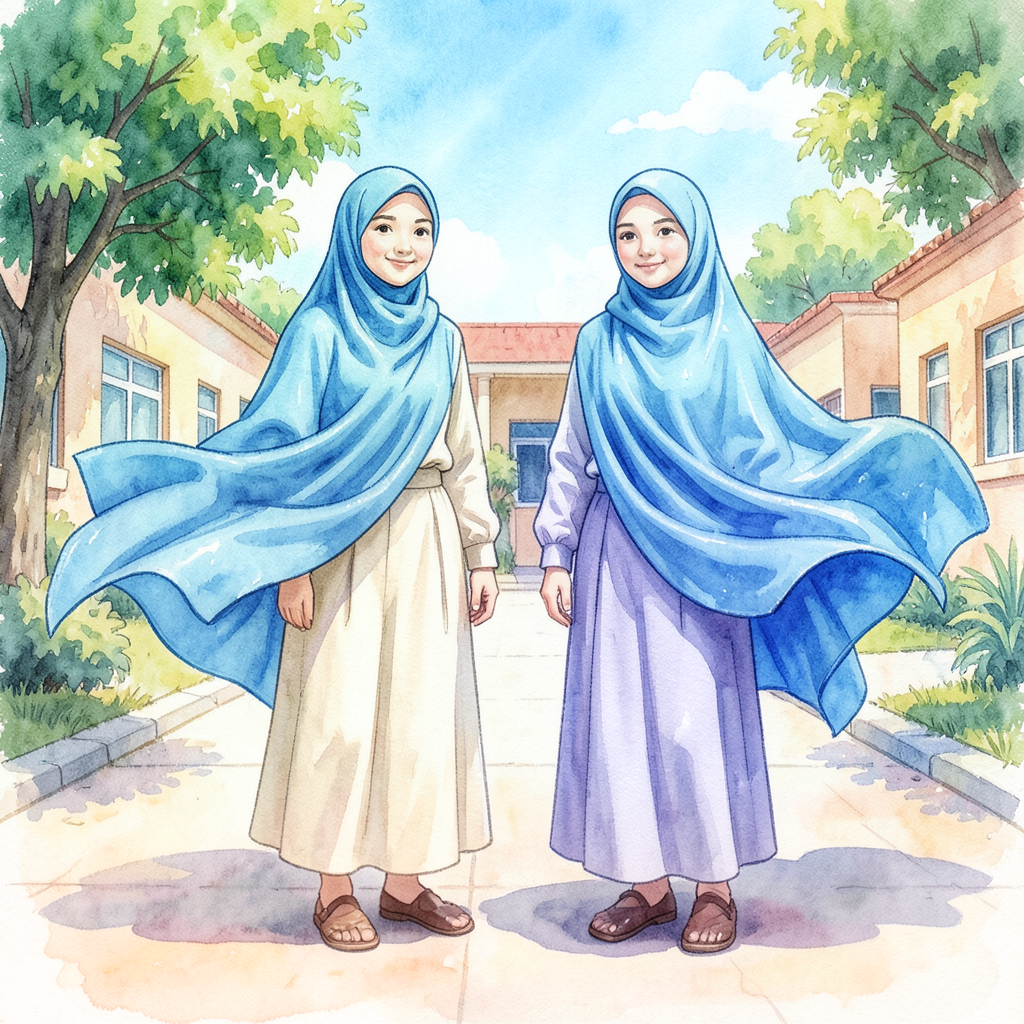
The Proudest Blue
About This Book
It's the first day of school and Faiza's big sister Asiya is wearing a beautiful blue hijab for the first time. When some kids say hurtful things, Faiza feels protective. But Asiya walks tall, and their mother's words remind them both that some people won't understand — and that's okay.
Themes
IdentityFamilyCourage
Best For
- Families looking for Muslim representation in picture books
- Classroom read-alouds about identity, belonging, and kindness
- Children who have experienced teasing about their appearance or cultural background
- Starting conversations about religious and cultural differences with young children
- Siblings — especially older and younger sister pairs
Why Parents Love This Book
The Proudest Blue stands out because it tells the story of hijab not as a topic to explain or defend, but as something simply beautiful — the color of the ocean, of the sky. Co-written by Olympic fencer and activist Ibtihaj Muhammad and her sister, the book carries genuine lived experience. Faiza, the younger sister narrating, gives readers a child's-eye view of navigating a world that doesn't always understand. When kids say cruel things at school, the story doesn't flinch or minimize the hurt — it validates it. But it also offers something more lasting: Asiya holds her head high, anchored by her mother's quiet wisdom. Hatem Aly's illustrations are radiant, painting Asiya's hijab as something magical and proud. The emotional arc moves from vulnerability to resilience in a way that feels honest rather than preachy. It's a book that Muslim families see themselves in, and that all families can use to open conversations about difference, courage, and self-worth.
Reading Tips for Parents
Before reading, invite your child to look at the cover and notice the colors. Ask what they think the story might be about. As you read, pause when Faiza hears the hurtful comments at school — this is a natural moment to check in with your child about how those words feel, without rushing past the discomfort. The mother's words throughout the book are beautifully distilled wisdom; consider reading those lines slowly. After finishing, you might ask your child if they have ever worn something they were proud of, or if they have ever seen someone be unkind about how another person looks. For non-Muslim families, a brief, matter-of-fact explanation of hijab before reading can help younger children focus on the emotional story rather than getting distracted by unfamiliarity.
Awards & Recognition
- New York Times Bestseller
- Amazon Best Book of the Year (2019)
Educational Value
This book helps children develop skills across multiple areas:
- Social-emotional learning: Helps children name complex feelings like pride, hurt, and protectiveness, and see that all of those feelings can exist at the same time.
- Identity: Invites children to think about what makes them proud of who they are and where they come from.
- Vocabulary: Introduces descriptive, sensory language — colors, textures, movement — through Faiza's poetic narration.
- Cultural awareness: Offers a window into Muslim American family life and the experience of wearing hijab, building empathy and reducing othering.
- Resilience: Models a healthy response to bullying and unkindness — not ignoring it, but not letting it define you either.
- Family relationships: Explores sibling bonds and the way parents pass down confidence and wisdom to their children.
Discussion Questions
Use these questions to spark conversation before, during, or after reading:
- Why do you think Faiza compares Asiya's hijab to the ocean and the sky? What does that tell us about how she sees her sister?
- How did Faiza feel when she heard kids saying unkind things? What would you have felt?
- Asiya walks tall even when people are mean. What do you think helps her do that?
- Has anyone ever said something about how you look or what you were wearing that made you feel bad? What did you do?
- What do you think their mother's words mean when she tells them that some people won't understand — and that's okay?
Content Notes for Parents
The book includes scenes where children at school make unkind and mocking comments about Asiya's hijab, which may feel upsetting to sensitive children or children who have experienced bullying. There is no violence or scary imagery, and the story resolves with warmth and strength.
Frequently Asked Questions
What age is The Proudest Blue best for?
The book is written for ages 4 to 7, and that range feels right. Children around 5 or 6 will connect most strongly with the school-day setting and Faiza's emotions. Younger children will enjoy the vivid colors and sibling relationship, while older children in the 7-8 range can engage more deeply with the themes of identity and responding to unkindness.
Is this book only for Muslim families?
Not at all. While the story is rooted in Muslim American experience, the core themes — being proud of who you are, dealing with unkind comments, and drawing strength from family — resonate across backgrounds. Many non-Muslim families use this book to introduce children to hijab in a natural, positive way and to open broader conversations about respecting differences.
How should I handle it if my child asks why kids were mean to Asiya?
You can be honest and simple: some people say unkind things when something looks different from what they know. The book itself does the heavy lifting here — the mother's responses throughout give you language to borrow. Focus your conversation on how Asiya responds and what your family believes about treating others with respect.
Are there any content concerns parents should know about?
The book includes realistic scenes of children making mocking comments about Asiya's hijab, which may be upsetting for children who are sensitive to conflict or who have experienced bullying themselves. There is nothing graphic or frightening, and the story handles the hurt with care. You may want to read it together the first time rather than alone so you can talk through those moments.
What books would you recommend alongside this one?
Bilal Cooks Daal by Aisha Saeed is a warm, food-centered story of Muslim family life that pairs well for ages 4-7. For slightly older readers, Amina's Voice by Hena Khan offers a longer chapter-book look at a Muslim American girl navigating identity and belonging. Each Other's Everything by Amanda West Lewis is another good choice for exploring sibling bonds and standing up for one another.