The Name Jar
About This Book
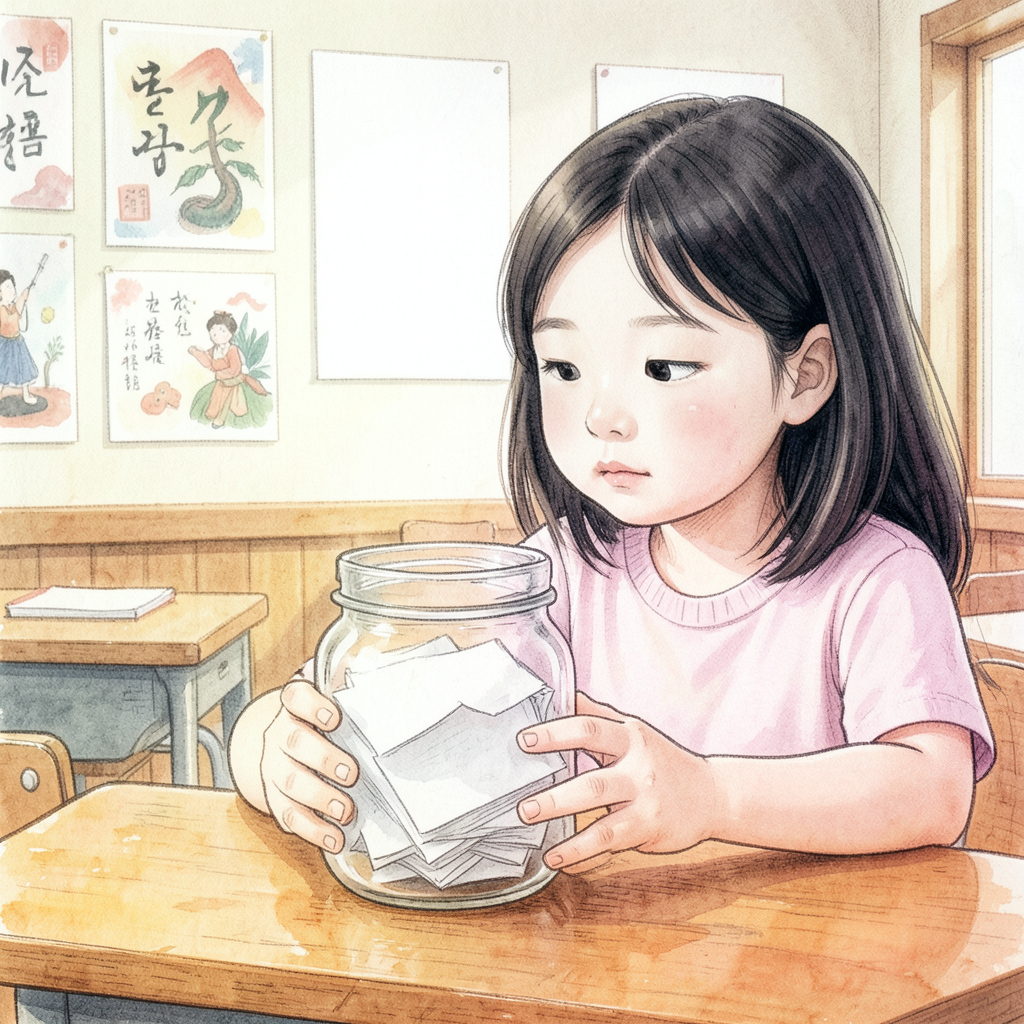
Unhei has just moved from Korea and worries that American kids won't be able to pronounce her name. Her classmates put suggested names in a jar, but with the help of a kind neighbor and her own growing confidence, Unhei decides that her own name — meaning 'grace' — is the one she wants to keep.
Themes
IdentityCultureBelonging
Best For
- Children who are starting at a new school or have recently moved
- Classrooms welcoming students from different cultural backgrounds
- Families exploring their own heritage, naming traditions, or family history
- Read-alouds during back-to-school season or cultural awareness units
- Children whose names are frequently mispronounced or simplified by others
Why Parents Love This Book
The Name Jar is a quietly powerful picture book that gets to the heart of what it feels like to be new — new to a country, a school, and a language. Yangsook Choi draws on her own experience as a Korean immigrant to give Unhei's story an authenticity that children immediately recognize as real. The name jar itself is a beautiful storytelling device: classmates filling it with American name suggestions shows both genuine kindness and the subtle pressure to assimilate. What makes this book enduring is that it never casts the well-meaning children as villains. Instead, it holds space for complexity — the desire to fit in, the fear of being different, and the slow, brave journey back to claiming who you already are. When Unhei finally introduces herself by her real name and explains its meaning, the moment lands with warmth and triumph. This is a book that celebrates the names our families give us and the stories those names carry.
Reading Tips for Parents
Before reading, ask your child if they know what their name means or why they were given it — this primes them for Unhei's discovery. Pause at the page where classmates suggest names and ask your child how they think Unhei feels. After reading, look up what the names of family members mean together; this turns a single read-aloud into a broader family conversation. The book is ideal for sharing with children who are themselves new to a school or neighborhood, but works equally well as a window book for children who have never moved. If your child has a name that is frequently mispronounced or shortened, this story offers powerful validation. The reading level suits ages 4 to 7, but the emotional content resonates strongly with early elementary children around ages 5 to 8.
Awards & Recognition
- ALA Notable Children's Book (2002)
- New York Public Library 100 Titles for Reading and Sharing selection
Educational Value
This book helps children develop skills across multiple areas:
- Social-emotional learning: Builds empathy by inviting children to see school from the perspective of a newcomer navigating a different culture and language.
- Identity and self-worth: Encourages children to value their own names and family heritage rather than changing themselves to fit in.
- Cultural awareness: Introduces Korean culture, language, and naming traditions in an accessible, story-driven way.
- Vocabulary: Exposes readers to the concept of names having meanings across languages, opening conversations about etymology and multilingualism.
- Narrative comprehension: The story arc — problem, attempted solution, inner conflict, resolution — is clear and well-paced, making it useful for teaching story structure.
- Social studies: Supports early discussions of immigration, belonging, and the experience of joining a new community.
Discussion Questions
Use these questions to spark conversation before, during, or after reading:
- Why do you think Unhei did not want to tell the other kids her real name at first?
- How would you feel if someone kept getting your name wrong or said it was too hard to say?
- The children put name suggestions in the jar to help Unhei — was that a kind thing to do? Why or why not?
- Unhei's name means 'grace' in Korean. What do you think your name means, or what meaning would you choose for it if you could?
- At the end, Unhei decides to keep her own name. What helped her feel brave enough to do that?
Content Notes for Parents
There are no scary, violent, or mature elements in this book. The emotional content — feeling left out, worrying about fitting in — may resonate strongly with children who have experienced moving or being new, but is handled gently and resolves positively.
Frequently Asked Questions
What age is The Name Jar best suited for?
The book is written for children ages 4 to 7 and works well as a read-aloud for preschool through early elementary. The emotional themes of belonging and identity can resonate with slightly older children too, particularly those around ages 7 to 9 who may be navigating social dynamics at school.
Is this book appropriate for children who have not moved or immigrated?
Absolutely. The Name Jar works both as a mirror for children who share Unhei's experience and as a window for those who have not. It naturally builds empathy and gives all children language to think about how they treat classmates who seem different from them.
Are there any upsetting or sad scenes?
The book does depict Unhei feeling anxious and left out, and there is a moment where her stamp — a treasured gift from home — goes missing. These moments are resolved warmly and are not likely to distress most children, though sensitive readers may want a reassuring conversation afterward.
How can I use this book in a classroom setting?
Many teachers pair this book with a 'name jar' activity where students share the meaning or origin of their own names. It fits naturally into back-to-school units, cultural diversity themes, and social-emotional learning curricula. It also opens productive discussions about kindness to newcomers.
What books are similar to The Name Jar?
Families who love this book often enjoy My Name Is Yoon by Helen Recorvits, which explores a similar theme of a Korean immigrant child navigating her name in an American school. The Name Quilt by Phyllis Root and Each Kindness by Jacqueline Woodson also deal with belonging and classroom community in complementary ways.