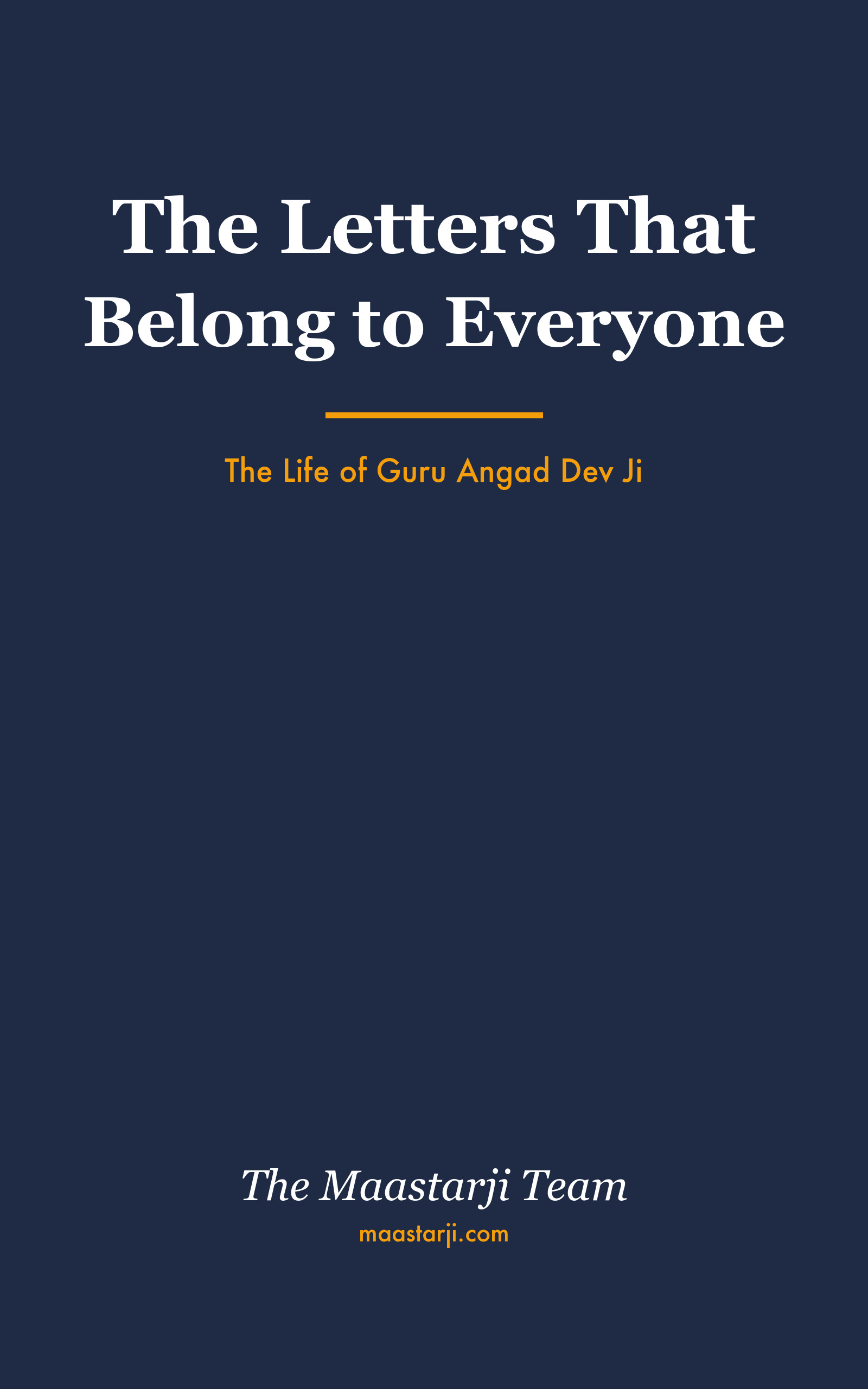
The Letters That Belong to Everyone: The Life of Guru Angad Dev Ji
About This Book
Guru Angad Dev Ji, the second Sikh Guru, took the Gurmukhi script and opened schools so that every child — regardless of birth or background — could learn to read the Guru's words. He strengthened the langar tradition, taught that true strength comes from humble service, and lived a life that proved greatness belongs to those who kneel to lift others up.
Themes
EducationSikh HistoryEquality
Best For
- Families wanting to introduce Sikh history and values to young children in a warm, story-driven way
- Classroom or gurdwara settings exploring themes of equality, education, and community service
- Children who are beginning readers and will feel a personal connection to a story about the power of learning letters
- Read-aloud sessions that naturally lead into conversations about fairness and helping others
- Gift-giving for Sikh milestones such as a child starting school or beginning Gurmukhi classes
Why Parents Love This Book
This picture book does something rare: it makes the gift of literacy feel like a revolutionary act of love. Guru Angad Dev Ji's decision to formalize Gurmukhi script and open schools for every child — regardless of caste, wealth, or background — is a story that resonates deeply in any era. What sets this book apart is how it connects two big ideas — the power of written language and the spirit of humble service — in a way young children can genuinely feel. Rather than presenting a distant historical figure, the story shows a person who believed that knowledge locked away from ordinary people is knowledge wasted. The langar tradition woven throughout reinforces that feeding minds and feeding bodies are both acts of sacred equality. For children just beginning to learn their own letters, there is something quietly thrilling about a story where letters themselves become the hero. This is a book that earns its place on the shelf not just as cultural education, but as genuine inspiration.
Reading Tips for Parents
Before reading, show your child the Gurmukhi alphabet on a separate page or screen — even a quick glance helps them understand why the standardization of a script was such a meaningful act. As you read, pause at moments where Guru Angad Dev Ji opens schools and ask your child to imagine not being allowed to read. After the story, connect langar to any shared meal your family has together, framing it as a small version of the same spirit. Children aged 4-7 often need one or two re-readings before the historical context fully settles; the second read is usually when deeper questions emerge. If your child attends a Sikh school or gurdwara, this book pairs beautifully with those real-world experiences as a bridge between story and practice.
Awards & Recognition
- No major awards listed at time of publication (2026)
- Published 2026 — award eligibility windows are ongoing
Educational Value
This book helps children develop skills across multiple areas:
- History: Introduces the life and contributions of Guru Angad Dev Ji, the second Sikh Guru, in an accessible narrative form for early readers.
- Literacy awareness: Explores the origin and importance of the Gurmukhi script, helping children understand that writing systems are human inventions with stories behind them.
- Social-emotional: Models humility and servant leadership — the idea that true greatness comes from lifting others rather than elevating oneself.
- Equality and justice: Reinforces the value of equal access to education regardless of birth, background, or social status.
- Cultural heritage: Deepens familiarity with Sikh history, traditions, and values including langar and seva (selfless service).
- Vocabulary: Introduces meaningful words such as 'script', 'langar', and 'service' within a rich narrative context that makes them memorable.
Discussion Questions
Use these questions to spark conversation before, during, or after reading:
- Why do you think Guru Angad Dev Ji wanted every child to be able to read — not just some children?
- What is langar, and how does sharing a meal with anyone who comes show that everyone is equal?
- If you invented a new alphabet today, what would you want people to use it to write or learn?
- Can you think of something you know how to do that you could teach someone else so they do not feel left out?
- How do you think the children who came to Guru Angad Dev Ji's schools felt on their very first day of learning?
Content Notes for Parents
There are no frightening, violent, or age-inappropriate elements in this book. Some children may find the historical and philosophical themes abstract on a first reading, but they are presented gently and a parent's guidance bridges the gap easily.
Frequently Asked Questions
What age is this book best suited for?
The book is written for children aged 4 to 7 and is classified as a beginning reader. Younger children in this range will enjoy it most as a read-aloud with a parent, while children closer to 7 may engage with the text more independently. The themes are layered enough that older siblings or adults reading along will find meaning in it too.
Do we need to be Sikh to appreciate this book?
Not at all. While the story is rooted in Sikh history and tradition, its central themes — equal access to education, humble service, and the idea that knowledge belongs to everyone — are universal. Families of any background will find it a meaningful entry point into discussing equality and the value of learning.
Is there anything in the book that might be confusing or upsetting for young children?
There are no scary or upsetting elements. Some children may need a brief explanation of historical context, such as why children were once denied access to education based on their birth. Parents can frame this honestly and age-appropriately as something people worked hard to change.
How does this book connect to real Sikh practice?
The book highlights two living Sikh traditions: Gurmukhi, the script used in the Guru Granth Sahib, and langar, the free community kitchen found at every gurdwara. If your family or community participates in either, this story gives children a meaningful backstory for practices they may already know.
Are there similar books you would recommend reading alongside this one?
Other picture books exploring the lives of the Sikh Gurus make natural companions, particularly any that cover Guru Nanak Dev Ji as the first Guru, establishing the tradition Guru Angad Dev Ji continued. Books about the origins of writing systems from other cultures also pair well if you want to broaden the literacy theme.