Simran Kaur and the Steel Circle
About This Book
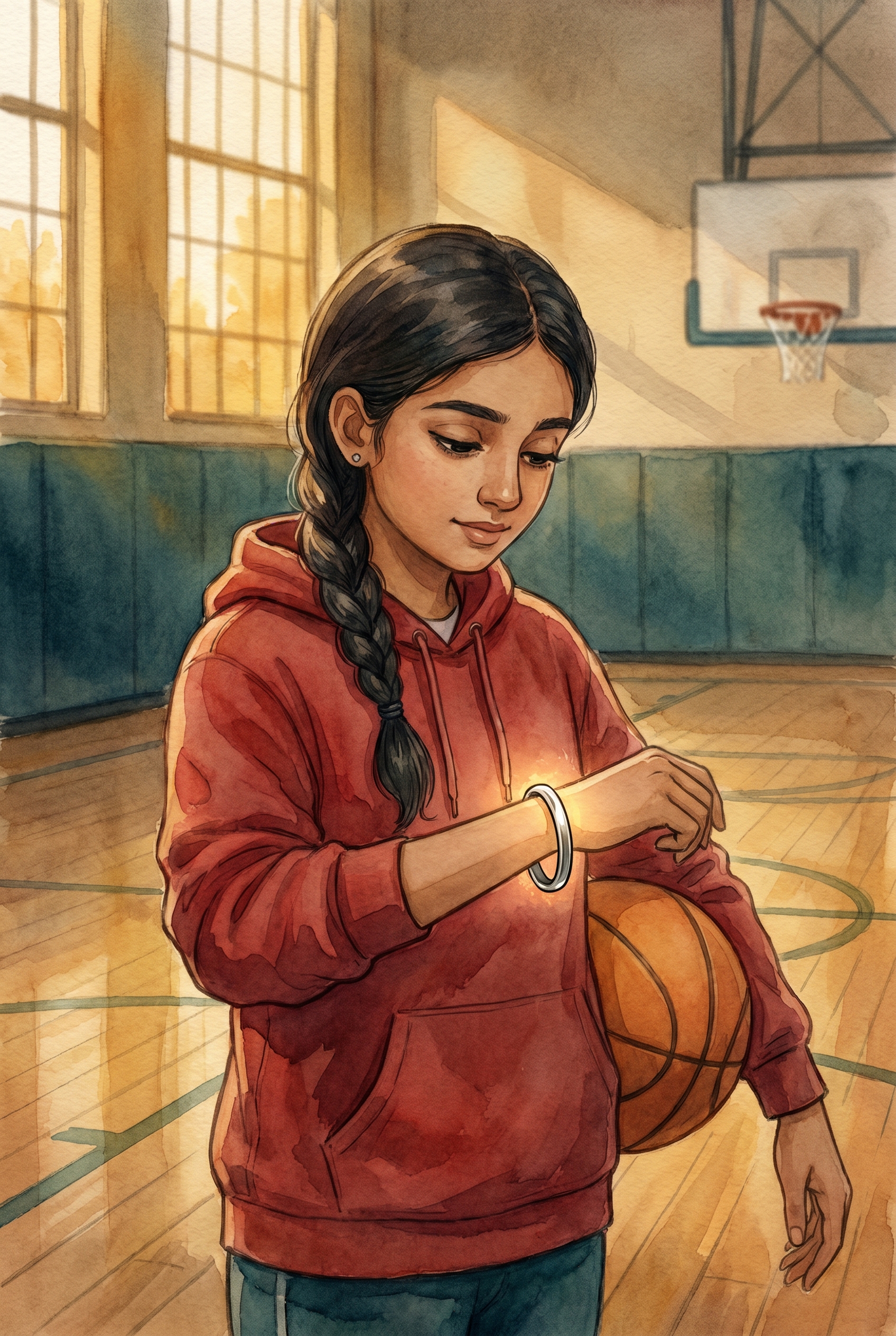
When the gym teacher announces that all bracelets must come off before the big basketball game, Simran faces a choice she was not prepared for. Her kara is not a bracelet — it is a circle with no beginning and no end, a promise she wears every day. This story of self-advocacy and quiet courage shows what it means to stand for who you are, even when it is uncomfortable.
Themes
IdentityCourageSelf-Advocacy
Best For
- Sikh families looking for a book that reflects real school-day experiences
- Classroom read-alouds ahead of diversity, equity, and inclusion discussions
- Children preparing for a new school, team, or activity where they may need to explain their faith
- Parents who want to practice self-advocacy conversations with their child before a real situation arises
- Non-Sikh families seeking a window into Sikh identity and practice for ages 4-7
Why Parents Love This Book
Simran Kaur and the Steel Circle tackles one of the most real and recurring situations Sikh children face: being asked to remove the kara in a school setting where the person asking simply does not know better. What makes this book stand out is that Simran does not get angry, and she does not stay silent either. She finds a third path — calm, clear self-advocacy — and that is exactly the model young children need to see. The framing of the kara as "a circle with no beginning and no end" is both theologically accurate and emotionally resonant, giving children language they can actually use when they face the same moment. Unlike books that celebrate Sikh identity in broad strokes, this story zeroes in on one specific, tense, uncomfortable minute and shows a child navigating it with dignity. That specificity is what makes it stick. Parents of Sikh children will find themselves returning to this book before the school year starts, before sports tryouts, and any time their child needs to remember that who they are is worth explaining.
Reading Tips for Parents
Before reading, hold the kara (if your child wears one) and ask them to describe it in their own words. This activates the personal connection the story builds on. As you read, pause when the gym teacher makes the announcement and ask your child what they would feel in that moment — let them sit with the discomfort before turning the page to see what Simran does. After reading, role-play the conversation: you play the teacher, your child plays Simran. This gives them real practice with the words, not just the idea. If your child does not wear a kara, this book still opens excellent conversations about religious items, diversity in classrooms, and what it means to speak up respectfully for yourself or a friend. Keep the book visible near the start of a new school year.
Awards & Recognition
- No major awards listed at time of publication (2024)
- Published by Maastarji, 2024
Educational Value
This book helps children develop skills across multiple areas:
- Vocabulary: Introduces meaningful words like kara, self-advocacy, and identity in context, giving young readers precise language for cultural and religious concepts.
- Social-emotional: Models how to handle an uncomfortable confrontation with calm rather than anger or silence — a concrete emotional regulation skill.
- Civic understanding: Helps children grasp that rules can be applied in ways that do not account for everyone, and that respectful communication can create space for accommodation.
- Cultural literacy: Provides accurate, accessible information about the kara as a Sikh article of faith, building awareness for Sikh and non-Sikh readers alike.
- Speaking and listening: The story's dialogue structure invites readers to practice how to explain something personal clearly and confidently to an authority figure.
Discussion Questions
Use these questions to spark conversation before, during, or after reading:
- Why does Simran call her kara a circle with no beginning and no end? What do you think that means?
- How do you think Simran felt when the teacher said all bracelets had to come off? Have you ever had a moment where a rule did not seem to fit your situation?
- What would you have done if you were Simran? Would it be easy or hard to speak up?
- How do you think the teacher felt after Simran explained what the kara means to her?
- Can you think of something you wear or carry that is important to who you are? How would you explain it to someone who had never seen it before?
Content Notes for Parents
There are no scary, violent, or sad elements in this book. The central tension — being asked to remove a religious item — may feel stressful for children who have personally experienced this, and parents should be prepared for that emotional recognition to surface during reading.
Frequently Asked Questions
What age is this book best suited for?
The book is written for ages 4 to 7 and is leveled as a beginning reader. Younger children in this range will enjoy it as a read-aloud with a parent; children closer to 6 or 7 may be able to read it with some support. The emotional content — speaking up for yourself in a school setting — becomes more personally relevant as children enter kindergarten and first grade.
My child does not wear a kara. Will this book still mean something to them?
Yes. The story's core lesson — that you have the right to explain who you are, and that speaking up calmly is a form of courage — applies to every child. Non-Sikh readers gain an accurate, respectful introduction to a Sikh article of faith, and all children benefit from seeing a peer navigate a moment of pressure with grace.
Is this book appropriate for classroom use?
It is well-suited for classroom use in pre-K through second grade. Teachers can use it to open conversations about religious diversity, school accommodation policies, and self-advocacy. The story is neither preachy nor confrontational, which makes it easy to discuss across different family backgrounds.
Are there any content concerns I should be aware of before reading with my child?
There are no scary, violent, or upsetting elements. The only tension is social — being singled out and asked to comply with a rule that conflicts with religious practice. For children who have lived through a similar moment, that tension may feel very real, and parents should be ready to pause and talk.
What books would you recommend alongside this one?
Families who connect with this book often enjoy other titles that center Sikh identity, quiet courage, or speaking up in everyday settings. Look for picture books that feature children navigating school life while holding onto cultural or religious identity — your local librarian can suggest titles that pair well for ages 4 to 7.