The Rabbit Listened
About This Book
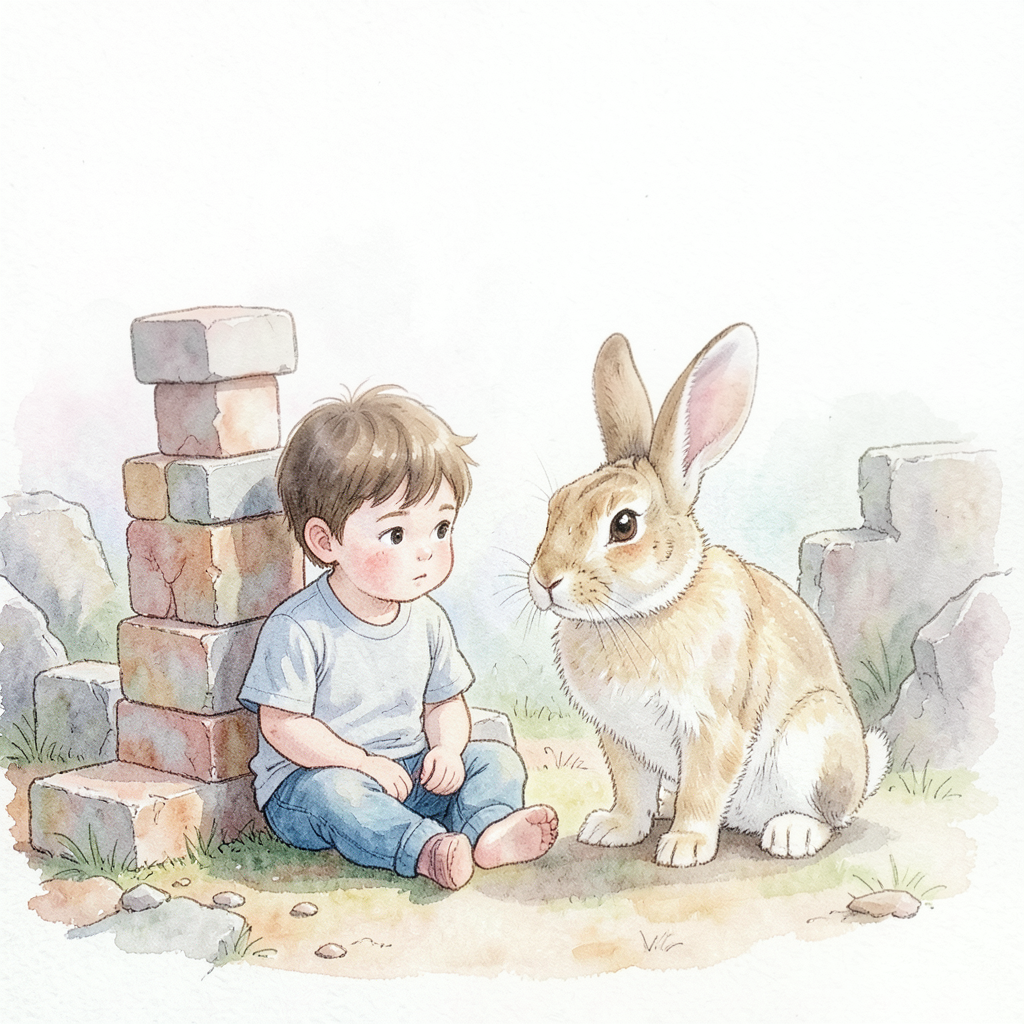
When Taylor's block tower is knocked down, various animals come to help. The chicken wants to talk about it, the bear wants to shout, the elephant wants to remember, the hyena wants to laugh it off. But only the rabbit knows exactly what Taylor needs — someone to simply sit and listen.
Themes
EmpathyEmotionsComfort
Best For
- Children going through a difficult transition such as a new sibling, a move, or starting school
- Families wanting to build a shared vocabulary around emotional needs and asking for support
- Classroom read-alouds focused on empathy, kindness, or social-emotional learning
- Parents who want a gentle way to explain to children why listening matters more than advice
- Bedtime reading when a child has had a hard day and needs to feel seen and understood
Why Parents Love This Book
The Rabbit Listened is one of those rare picture books that communicates something genuinely profound without ever becoming preachy or heavy-handed. When Taylor's carefully built block tower comes crashing down, a parade of well-meaning animals arrives, each offering a different kind of comfort — talking it out, shouting in anger, laughing it off, reliving the memory. Every single one misses the mark. Then the rabbit comes and simply sits. No advice. No agenda. Just presence. Cori Doerrfeld's genius is in showing young children what good emotional support actually looks like, at a developmental stage when they are just beginning to understand that other people have feelings too. The soft, warm illustrations and the gentle rhythm of the text make this book feel like a hug. It also works beautifully in the other direction: it teaches adults — parents, caregivers, educators — to slow down and truly listen before leaping in to fix. This book earns its beloved status because it speaks truthfully to both the child and the grown-up reading alongside them.
Reading Tips for Parents
Before reading, ask your child about a time something went wrong and someone tried to help — this primes them to connect personally with Taylor's experience. As you move through the animals, pause and let your child predict what each one will suggest. Use different voices or tones for each animal to bring out their distinct personalities. When the rabbit finally appears, slow way down and let the quietness of those pages land. After reading, resist the urge to immediately explain the lesson — give your child a moment to sit with it. This book is especially useful as a tool you can reference later: when your child is upset and you catch yourself jumping to fix-it mode, you might gently ask, "Do you need a rabbit right now?" That shorthand can become a meaningful family phrase.
Awards & Recognition
- New York Times Bestseller
- Kirkus Reviews Best Children's Book
- Amazon Best Book of the Year (Children's)
Educational Value
This book helps children develop skills across multiple areas:
- Social-emotional: Teaches children that listening — not fixing — is often the most powerful form of comfort, building foundational empathy skills.
- Emotional literacy: Introduces a range of emotional responses (grief, anger, laughter, denial) and helps children recognize and name those states in themselves and others.
- Vocabulary: Naturally introduces words like "comfort," "remember," "shout," and "imagine" in meaningful emotional contexts.
- Perspective-taking: Each animal models a different coping style, gently showing children that people respond to difficulty in different ways — none entirely wrong, but timing matters.
- Communication: Opens conversations about asking for what you need emotionally, a crucial early skill for self-advocacy.
- Narrative comprehension: The book's repeating structure (problem, animal, response, failure) builds story pattern recognition and prediction skills in pre-readers.
Discussion Questions
Use these questions to spark conversation before, during, or after reading:
- Why do you think none of the animals' ideas made Taylor feel better, even though they were all trying to help?
- Which animal's idea did you think sounded most like what you might do if a friend was sad?
- What did the rabbit do differently from all the other animals? Why do you think that worked?
- Have you ever felt like Taylor — upset about something, but not quite ready to talk about it? What helped you feel better?
- If you built something really wonderful and it broke, what would YOU want someone to do for you?
Content Notes for Parents
There are no scary, violent, or mature elements in this book. The emotional core — Taylor's block tower being knocked down and the sadness that follows — is gentle and age-appropriate, and the overall tone is warm and reassuring throughout.
Frequently Asked Questions
What age is The Rabbit Listened best suited for?
The book is listed for ages 2–5, and that range feels accurate. Toddlers as young as 2 enjoy the animal parade and simple repetition, while children aged 4–6 are more likely to grasp the emotional nuance at the heart of the story. It also reads meaningfully to older children (up to about age 7 or 8) who are working through bigger feelings.
Is this book too sad for sensitive children?
No — while Taylor does experience genuine disappointment when the block tower falls, the book never dwells in distress. The tone remains warm and hopeful throughout, and the ending is genuinely comforting. Sensitive children often find this book especially validating rather than upsetting.
How can I use this book to help my child who doesn't like to talk about their feelings?
This book is actually perfect for that child. Its central message is that you do not have to talk right away — the rabbit models simply being present without pressure. Reading it together sends the message that silence and presence are okay. You might also use the rabbit as a gentle prompt: ask if your child wants you to "be the rabbit" when they are upset.
Are there similar books you would recommend pairing with this one?
The Invisible String by Patrice Karst pairs well for children dealing with separation or loss, as does In My Heart by Jo Witek for broader emotional vocabulary. When Sophie Gets Angry — Really, Really Angry by Molly Bang is a good companion for the anger element Taylor experiences. Together these books form a strong social-emotional reading collection for toddlers and preschoolers.
Does this book work for a classroom setting?
Yes, it is widely used in preschool and kindergarten classrooms. The repeating structure makes it easy for group read-alouds, and the animal characters invite role-play and discussion. Many teachers use it to introduce the concept of active listening and to build classroom norms around emotional support. It pairs naturally with circle time conversations about how we help our friends.