The Secret of True Cleanliness: A Story from the Travels of Guru Nanak
About This Book
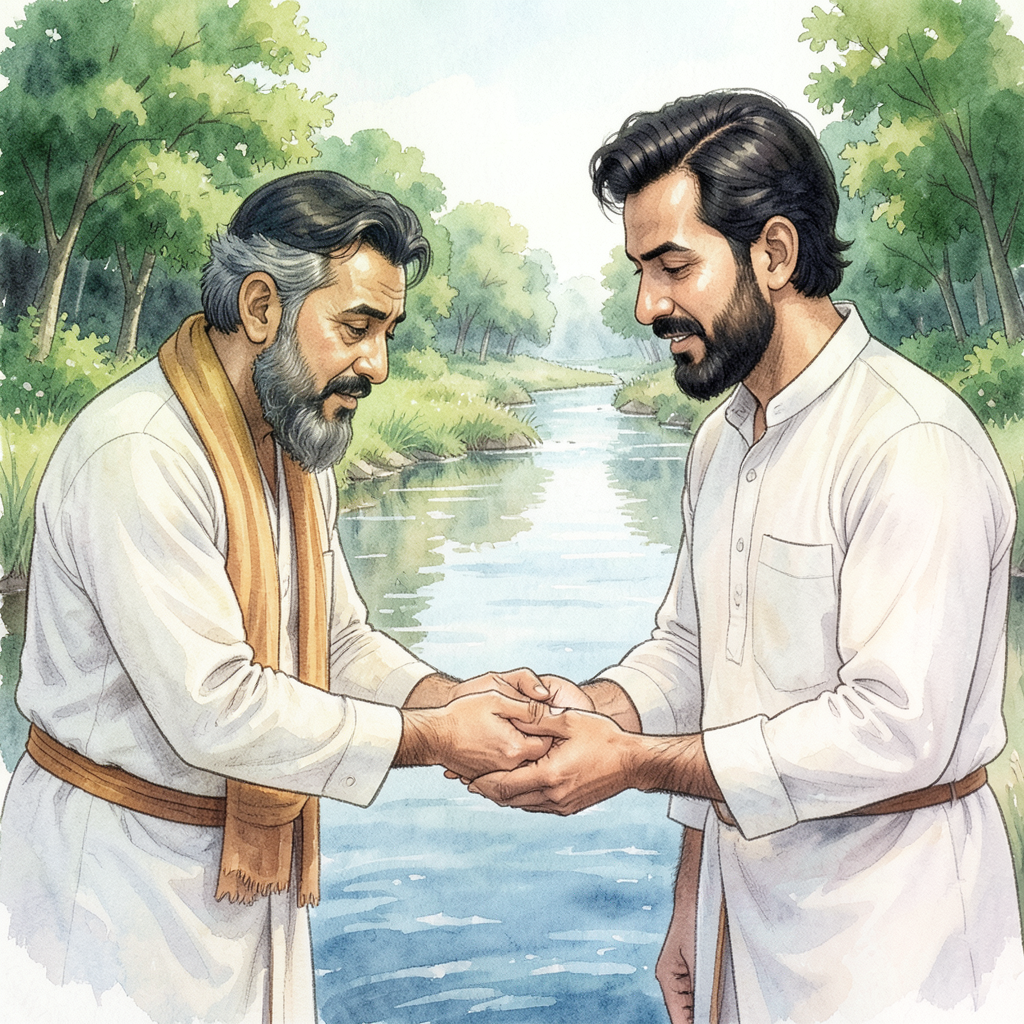
In the sacred city of Haridwar, Guru Nanak watches pilgrims throw water toward the sun to water their ancestors' fields in the afterlife. He begins throwing water in the opposite direction — and when they ask why, he gives an answer that overturns everything they assumed about purity, caste, and who deserves dignity. A story of radical equality, told with warmth and wit.
Themes
EqualitySikh StoriesInner Purity
Best For
- Families looking for picture books that introduce Sikh history and values in an accessible way
- Classroom or home read-alouds paired with discussions about fairness and equality
- Children who enjoy stories where a character solves a problem through wisdom rather than action
- Interfaith households or educators exploring world religious traditions with young children
- Parents wanting to start early conversations about treating all people with equal dignity
Why Parents Love This Book
This book does something rare: it uses a single, vivid scene to open up a genuinely big idea. Guru Nanak stands at the banks of the Ganges in Haridwar, surrounded by pilgrims performing an ancient ritual — tossing water toward the sun to nourish ancestors in the afterlife. Then, quietly, he turns around and starts throwing water in the opposite direction. The crowd is baffled. His explanation dismantles, with warmth and gentle wit, assumptions about ritual purity, caste hierarchy, and who deserves to be treated with dignity. What makes this story endure across centuries — and what makes this retelling work so well for young readers — is that the lesson arrives through action, not lecture. Children see the curiosity on the pilgrims' faces, follow the logic of Guru Nanak's challenge, and arrive at the insight themselves. It models questioning without mockery, and equality without abstraction. For families raising children in any tradition that values justice, this is a story worth returning to again and again.
Reading Tips for Parents
Before reading, ask your child if they have ever seen people doing a ritual — lighting candles, saying a prayer, performing a ceremony — and whether they know why. This primes them for Guru Nanak's central question. During the story, pause when Guru Nanak turns to throw water the other direction and ask: "What do you think he is trying to show them?" Let children guess before turning the page. After reading, the idea of "inner cleanliness" versus outer ritual is the heart of the book — you might connect it to everyday moments: being kind even when no one is watching, or treating everyone at school with equal respect regardless of who they are. The story's setting in Haridwar is a good opportunity to introduce the concept of pilgrimage and sacred cities in a factual, respectful way.
Awards & Recognition
- No major awards on record at time of publication (2025)
- Published 2025 — award eligibility windows ongoing
Educational Value
This book helps children develop skills across multiple areas:
- Critical thinking: Encourages children to question assumptions and consider why people follow traditions, rather than accepting them without reflection.
- Social-emotional learning: Builds empathy and a sense of radical equality — the idea that every person deserves dignity regardless of background or status.
- Vocabulary: Introduces meaningful words such as pilgrimage, ritual, purity, ancestors, and sacred in context.
- Cultural literacy: Familiarizes children with the setting of Haridwar and the practice of river pilgrimage, broadening awareness of world religious traditions.
- Ethics and values: Opens age-appropriate conversations about fairness, inner versus outer goodness, and what it means to treat others well.
- History and biography: Introduces Guru Nanak as a historical figure and founder of the Sikh faith, framed through one of his teaching journeys.
Discussion Questions
Use these questions to spark conversation before, during, or after reading:
- Why did the pilgrims throw water toward the sun, and what did they believe it would do?
- Why did Guru Nanak throw water in the opposite direction? What was he trying to show?
- What do you think 'true cleanliness' means? Is it the same as washing your hands?
- Have you ever done something a certain way just because everyone else did it? Did you ever wonder why?
- If you could ask Guru Nanak one question after this story, what would it be?
Content Notes for Parents
There are no frightening, violent, or sad elements in this story. The book does challenge certain beliefs about caste and ritual purity, which may prompt questions from children — this is intentional and invites calm, thoughtful family discussion.
Frequently Asked Questions
What age is this book best suited for?
The book is written for ages 4 to 7 and is classified as a beginning reader. The story is simple enough for a four-year-old to follow with adult guidance, while the philosophical content gives five-, six-, and seven-year-olds plenty to think and talk about. Older children in the 8-10 range who enjoy stories with moral depth will also find it engaging.
Do we need to be Sikh to enjoy or get value from this book?
Not at all. The central message — that true goodness comes from within, and that all people deserve equal dignity — is universal. The Sikh context adds richness and cultural specificity, but families of any background or none will find the story meaningful. It is also a gentle, respectful introduction to Sikh tradition for children encountering it for the first time.
Is there anything in the book that might confuse or upset young children?
There is nothing frightening or upsetting. The book does challenge the idea that outer rituals make a person pure or superior, which is thought-provoking rather than distressing. If your child asks why some people believed in caste or hierarchy, that is a natural opening for an honest, age-appropriate conversation about fairness and history.
Are there similar books you would recommend alongside this one?
If your family enjoys this story, look for other picture books drawn from Guru Nanak's travels, as many contain similarly clever parable-style moments. Books about other figures who challenged inequality through quiet, principled action — such as picture book biographies of Gandhi or Martin Luther King Jr. — pair well thematically for slightly older readers.
How long does it take to read aloud, and is it good for bedtime?
As a picture book for beginning readers, it reads aloud comfortably in about 8 to 12 minutes. It works well at bedtime because it is calm and ends on a reflective, positive note — though the discussion questions it sparks mean some children will want to keep talking, so allow a few extra minutes if your child is curious.