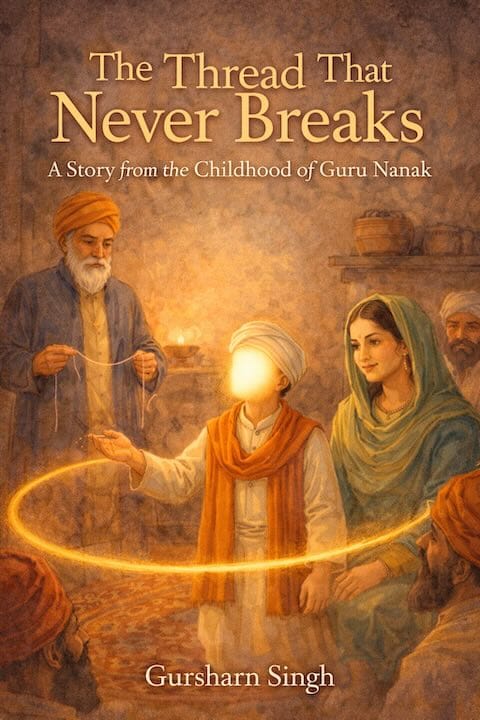
The Thread That Never Breaks: A Story from the Childhood of Guru Nanak
About This Book
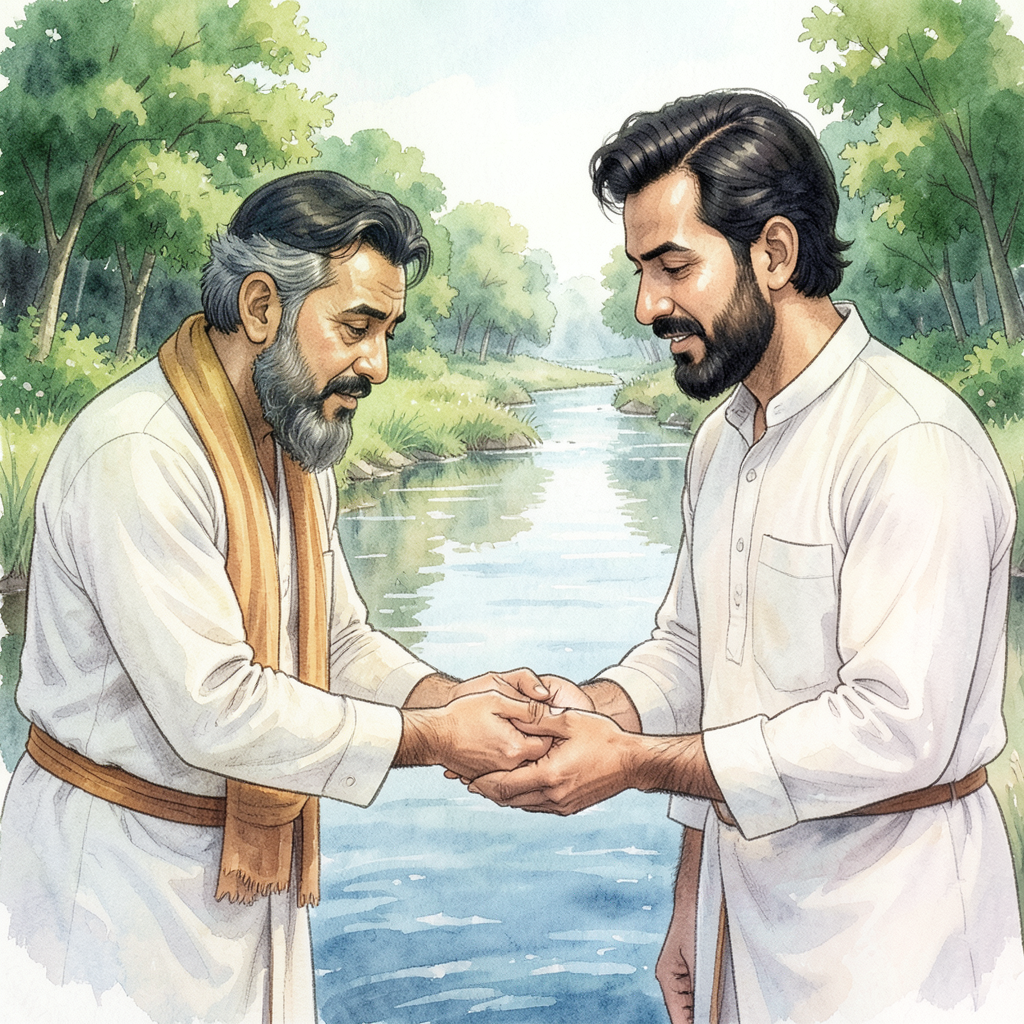
When the family priest arrives to place the sacred janeu thread around young Nanak's neck — a rite that only boys of certain castes could receive — Nanak refuses. He asks what kind of thread can hold goodness inside the heart, what kind of thread belongs equally to all. His questions change everything. A story about equality, inner truth, and the courage to ask why.
Themes
EqualitySikh StoriesCourage
Best For
- Sikh families wanting to share foundational stories from their tradition with young children
- Classrooms and libraries exploring diversity, world religions, or social justice themes
- Children who ask a lot of questions and need to see that quality celebrated
- Read-aloud sessions where a short story can anchor a longer conversation about fairness and belonging
- Beginning readers ready to engage with stories that carry real emotional and ethical weight
Why Parents Love This Book
This picture book takes one of the most striking episodes from Guru Nanak's childhood and makes it vivid and immediate for young readers. When the family priest arrives to perform the janeu ceremony — a sacred thread ritual restricted to boys of upper castes — young Nanak asks a simple, devastating question: what thread can truly hold goodness inside a heart? It is a question that stops the room. What makes this book exceptional is that it trusts children with a genuinely difficult idea: that a ceremony can be beautiful and still be wrong if it excludes people. Rather than talking down to its readers, the story invites them into Nanak's curiosity and courage. The prose has a quiet, meditative quality that suits the weight of the moment, while the accessible language keeps it grounded for early readers. For Sikh families, this is a rare chance to share a foundational story from their tradition with young children in a format built for them. For all families, it is an early and memorable lesson that asking "why" — even when it is uncomfortable — is an act of both honesty and bravery.
Reading Tips for Parents
Before reading, you may want to briefly explain what a ceremony is and why some communities use special rituals to mark important moments — this gives children the context to understand what Nanak is being asked to participate in. As you read, pause when Nanak asks his questions and let the silence sit; children often need a moment to absorb ideas this substantial. After the story, resist the urge to immediately provide answers — instead, ask your child what they think Nanak meant. The book opens naturally into conversations about fairness and belonging, so follow your child's lead. For Sikh families, this is a wonderful entry point into discussing Guru Nanak's teachings on equality. For families of all backgrounds, it pairs well with conversations about times your child has questioned a rule and why that was a brave thing to do.
Awards & Recognition
- No major awards data available at time of publication (2026)
- Published by Maastarji, 2026
Educational Value
This book helps children develop skills across multiple areas:
- Social-emotional: Builds children's confidence that asking difficult questions is a form of courage, not rudeness.
- Critical thinking: Encourages children to examine traditions and rules by asking what purpose they serve and whether they include everyone.
- Cultural literacy: Introduces the janeu ceremony and its historical context in a way that is accessible to children with no prior knowledge.
- Vocabulary: Exposes early readers to words like ceremony, sacred, caste, and equality in a meaningful, story-driven context.
- History and biography: Grounds children in a real historical moment from Guru Nanak's life, supporting early interest in biography and world history.
- Ethics: Opens age-appropriate discussion of fairness, belonging, and what it means to treat all people as equal.
Discussion Questions
Use these questions to spark conversation before, during, or after reading:
- Why did the priest want to put the thread around Nanak's neck? What was it supposed to mean?
- What did Nanak mean when he asked what kind of thread could hold goodness inside a heart? Can you think of what that might look like?
- Have you ever been left out of something because of a rule that didn't seem fair? How did that feel?
- Do you think it was hard for Nanak to ask his questions out loud? Why or why not?
- If you could design a thread that truly showed what was good inside a person, what would it look like?
Content Notes for Parents
There are no frightening, violent, or age-inappropriate elements in this book. Some children may find the concept of exclusion or social hierarchy emotionally challenging, which makes for a valuable but gentle conversation rather than a content concern.
Frequently Asked Questions
What age is this book really best for?
The book is written for ages 4 to 7 and works well as a read-aloud for children on the younger end of that range. Children around 6 or 7 who are beginning to read independently will be able to engage with it on their own. The ideas are substantive enough that older children in early elementary school will still find the story meaningful.
Do we need to be Sikh to connect with this story?
Not at all. While the story draws from Sikh history and will resonate especially deeply for Sikh families, the central questions Nanak raises — about fairness, belonging, and the difference between outward ritual and inner goodness — are universal. Families from any background will find the story opens rich conversations about values they already care about.
Is the janeu ceremony explained in the book? Will my child understand the context?
The story introduces the ceremony in a way that gives children enough context to follow what is happening without requiring prior knowledge. Parents who want to go deeper can briefly explain beforehand that some religious traditions use special items or rituals to mark milestones, and that in Nanak's time, the janeu thread was only offered to boys from certain groups — not to everyone.
Are there any parts of the book that might upset young children?
There is no violence or frightening content. Some children may feel a flicker of discomfort at the idea of someone being excluded or told they do not belong — but the story frames Nanak's response as empowering rather than painful, and that distinction tends to leave children feeling inspired rather than distressed.
What books would pair well with this one?
For more stories about Guru Nanak's life and teachings, look for other Maastarji titles in the Sikh Stories series. For thematic companions on equality and courage, books like The Name Jar by Yangsook Choi or Each Kindness by Jacqueline Woodson share a similar focus on inclusion and the courage to do what is right.