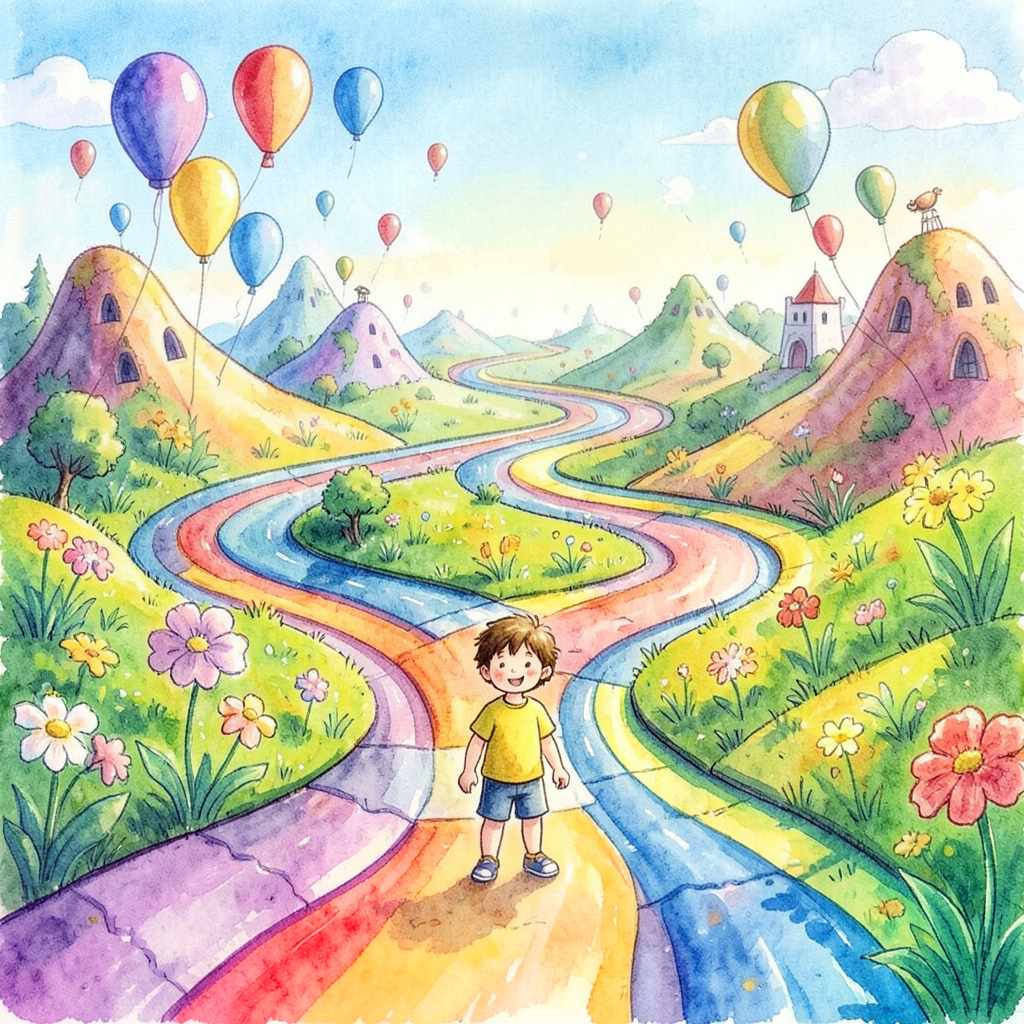
Oh, the Places You'll Go!
About This Book
Dr. Seuss's final published book follows a young person setting out into the world, encountering both the exciting highs and the inevitable lows of life's journey. With its encouraging message about resilience and self-determination, it has become a beloved graduation gift for all ages.
Themes
PerseveranceAdventureGrowing Up
Best For
- Sending off a child to kindergarten or a new school year as a meaningful first-day tradition
- Graduation gifts for older children, teens, and adults — the book transcends its picture-book format
- Children going through a big transition such as moving, welcoming a sibling, or changing schools
- Bedtime reading when a child is feeling anxious about something coming up
- Family read-alouds where parents want a book that speaks to them as much as to their child
Why Parents Love This Book
Published in 1990 as Dr. Seuss's final book, "Oh, the Places You'll Go!" stands apart from his other works because it speaks directly to the reader's future rather than telling a story about a separate character. The unnamed protagonist — really just "you" — ventures into a vivid, fantastical world that maps perfectly onto the real emotional terrain of growing up: the exhilarating highs of success, the bewildering slumps, the lonely waiting places, and the triumphant breakthroughs. Seuss never sugarcoats the journey. He acknowledges that life will sometimes be hard, that you will face frightening places and moments of doubt, yet always circles back to a bedrock belief in the reader's own capability. That honesty is what gives the book its remarkable staying power across generations. Parents who read it to four-year-olds find themselves moved right alongside their children, because the message resonates at every stage of life. It is a rare picture book that earns its place at kindergarten sendoffs, graduations, and every milestone in between.
Reading Tips for Parents
Read this one slowly and let the rhythm do the work — Seuss's anapestic meter is meant to be performed, not rushed. Pause at the "Waiting Place" spread and invite your child to describe what they see; this section generates the richest conversation about patience and frustration. For younger children (ages 4-6), focus on the adventure and the encouraging ending without over-explaining the harder passages. For older children approaching a transition — starting school, moving, changing grades — connect the story directly to their specific situation: "You're about to go somewhere brand new, just like in the book." Keep a copy on hand to revisit at each milestone. The book's second-person voice makes re-reading feel fresh every time, because "you" is always the right age.
Awards & Recognition
- New York Times Bestseller — has appeared on the list for over 180 weeks total across multiple runs, including years-long consecutive appearances
- #1 New York Times Bestseller upon release in 1990
- Frequently cited as one of the best-selling children's picture books of all time
Educational Value
This book helps children develop skills across multiple areas:
- Vocabulary: Introduces expressive, invented Seussian words alongside real words like "lurch," "slump," and "bang-ups" that expand a child's emotional vocabulary in context.
- Social-emotional learning: Directly addresses resilience, self-confidence, and coping with setbacks — gives children language to name difficult feelings like being stuck or afraid.
- Phonological awareness: The consistent anapestic rhythm strengthens a child's sense of meter and rhyme, which supports early reading and phonemic skills.
- Critical thinking: The open-ended, second-person narrative invites children to project themselves into the story and consider how they would respond to challenges.
- Life skills: Normalizes the idea that failure and confusion are part of any journey, building a growth mindset rather than fear of mistakes.
Discussion Questions
Use these questions to spark conversation before, during, or after reading:
- Where do you think the traveler in the book is going? What is one place you would love to go someday?
- The book talks about "the Waiting Place" where everyone is just waiting for something to happen. Have you ever felt stuck waiting? How did it feel when the wait was finally over?
- The traveler faces some scary and confusing places along the journey. What is something that felt hard at first but got better when you kept trying?
- Dr. Seuss says you have "brains in your head" and "feet in your shoes" — what do you think he means by that?
- If you were going to write your own page for this book about a place YOU will go, what would it say?
Content Notes for Parents
The book honestly depicts scary, lonely, and discouraging experiences — including ominous creatures and a bleak "Waiting Place" — which may prompt questions from sensitive younger children, but nothing rises to the level of a content concern. These elements are framed constructively and are part of what makes the book emotionally authentic rather than alarming.
Frequently Asked Questions
What age is this book really for? My child is only four.
The book is marketed for ages 4 and up, and a four-year-old will enjoy the rhymes, bright illustrations, and the adventure story on its surface. The deeper messages about resilience and navigating life's lows land more fully around ages 6-8 and beyond. It is genuinely one of the few picture books that works at every age, so there is no wrong time to start.
Will the scary or sad parts upset my child?
Most children take the darker passages — the lurking creatures, the Waiting Place, the lonely stretches — in stride because Seuss always pivots back to encouragement. Sensitive children may ask questions, which is actually a great opening for conversation. If your child is going through a hard time, those sections can help them feel seen rather than frightened.
Is this appropriate as a graduation gift for a teenager or adult?
Absolutely — this is perhaps the most common use of the book. Seuss wrote it explicitly as a message to anyone facing a new chapter, and the second-person voice makes it feel personally addressed regardless of age. It is one of the very few picture books that adults routinely give to other adults without irony.
Are there similar books you would recommend alongside this one?
For the same themes of adventure and self-belief, try 'The Wonderful Things You Will Be' by Emily Winfield Martin for younger children, or 'You Are a Story' by Bob Shea. For older readers ready for a Seuss-adjacent style, 'I Had Trouble in Getting to Solla Sollew' covers similar journey-and-obstacles territory with more narrative depth.
Does Dr. Seuss win any major literary awards like the Caldecott or Newbery for this book?
This specific title did not win a Caldecott Medal or Newbery Award. Dr. Seuss received two Academy Awards and a Pulitzer Prize Special Citation in 1984 for his overall body of work, but 'Oh, the Places You'll Go!' is recognized primarily through its extraordinary and sustained commercial success rather than a specific literary prize.