Baby Faces
About This Book
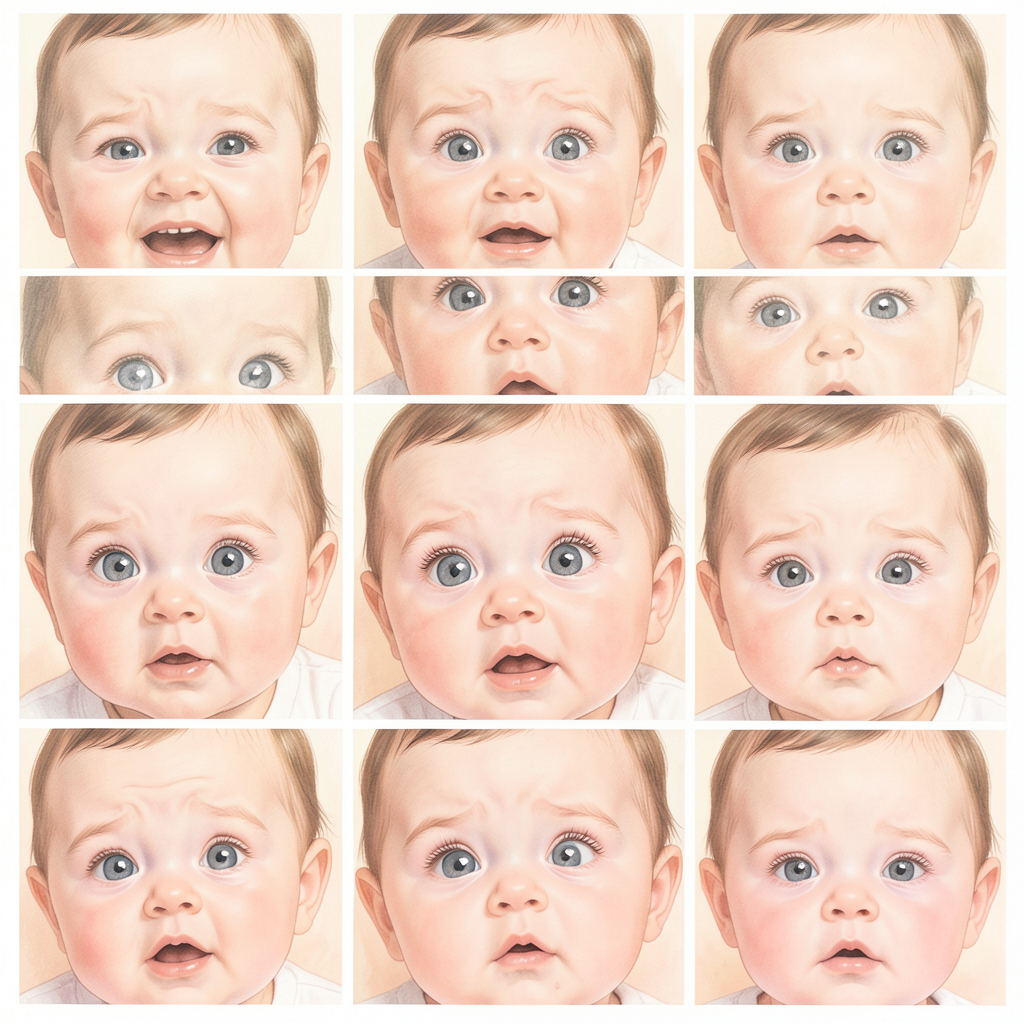
Happy, sad, silly, surprised — a gallery of real baby photographs invites very young children to name the emotions they see and find them in themselves. Margaret Miller's clear, warm photography makes this one of the earliest and most effective books for emotional vocabulary and self-recognition.
Themes
EmotionsFacesSelf-Awareness
Best For
- Tummy time and lap reading with newborns and young infants who are drawn to faces
- Parents and caregivers looking to introduce emotional vocabulary before a child can speak
- Toddlers who are beginning to experience big feelings and need language to name them
- Childcare and daycare settings where group face-making and mirroring activities work well
- Gift giving for newborns — durable, timeless, and immediately useful from day one
Why Parents Love This Book
Baby Faces works because it speaks directly to babies in a language they already understand: other babies. Margaret Miller's warm, clear photographs of real infants expressing happiness, sadness, surprise, and silliness tap into something developmentally profound — very young children are wired to study faces from birth, and this book hands them a mirror. Unlike illustrated books where emotions can feel stylized or abstract, these photographs show genuine, spontaneous expressions that babies recognize and respond to immediately. The simple one-word labels beside each face quietly begin building emotional vocabulary at an age when most parents do not think language work has started yet. There is no plot to follow, no characters to track — just an honest, joyful gallery of faces that invites the youngest readers to point, name, and feel. The board book format means it survives the handling of tiny hands, and the pacing is perfect for short attention spans. This is a book that earns its place on the shelf by doing one thing exceptionally well.
Reading Tips for Parents
Hold the book close enough for your baby to focus — newborns see best at about 8 to 12 inches. As you turn each page, name the emotion out loud and then mirror the expression yourself: make a surprised face, a sad face, a silly face. This mirroring is more than play — it reinforces both the word and the physical sensation of the emotion. For babies around 9 to 18 months, pause and ask "Can you make that face?" before turning the page. For toddlers approaching two, connect the images to real life: "Remember when you cried at the park? That was sad, just like this baby." You do not need to read every page in one sitting. Even flipping to a single image and spending a minute on it is valuable. Keep this book in a reachable spot so your child can bring it to you.
Awards & Recognition
- New York Times Notable Children's Book (commonly cited for Margaret Miller's photography books)
- Widely recognized as a perennial bestseller in the infant board book category since its 1998 publication
Educational Value
This book helps children develop skills across multiple areas:
- Social-emotional: Introduces the names of core emotions (happy, sad, silly, surprised) at an age when emotional vocabulary is just beginning to form.
- Language: Pairs a single clear word with a vivid image, one of the most effective structures for early word acquisition in infants and toddlers.
- Self-awareness: Encourages children to recognize emotions in others and connect those emotions to their own inner experiences.
- Cognitive: Supports face-perception skills, which are foundational to social cognition and early communication development.
- Pre-literacy: Reinforces the concept that pictures carry meaning and that words can describe what we see, laying groundwork for reading readiness.
Discussion Questions
Use these questions to spark conversation before, during, or after reading:
- What does this baby's face look like? Can you make that same face?
- When do you feel happy like this baby? What makes you feel that way?
- This baby looks surprised — what do you think just happened to make them feel that way?
- Can you point to the baby who looks like how you feel right now?
- Which face is your favorite in the whole book, and why?
Content Notes for Parents
There are no scary, sad, or mature elements in this book. The photograph of a crying baby may prompt some very young children to become briefly upset in empathy, but this is developmentally normal and can itself be a gentle teaching moment.
Frequently Asked Questions
What age is Baby Faces actually appropriate for?
This book is genuinely useful from birth. Newborns are biologically primed to focus on faces, and the clear, high-contrast photographs hold their attention early. The book continues to be engaging through age two or three as toddlers develop more complex emotional awareness and begin connecting the images to words and their own feelings.
How do I read a book with no real story to a baby?
You do not need a narrative to make this book work. Treat each page as its own small event: name the emotion, make the face yourself, and invite your child to do the same. For very young infants, simply narrating what you see — 'This baby is happy, look at that big smile' — is enough. The interaction between you and your child is the real content of the book.
My toddler keeps pointing at the crying baby and getting upset. Is that a problem?
Not at all — this is empathy in action, which is exactly what the book is designed to spark. Acknowledge your child's reaction ('I know, that baby looks sad. What do you think would make them feel better?') and use it as a natural opening to talk about feelings. Over time, this kind of practice builds emotional resilience and vocabulary.
Are there similar books you would recommend alongside this one?
Global Babies by the Global Fund for Children and Smile! by Roberta Grobel Intrater cover similar ground with diverse real-baby photography. For slightly older toddlers ready for a simple story built around emotions, Today I Feel Silly by Jamie Lee Curtis or The Way I Feel by Janan Cain are excellent next steps.
Is the photography diverse and inclusive?
Baby Faces features babies of varied ethnicities and skin tones throughout the book, which is one of the reasons it has remained a recommended choice by librarians and pediatricians for nearly three decades. Seeing faces that reflect a range of children helps all babies feel represented.