
Caps for Sale
About This Book
A traveling cap seller carries his wares stacked on top of his head — gray caps, brown caps, blue caps, and red caps. When he falls asleep under a tree and wakes to find monkeys have stolen all his caps, his angry reactions lead to an amusing and unexpected solution.
Themes
HumorProblem SolvingCleverness
Best For
- Bedtime reading for ages 3-6 who enjoy repetition and predictable story patterns
- Interactive read-alouds in preschool or kindergarten classrooms where children can join in on the refrains
- Children who love physical comedy and slapstick humor
- Early readers building confidence, as the simple vocabulary and repetitive text support independent reading attempts
- Rainy-day dramatic play — the story is easy to act out with homemade or toy hats
Why Parents Love This Book
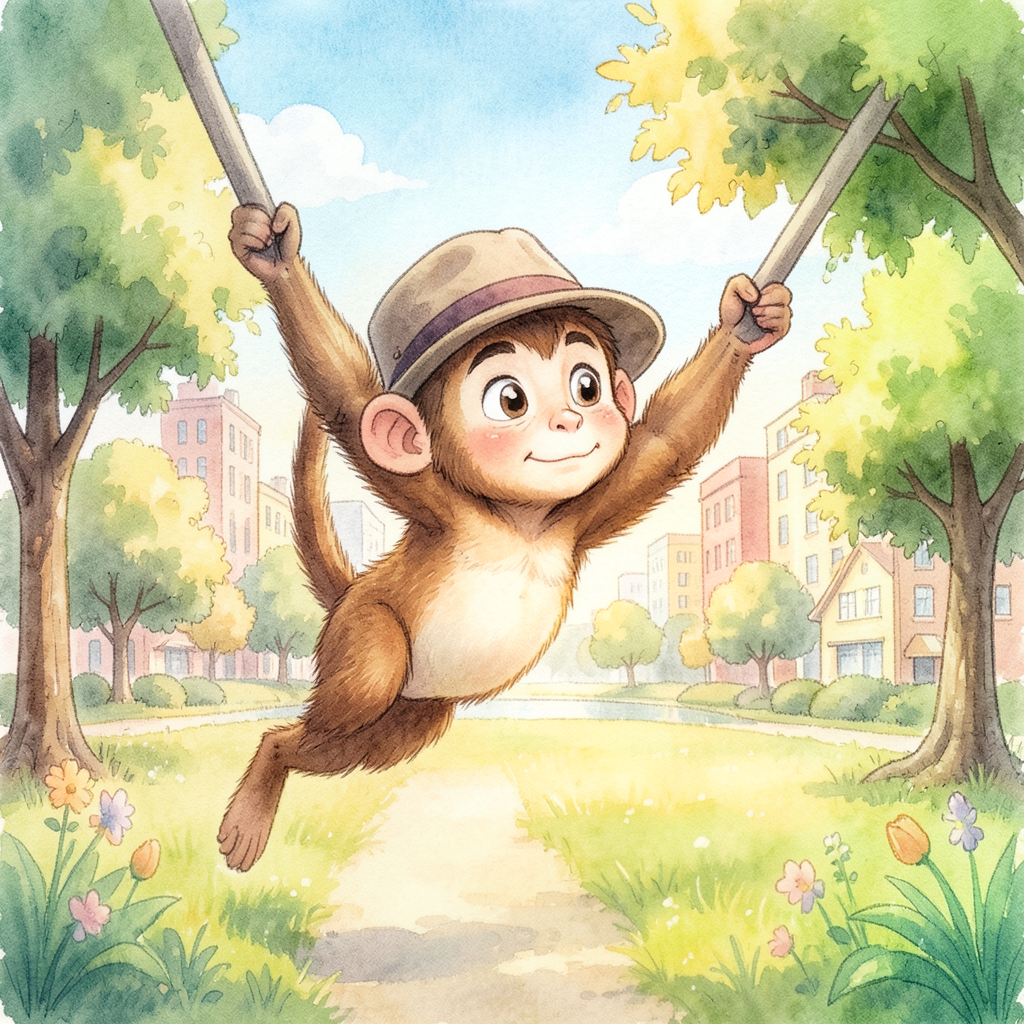
First published in 1938, Caps for Sale has earned its place as a genuine classic through the perfect simplicity of its structure. Esphyr Slobodkina gives us a peddler with an impeccable system — gray caps, brown caps, blue caps, and one red cap on top — and then lets a troop of mischievous monkeys upend that order completely. What makes the book irresistible is its escalating comic rhythm: the peddler shakes his finger, stamps his foot, and throws his own cap down in frustration, only for the monkeys to mirror him perfectly at every turn. Children sense the humor before they can articulate why it is funny, and they delight in shouting along with "You monkeys, you! Give me back my caps!" The solution — the peddler throws his cap down in a tantrum and the monkeys follow suit — feels both surprising and inevitable, which is the mark of a great picture-book ending. Nearly ninety years on, the repetition, the physical comedy, and the satisfying resolution make this book just as fresh today as the day it was published.
Reading Tips for Parents
The book's repeating phrases are your secret weapon. After the first read-through, invite your child to say "Tsz, tsz, tsz!" and "You monkeys, you!" right alongside you, or even let them take over the peddler's lines entirely. Pause before each page turn so children can predict what the monkeys will do next — this builds both comprehension and confidence. On a second reading, point to the cap stack on the peddler's head and count the caps together, reinforcing color sequencing and order. Older children in the 4-7 range enjoy acting out the story, taking turns as the peddler and the monkeys. The book reads aloud in about ten minutes, making it a strong choice for bedtime or a quick afternoon story when time is limited.
Awards & Recognition
- School Library Journal's list of "One Hundred Books That Shaped the Century" (20th century children's books)
- Recognized as a Children's Literature classic and perennial bestseller still in print after more than eight decades
Educational Value
This book helps children develop skills across multiple areas:
- Sequencing and Order: Children practice recalling and reciting the exact sequence of cap colors (gray, brown, blue, red), building memory and ordering skills.
- Vocabulary: Words like 'peddler,' 'wares,' and 'disturbed' introduce slightly formal language in a context that makes meaning easy to infer.
- Math: Counting and stacking the caps on the peddler's head offers a concrete introduction to ordinal concepts and one-to-one correspondence.
- Social-Emotional: The peddler's visible frustration and eventual calm model emotional regulation in a humorous, low-stakes way.
- Cause and Effect: The mirroring pattern helps children understand that actions produce predictable reactions, a foundational logic skill.
- Phonological Awareness: Repeated refrains and rhythmic language support early phonological awareness and make the text easy to memorize and recite.
Discussion Questions
Use these questions to spark conversation before, during, or after reading:
- Why do you think the monkeys copied everything the peddler did instead of giving the caps back?
- Can you remember the order of the caps from bottom to top? Let's try to say them together.
- Have you ever felt as frustrated as the peddler? What did you do?
- The peddler solved his problem by accident. Can you think of another way he could have gotten his caps back?
- If you were one of the monkeys sitting in the tree, what would you have done with the cap you were wearing?
Content Notes for Parents
There are no scary, sad, or mature elements in this book. The peddler's frustration is played entirely for comedy and resolves happily, making it suitable for the full 4-7 age range without reservation.
Frequently Asked Questions
What age is Caps for Sale best suited for?
The book is ideal for ages 3 through 7. Toddlers as young as 2.5 often enjoy the repetition and the comic faces, while kindergarteners and first-graders can begin reading the familiar refrains independently. The humor lands across a wide age span, so older siblings often enjoy it too.
Is this book good for beginning readers to try on their own?
Yes, it is one of the stronger choices for early independent reading. The vocabulary is simple, sentences are short, and the repeating phrases mean children quickly memorize large sections of the text. That sense of 'reading it themselves' builds genuine confidence even before full decoding skills are in place.
Are there any parts that might upset sensitive children?
The peddler gets visibly angry — he shakes his fists and stamps his feet — but the tone is always comedic rather than threatening. There is nothing frightening or sad in the story. Very sensitive children may briefly feel bad for the peddler, but the quick and funny resolution reassures them immediately.
What books are similar to Caps for Sale that my child might enjoy next?
Children who love Caps for Sale typically enjoy other repetition-driven classics such as 'The Very Hungry Caterpillar' by Eric Carle, 'If You Give a Mouse a Cookie' by Laura Numeroff, and 'Goodnight Moon' by Margaret Wise Brown. For more monkey mischief, 'Five Little Monkeys Jumping on the Bed' by Eileen Christelow is a natural next step.
Why does the peddler carry the caps on his head instead of in a bag?
That is exactly the right question to ask your child — the book never explains it, and that gap is part of what makes the story fun to talk about. Most children accept the image immediately because it is so visually funny and logical within the story's world. Asking 'why do you think he carries them that way?' is a great way to spark imaginative discussion.