The Gruffalo
About This Book
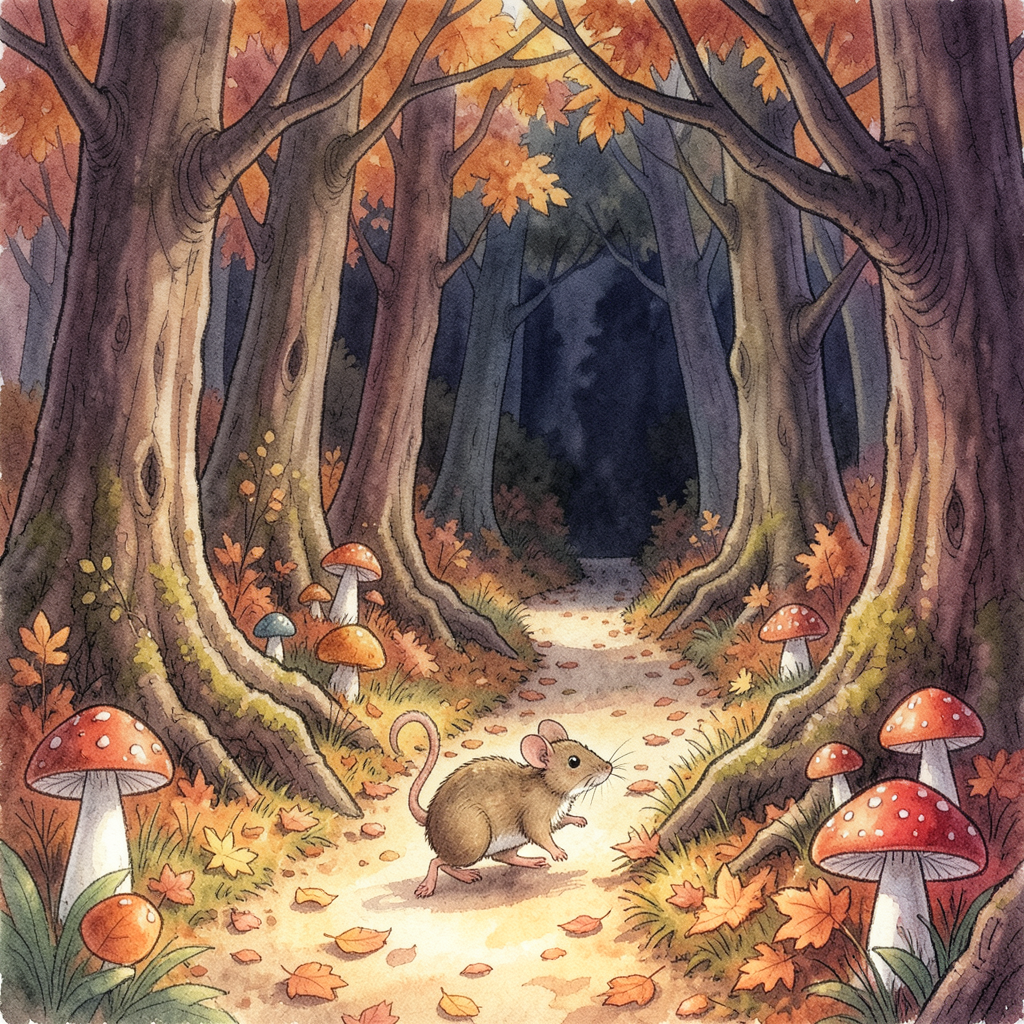
A clever little mouse walks through a forest, scaring off predators by describing a fictional monster called the Gruffalo. But when the mouse comes face to face with a real Gruffalo who wants to eat him, he must use his wits once more to stay safe.
Themes
ClevernessCourageHumor
Best For
- Bedtime reading when you want a story with a satisfying, reassuring ending
- Children who enjoy joining in with repeated phrases and refrains
- Starting conversations about using your brain rather than your size or strength
- Car trips or waiting rooms where a child can recite the Gruffalo's description from memory
- Introducing the concept of an unreliable plan that accidentally works out
Why Parents Love This Book
The Gruffalo has enchanted readers since 1999 for one very good reason: the mouse wins, and he wins with his brain. Julia Donaldson built the story on a rhythmic, rhyming text that pulls young readers forward with every turn of the page, making them feel clever for anticipating what comes next. The central joke — that the mouse invents the Gruffalo to frighten his enemies, only to encounter a real one — lands perfectly because children grasp the irony instantly and delight in being in on the joke with the mouse. Axel Scheffler's Gruffalo is wonderfully, specifically monstrous: terrible tusks, poisonous wart, orange eyes with a black tongue. The physical description is repeated throughout the book, giving early readers a memory exercise disguised as storytelling. Unlike many picture books where adults solve problems for children, here a small, seemingly powerless creature outsmarts everyone through calm thinking. That message — that cleverness is a superpower — has made this book a perennial favorite across more than two decades.
Reading Tips for Parents
Read this one aloud with full drama: lower your voice for the Gruffalo's lines, and let the mouse sound matter-of-fact and confident. The repetitive structure means most children can join in on the Gruffalo's description ("terrible tusks, terrible claws...") by the second or third reading — pause and let them fill in the blanks. Before the Gruffalo actually appears, ask your child to draw what they imagine he looks like based on the mouse's description, then compare it to Scheffler's illustration. After the story, revisit the beginning: point out how the mouse's invented lie accidentally became true, and talk through how he turned that situation around. This book pairs well with a walk outside — spotting imaginary creatures in trees and bushes extends the playful tone naturally.
Awards & Recognition
- Nestlé Smarties Book Prize Gold Award (1999)
- Shortlisted for the Kate Greenaway Medal (1999)
- New York Times bestseller and consistent top seller on UK children's book charts for over two decades
Educational Value
This book helps children develop skills across multiple areas:
- Vocabulary: Introduces vivid, specific descriptive words — tusks, claws, poisonous, terrible — in a memorable, repeated context that helps children retain new language.
- Phonological awareness: Donaldson's strong rhyme and meter support early phonics skills; children naturally begin to predict rhyming words before the page turns.
- Sequencing and memory: The repeated description of the Gruffalo's features gives children structured practice recalling details in order.
- Social-emotional: Models calm problem-solving under pressure; the mouse demonstrates that staying composed and thinking creatively are more effective than panicking.
- Critical thinking: The story's twist — the invented creature turns out to be real — invites children to think about cause and effect and unexpected consequences.
- Narrative comprehension: The circular story structure (beginning and end mirror each other) introduces children to how stories can be architecturally satisfying.
Discussion Questions
Use these questions to spark conversation before, during, or after reading:
- Why did the mouse make up the Gruffalo? Was it a good idea? Did it work the way the mouse expected?
- The mouse described the Gruffalo's features over and over. Can you remember them all? What would your own made-up monster look like?
- When the real Gruffalo appeared, the mouse didn't panic. What would you have done if you were the mouse?
- The fox, owl, and snake all ran away from the mouse at the end. Do you think they felt embarrassed? What do you think they said to each other afterward?
- If you could be any animal in the forest from this story, which one would you choose and why?
Content Notes for Parents
The Gruffalo is a large, scary-looking creature with detailed monstrous features, which may feel intense for very sensitive children under three, though the story quickly reassures readers that the mouse is never in real danger. There is no violence, death, or genuinely frightening content — the tone throughout is humorous and triumphant.
Frequently Asked Questions
What age is The Gruffalo best suited for?
The book is written for children ages 3 to 7. Younger children in that range enjoy the rhythm, the monster's funny appearance, and the reassuring ending. Children toward the older end of the range begin to appreciate the mouse's strategic thinking and the irony of the plot twist. Many parents report reading it successfully to 2-year-olds who love the rhymes, even before they follow the full plot.
Is the Gruffalo too scary for young children?
Most children are not frightened by the Gruffalo because the tone of the book is playful rather than threatening, and the mouse is never actually in serious danger for long. Axel Scheffler's illustrations are expressive but not grotesque. Very sensitive children under age three may need a parent to read expressively and keep the tone light. By the end of the story, the Gruffalo himself is running away — which most children find funny rather than scary.
What books are similar to The Gruffalo that we might enjoy next?
Julia Donaldson and Axel Scheffler made a direct sequel called The Gruffalo's Child, which follows the Gruffalo's daughter searching for the 'Big Bad Mouse' — it works well as a follow-on read. Other Donaldson and Scheffler collaborations like Room on the Broom and Zog have the same rhyming energy. If you love the 'small creature outsmarts big predators' theme, try Where the Wild Things Are by Maurice Sendak or The Tiger Who Came to Tea by Judith Kerr.
How can I use this book to build reading skills?
The Gruffalo's repetitive structure makes it ideal for shared reading. After a few readings, pause before rhyming words and let your child complete the line. The Gruffalo's physical description repeats several times — this is a natural memorization exercise that builds vocabulary and sequencing. You can extend the activity by having your child invent their own fictional creature, describe it in detail, and draw it, mirroring what the mouse does in the story.
Is there a film or audio version available?
Yes — a 27-minute animated film adaptation was produced by Magic Light Pictures and first broadcast by the BBC in 2009. It features voice performances from Helena Bonham Carter, James Corden, and Robbie Coltrane. The adaptation is faithful to the book and widely available on streaming services. There is also an official audiobook read by Imelda Staunton that preserves Donaldson's original rhymes well.