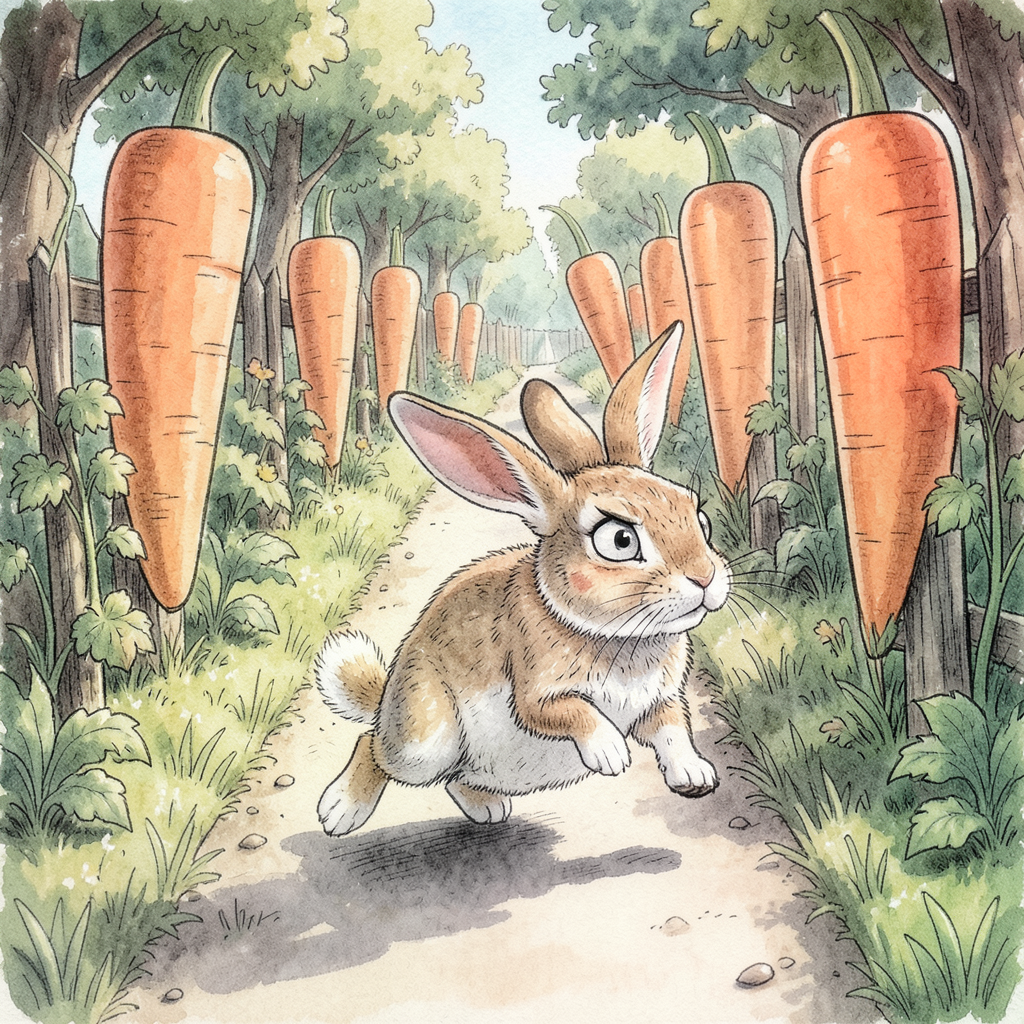
Creepy Carrots!
About This Book
Jasper Rabbit loves carrots — especially the particularly delicious ones from Crackenhopper Field. But lately, the carrots seem to be following him. At the bus stop. In the bathroom. Around every corner. Aaron Reynolds' hilarious paranoid-rabbit tale and Peter Brown's gorgeous noir-influenced artwork combine for a Caldecott Honor book that never stops being funny on re-reads.
Themes
HumourFearImagination
Best For
- Read-aloud sessions where a big group reaction makes the comedy land even better
- Children who claim they 'don't like' vegetables — Jasper's carrot obsession is a funny conversation starter
- Halloween season reading that delivers atmosphere without genuine fright
- Beginning readers ready to practice inference and re-reading for deeper meaning
- Families who enjoy sharing a book multiple times and noticing new details each pass
Why Parents Love This Book
Creepy Carrots! earns its place on the all-time-favorites shelf by doing something rare: it is genuinely funny for adults and children at the same time, for entirely different reasons. Kids delight in Jasper Rabbit's escalating panic as the carrots seem to lurk everywhere — behind the shower curtain, at the bus stop, in every shadowy corner. Adults catch the deadpan noir atmosphere Peter Brown creates with his moody black-and-white-and-orange illustrations, which parody classic horror and crime-fiction visuals with pitch-perfect restraint. The punchline landing at the end rewards patient re-readers who spot what the carrots were "really" doing all along, making every re-read a fresh experience. Aaron Reynolds keeps the text lean and rhythmic, so the comedy lands even when read aloud at bedtime speed. The book also quietly explores the way imagination can transform the ordinary into the terrifying — a concept children recognize from their own lives — giving it emotional resonance well beyond its comic surface.
Reading Tips for Parents
Read this one slowly and let the illustrations do the work. Before turning each page, pause and ask your child what they think the carrots will do next — the buildup is half the fun. On a first read, keep a straight face when the carrots appear; playing along with Jasper's dread amplifies the humor. On re-reads, invite your child to study the background details in Peter Brown's illustrations, because the carrots are visible doing perfectly ordinary things that Jasper misreads as sinister. This makes a wonderful entry point for talking about how our imagination can play tricks on us when we are nervous or hungry. The book reads aloud in about five minutes, making it ideal as a quick bedtime pick or a library storytime selection. No scary content that lingers — the tone is comedic throughout.
Awards & Recognition
- Caldecott Honor Book, 2013 (American Library Association)
- New York Times Best Illustrated Children's Books, 2012
Educational Value
This book helps children develop skills across multiple areas:
- Vocabulary: Introduces expressive words like 'peculiar,' 'lurking,' and 'suspicious' naturally through context, expanding descriptive language.
- Social-emotional: Validates the experience of irrational fear in a humorous, non-threatening way, helping children recognize and laugh at their own anxious imagination.
- Visual literacy: Peter Brown's noir-style illustrations reward close looking — children practice reading mood and meaning from color, shadow, and facial expression.
- Narrative structure: The story has a clear setup, escalating tension, and a twist resolution, giving children an early model of comic storytelling structure.
- Critical thinking: The ending invites children to reconsider every earlier scene, building inference skills and the habit of questioning first impressions.
- Humor comprehension: The gap between what Jasper believes and what is actually true introduces children to dramatic irony in an accessible, age-appropriate form.
Discussion Questions
Use these questions to spark conversation before, during, or after reading:
- Why do you think Jasper was so scared of the carrots? What was really happening?
- Has your imagination ever made something ordinary seem scary or strange? What was it?
- What would YOU do if you thought something was following you everywhere?
- Look at the pictures carefully — what are the carrots actually doing in each scene?
- Do you think Jasper will eat the carrots again after all this? Why or why not?
Content Notes for Parents
The book depicts a character experiencing mounting fear and paranoia, but the tone is entirely comedic and the resolution is reassuring — there is nothing genuinely scary or upsetting here. No violence, sad themes, or mature content; children who are sensitive to even mild spookiness will almost certainly find this funny rather than frightening.
Frequently Asked Questions
Is this book actually scary? My child is sensitive to frightening content.
No — the tone is comedic throughout. The illustrations use moody black-and-white noir styling, but the carrots themselves are completely harmless, and the joke is that Jasper is overreacting. Most sensitive children laugh rather than feel scared. If your child is easily upset by any hint of spookiness, preview it first, but the vast majority of 4-7 year olds find it funny rather than frightening.
What age range is this best suited for?
The book is written for ages 4-7, and that range holds up well in practice. Younger children (around 4-5) enjoy the slapstick visual comedy and the rabbit's exaggerated reactions. Older children in the 6-7 range start picking up on the dramatic irony — they can see what Jasper cannot — which gives them a more sophisticated reading experience and a sense of superiority over the protagonist that children love.
Will this book help my child who is afraid of the dark or of imaginary monsters?
It can be a gentle, humorous entry point for that conversation. The story shows that Jasper's fear was real to him even though the 'threat' was completely imaginary, and the resolution is matter-of-fact and reassuring. You can use it to open a discussion about how brains sometimes trick us. It is not a therapeutic tool, but many parents find it normalizes irrational fear without dismissing it.
Are there similar books you would recommend after this one?
Peter Brown's other books — including Mr. Tiger Goes Wild and The Wild Robot — share his distinctive illustration style and dry humor, though they are quite different in story. For a similar comedic-fear tone, Mo Willems' Elephant and Piggie series and Lemony Snicket's The Bad Mood and the Stick hit comparable notes. Aaaargh, Spider! by Lydia Monks works well for the same age group.
Is this good for classroom or library storytime use?
It is an excellent storytime choice. The pacing builds suspense that groups respond to well, the comedic payoff lands with an audience, and the illustrations are expressive enough to be read from a distance. The book runs about five minutes aloud, which fits neatly into a longer storytime block. The 2013 Caldecott Honor recognition means it is widely stocked in public and school libraries.