Dragons Love Tacos
About This Book
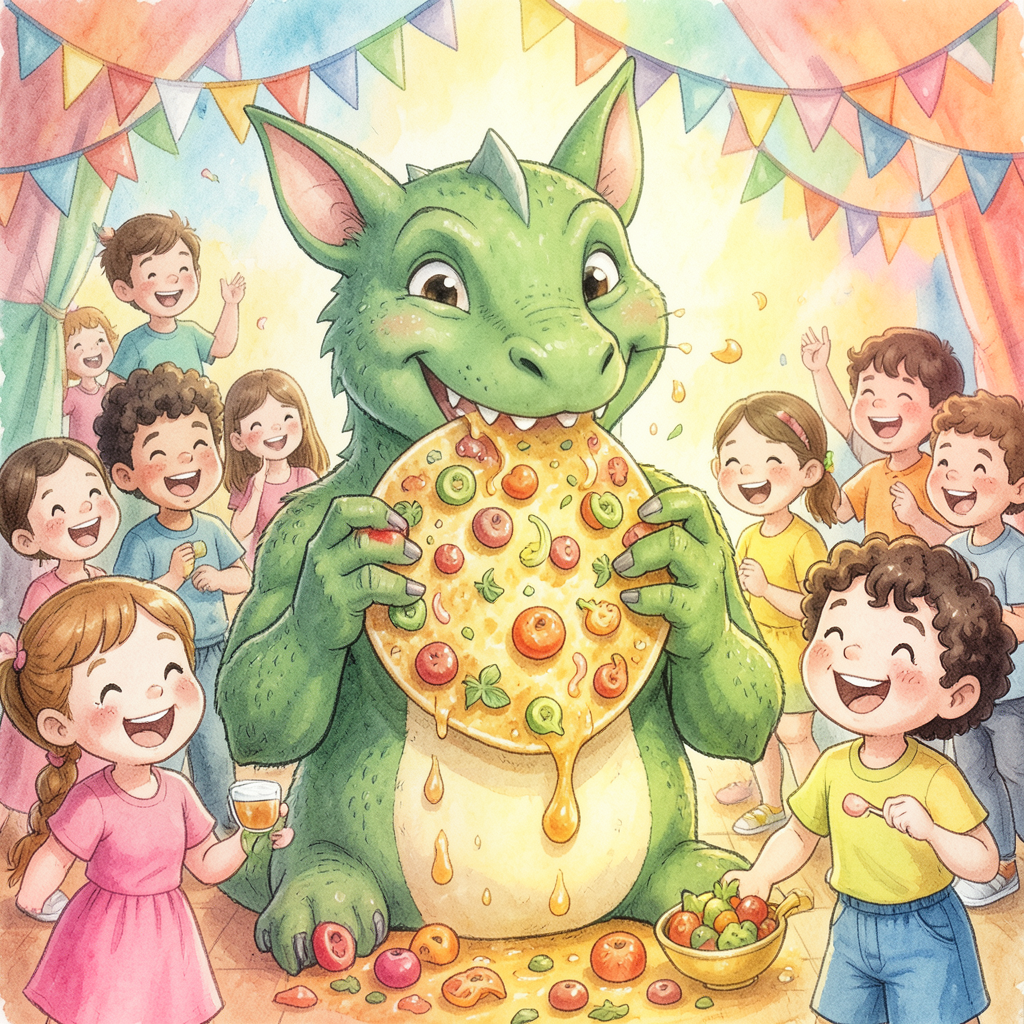
Dragons love all kinds of tacos — chicken tacos, beef tacos, great big tacos, tiny little tacos. But they absolutely cannot handle spicy salsa. When a boy throws a taco party for dragons and accidentally serves spicy salsa, things get very, very hot.
Themes
HumorImaginationFriendship
Best For
- Read-aloud sessions where you want guaranteed laughs from a group of preschool or kindergarten-age children
- Introducing the concept of cause and effect in a low-stakes, funny context
- Reluctant readers who respond better to humor than to more earnest picture books
- Taco nights at home — reading it before or after a family taco dinner becomes an instant tradition
- Library storytimes focused on food, imagination, or silly animals
Why Parents Love This Book
Dragons Love Tacos has earned its place as a modern classic because it does something rare: it creates a completely absurd premise and commits to it with total conviction. Adam Rubin's deadpan voice treats the dietary preferences of dragons as if they were perfectly established fact, and that straight-faced delivery is exactly what makes kids dissolve into giggles. The logic is airtight within its own delightful universe — dragons adore tacos, but spicy salsa is catastrophic. Daniel Salmieri's gouache illustrations are expressive and slightly retro, giving the dragons genuine personality without veering into scary territory. The boy protagonist is warmly drawn as an enthusiastic host whose good intentions lead to fiery (literal) consequences. What keeps parents reaching for this book again and again is the pacing — it builds beautifully to a comedic disaster, then pivots to a hopeful ending. It is a book that rewards re-reading, and kids who have heard it dozens of times still laugh at the same moments every time.
Reading Tips for Parents
Before the first read, take a moment to deliver the opening lines with exaggerated seriousness — the humor lands hardest when you sound like you are relaying important scientific facts. Pause on spreads that list taco varieties and let your child point to their favorites. When you reach the spicy salsa disaster, use your voice dramatically, then drop to a whisper for the aftermath. This is a great book for teaching cause and effect: ask your child to predict what will happen before you turn each page. The ending sets up a sequel naturally, so use it to introduce the idea of "what happens next?" as a storytelling concept. Kids ages 4 to 7 will want multiple back-to-back readings — build in time for at least two rounds so the experience does not feel cut short.
Awards & Recognition
- New York Times Bestseller
- New York Times Best Illustrated Children's Book (2012)
Educational Value
This book helps children develop skills across multiple areas:
- Vocabulary: Introduces descriptive food words and size contrasts (tiny, enormous, spicy, mild) in a memorable, repetitive context that helps words stick.
- Cause and Effect: The spicy salsa disaster is a clear, funny illustration of cause and effect, giving children a concrete anchor for this foundational reading comprehension concept.
- Social-emotional: Models thoughtful hosting and caring about guests' needs, and shows that accidents happen even with the best intentions.
- Humor and inference: The deadpan narration teaches children to recognize irony and comedic tone — an early literacy skill that supports understanding of subtext.
- Sequencing: The party build-up and aftermath give children practice retelling events in order, a core pre-reading skill.
- Creative thinking: The imaginative premise encourages children to invent their own absurd animal-and-food pairings, sparking original storytelling.
Discussion Questions
Use these questions to spark conversation before, during, or after reading:
- Why do you think dragons love tacos so much? What is your favorite food, and what would happen if a dragon showed up wanting to share it?
- The boy wanted to make the dragons happy at his party. What did he do wrong, and how could he have fixed it?
- The salsa made things very hot and fiery. Have you ever eaten something too spicy? What did it feel like?
- If you were going to throw a taco party for dragons, what rules would you make to keep everyone safe and happy?
- What do you think happens at the next taco party in the story? What would you do differently if you were the boy?
Content Notes for Parents
No scary, sad, or mature content to flag. The fire-breathing disaster scene is played entirely for laughs and is not frightening; the dragons are friendly and goofy throughout.
Frequently Asked Questions
What age is Dragons Love Tacos best for?
The sweet spot is ages 4 to 7. The humor is accessible to preschoolers who appreciate silly scenarios, and early readers around ages 6 to 7 can begin to tackle the text independently. Younger toddlers (2 to 3) may enjoy the bright illustrations and food theme but will not fully follow the story arc.
Is there anything scary in this book?
No. The fire-breathing scene when the dragons eat spicy salsa is written and illustrated as pure slapstick comedy — the dragons are distressed but the tone is entirely playful. There are no villains, no danger, and no sad moments. It is one of the gentler choices for sensitive children who are easily frightened by conflict in stories.
My child wants me to read this every night. Is that normal, and should I be concerned?
Completely normal and actually a good sign. Repetitive reading of a favorite book builds vocabulary, comprehension, and a love of reading. Each re-read, children often pick up new details in Salmieri's illustrations. If you need variety, Dragons Love Tacos 2: The Sequel exists and continues the story with equal silliness.
What books are similar to this one?
If your child loves this book, try Sharks Love Cats by Dominick Dalton, Peanut Butter and Cupcake by Terry Border, or anything else by Adam Rubin such as Those Darn Squirrels. For a similar deadpan-absurd tone, Dragons Love Tacos fans often respond well to I Want My Hat Back by Jon Klassen.
Can I use this book to introduce real information about dragons or tacos?
It works beautifully as a jumping-off point for both. After reading, many families make tacos together and talk about ingredients, spice levels, and different taco varieties mentioned in the book. For dragons specifically, the book is pure fantasy, so it pairs well with a follow-up conversation about mythological creatures if your child is curious about where the dragon idea comes from.