Each Peach Pear Plum
About This Book
I-spy with a nursery-rhyme twist: each spread hides a beloved fairytale or nursery-rhyme character that careful young eyes can spot in the illustrations. As Tom Thumb, Mother Hubbard, Bo-Peep, and the Three Bears all converge at a plum-pie picnic, this Caldecott Honor book rewards every re-reading with something new to find.
Themes
Nursery RhymesSearch and FindPlay
Best For
- Lap-reading with babies and toddlers who are just beginning to focus on illustrations
- Children who already love nursery rhymes and will enjoy spotting familiar faces
- Building observation and visual attention skills in a low-pressure, playful way
- Families looking for a short, satisfying bedtime book with a gentle rhythm
- Grandparents and caregivers who grew up with these classic characters and want to share them
Why Parents Love This Book
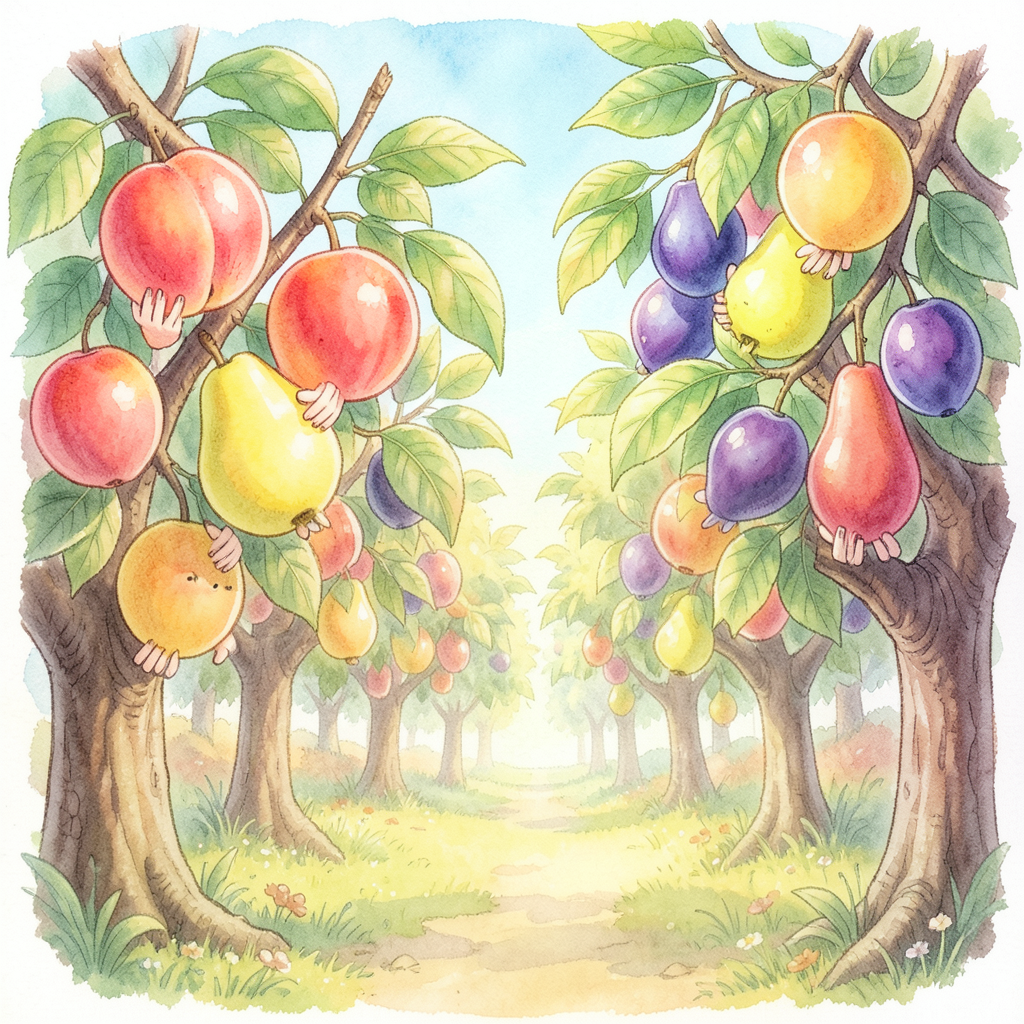
Each Peach Pear Plum has been delighting babies and toddlers since 1978, and its genius lies in how effortlessly it layers two kinds of joy into every page. The simple, bouncy rhyming text — built on a peach-pear-plum-spy pattern — gives very young children a satisfying rhythm to anticipate and chant along with. At the same time, Allan Ahlberg's warm, detailed illustrations hide a nursery-rhyme character on each spread, turning every reading into a gentle hide-and-seek game. Tom Thumb, Mother Hubbard, Bo-Peep, Cinderella, the Three Bears, and Robin Hood all make appearances before converging at a sunny plum-pie picnic. The ending feels like a celebration the whole nursery-rhyme world has been invited to. Because the characters are tucked into ordinary countryside scenes rather than spotlit, the book rewards closer looking on every re-read. Children who have found everything still love hearing the rhyme. It is one of the rare books that works equally well for a sleepy bedtime lap-read and an energetic "I found it!" morning session.
Reading Tips for Parents
Read the rhyming text through once without pausing so your child can feel the rhythm and momentum. On the second read, slow down at the "I spy" line and give your child time to scan the illustration before turning the page — resist pointing right away. For very young babies, your animated voice and the bright illustrations are enough; the hiding game becomes meaningful around 18 months to 2 years. As your child grows, ask them to name the character before you confirm it. If they are not yet familiar with the nursery rhymes, spend a few sessions on rhymes like "Little Bo-Peep" or "Old Mother Hubbard" first — recognition deepens the pleasure considerably. The final picnic spread, where all the characters appear together, is a wonderful opportunity to review everyone they have spotted throughout the book.
Awards & Recognition
- Caldecott Honor Book (American Library Association, 1979)
- Kate Greenaway Medal commended (UK, 1978)
Educational Value
This book helps children develop skills across multiple areas:
- Visual discrimination: Scanning detailed illustrations to locate a partially hidden figure builds early observation and focus skills that support later reading readiness.
- Phonological awareness: The consistent rhyme scheme (peach, pear, plum, spy) introduces children to rhyming patterns and the sounds of language in a playful, memorable way.
- Literary heritage: Meeting Tom Thumb, Cinderella, the Three Bears, and other classic characters gives toddlers an early foundation in nursery-rhyme and fairytale tradition.
- Vocabulary: Country-scene illustrations introduce words like orchard, haystack, cellar, and forest in a meaningful visual context.
- Social-emotional: The warm picnic ending models community and belonging — characters from different stories come together and share, reinforcing themes of inclusion.
- Cognitive patience: Waiting and searching before the page is turned builds the early impulse-control and sustained attention that underpin school readiness.
Discussion Questions
Use these questions to spark conversation before, during, or after reading:
- Can you find the hidden character on this page? Where are they hiding?
- Do you recognize any of these characters from other stories or songs you know?
- All the characters meet at the end for a picnic. What do you think they are eating, and who would you invite to your own picnic?
- Which hidden character was the hardest to find? Which was the easiest?
- If you could hide in one of these pictures, where would you hide?
Content Notes for Parents
There are no scary, sad, or mature elements in this book. All content is gentle and cheerful, and the book is appropriate for the youngest readers without reservation.
Frequently Asked Questions
What age is Each Peach Pear Plum best for?
The book works from birth onward, since babies respond to the bouncy rhyme even before they understand the words. The hide-and-seek game becomes genuinely engaging around 18 months to 2 years, when children can scan an illustration purposefully. Many children continue to enjoy it well past age 3, especially if they are building familiarity with nursery-rhyme characters.
Do children need to know the nursery rhymes before reading this book?
Not at all — the book stands on its own as a search-and-find rhyme. However, children who already recognize Tom Thumb, Bo-Peep, or Cinderella will get an extra layer of delight from spotting characters they know. You can use the book as a springboard to explore those rhymes and stories afterward, or read them beforehand to deepen the experience.
Is there anything in the book that might worry a sensitive child?
No. The tone is entirely warm and playful throughout. All the characters appear in cheerful, pastoral scenes and the book ends with a happy communal picnic. There are no scary moments, conflict, or sad themes.
My toddler wants me to read it over and over. Is that normal?
Completely normal and actually a sign the book is working well. Repetition is how young children consolidate language, pattern recognition, and the satisfaction of finding hidden characters they may have missed before. Each re-read often surfaces something new, so the book genuinely rewards repetition rather than wearing thin quickly.
Are there similar books you would recommend alongside this one?
If your child loves the search-and-find element, Martin Handford's Where's Wally? series is a natural next step for slightly older children. For more nursery-rhyme fun at the same age, The Jolly Postman (also by the Ahlbergs) is a beloved companion, though it works best from around age 4. Jan Ormerod's Sunshine or any simple Shirley Hughes picture book shares the same warm, observational illustration style.