Feast for 10
About This Book
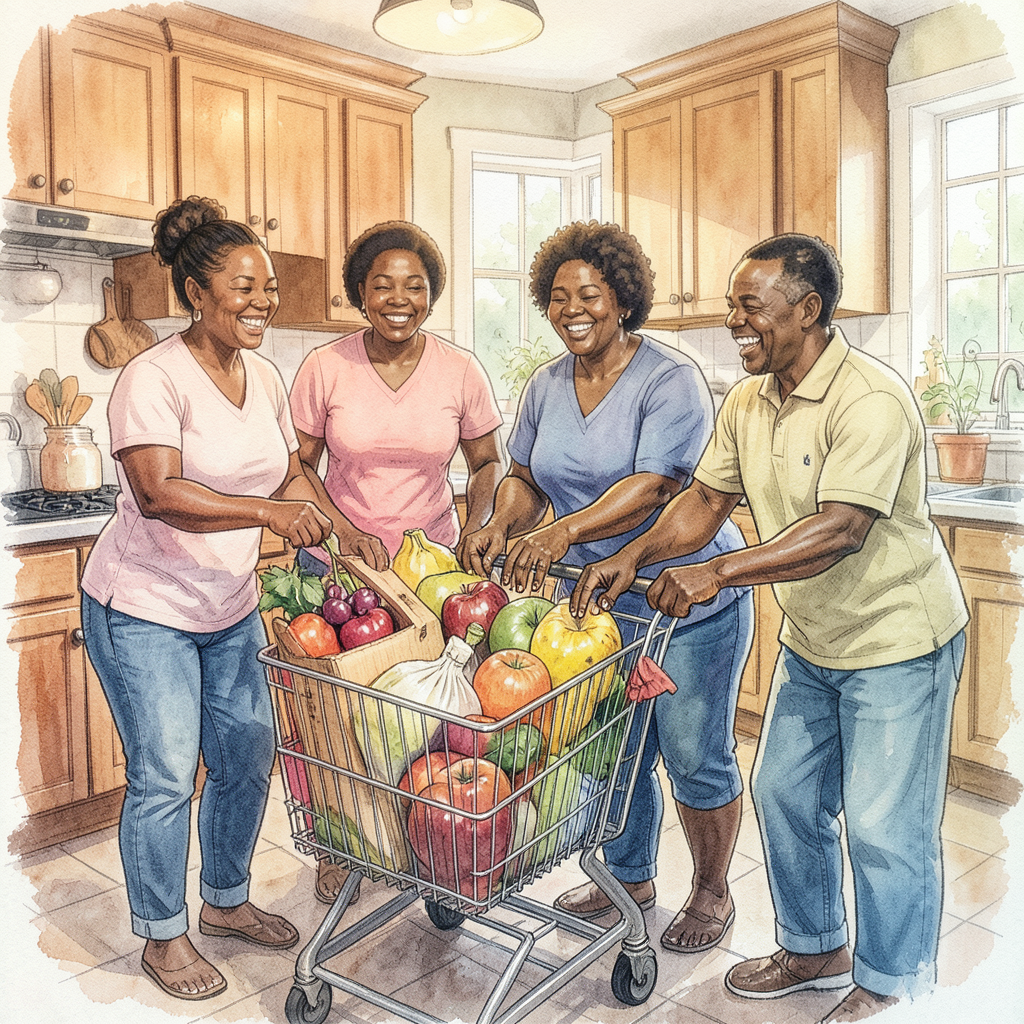
A family shops for ten items at the grocery store, then counts ten people helping to cook a celebration feast. Cathryn Falwell's rich cut-paper illustrations feature a joyful Black family working together from the market to the table, blending a counting lesson with a warm portrait of family life.
Themes
CountingFamilyFood
Best For
- Toddlers who are just beginning to learn to count to ten
- Families who want counting books that reflect Black family life
- Reading aloud before cooking or grocery shopping as a real-world connection
- Classrooms and daycares introducing number concepts to pre-readers
- Gift-giving for babies and toddlers — the board book format is durable and long-lasting
Why Parents Love This Book
Feast for 10 has earned its place as a genuine classic for the very youngest readers, and it is easy to see why. Cathryn Falwell structures the counting journey beautifully: children count up to ten as the family fills a grocery cart, then count again as ten family members pitch in to cook a celebration meal. That double pass through the numbers reinforces learning without feeling repetitive, because the setting shifts from the busy store to the warm kitchen. Falwell's hand-cut paper collage illustrations are a visual delight — layered, tactile, and richly detailed in a way that rewards lingering. The family at the center is joyful and intergenerational, with grandparents, parents, and children all working side by side. Published in 1993, the book remains rare in showing a loving, everyday Black family doing ordinary, beautiful things together. It teaches counting, but what it really teaches is that cooking together, sitting together, and celebrating together are what make a family.
Reading Tips for Parents
Read Feast for 10 as an interactive counting experience rather than a passive listen. Point to each item on the page and let your child say the number aloud or hold up their fingers. The book naturally invites two rounds of counting — first in the grocery store, then in the kitchen — so pause between sections and ask, "Now what are we counting?" Older toddlers enjoy spotting the food items in the illustrations before you name them. The cooking scenes are a perfect bridge to real life: read it before making dinner together and count ingredients or family members helping out. Board book editions hold up to the enthusiastic handling of very young children. The familiar sequence of shop-cook-eat gives even pre-verbal children an early sense of story structure.
Awards & Recognition
- ALA Notable Children's Book
- Booklist Editors' Choice
Educational Value
This book helps children develop skills across multiple areas:
- Math: Introduces counting 1 through 10 twice in different contexts — grocery shopping and cooking — giving children meaningful repetition of number sequence.
- Vocabulary: Introduces food and cooking words such as ingredients, feast, and the names of grocery items visible in the illustrations.
- Social-emotional: Shows cooperation and shared responsibility as every family member contributes to preparing the meal.
- Print concepts: The simple, rhythmic text supports early pattern recognition and helps pre-readers anticipate what comes next.
- Cultural awareness: Presents a joyful, intergenerational Black family in an everyday, affirming context that broadens representation for all young readers.
- Life skills: Connects the abstract concept of counting to real, familiar activities children experience — grocery shopping and cooking at home.
Discussion Questions
Use these questions to spark conversation before, during, or after reading:
- Can you count all the things the family puts in the grocery cart? Let's count them together!
- Who do you see helping in the kitchen? What job would you want to help with?
- The family is making a big feast. What is your favorite food to eat with your family?
- The book counts all the way to ten. Can you count to ten using your fingers?
- What do you think the family is celebrating at their feast?
Content Notes for Parents
There are no scary, sad, or mature elements in this book. It is gentle, warm, and entirely appropriate for infants through early preschoolers.
Frequently Asked Questions
What age is Feast for 10 best suited for?
The book is ideal for children ages 0 to 3, though its counting structure and detailed illustrations can engage children up to about age 5. Babies enjoy the bold, colorful collage art, while toddlers and preschoolers actively participate in the counting. The board book format is designed for the youngest readers.
Does the book count all the way to ten, or just to a lower number first?
The book counts all the way to ten twice. The first pass happens at the grocery store, where the family adds ten items to their cart. The second pass happens at home, where ten family members join together to cook. This double structure makes the counting feel fresh both times.
Are there any concerns about content or themes parents should know about?
None at all. The book is entirely wholesome, featuring a loving family doing everyday activities. There is nothing scary, sad, or mature. It is one of the safest and most joyful read-alouds available for very young children.
What makes this different from other counting books?
Most counting books use abstract objects arranged on a plain background. Feast for 10 counts within a real, warm narrative — a family shopping and then cooking together. Children are not just counting objects; they are following a story with a beginning, middle, and end. The rich cut-paper collage illustrations also stand apart visually from typical board book art.
What are some similar books we might enjoy after reading this one?
If your child loves the family warmth and counting in Feast for 10, try Ten, Nine, Eight by Molly Bang, which counts down at bedtime with a Black father and daughter, or Counting with Caruso by Cindy Meyers for more narrative counting fun. For more books celebrating Black family life, Ezra Jack Keats's The Snowy Day or Angela Johnson's picture books are wonderful next steps.