Counting Kisses
About This Book
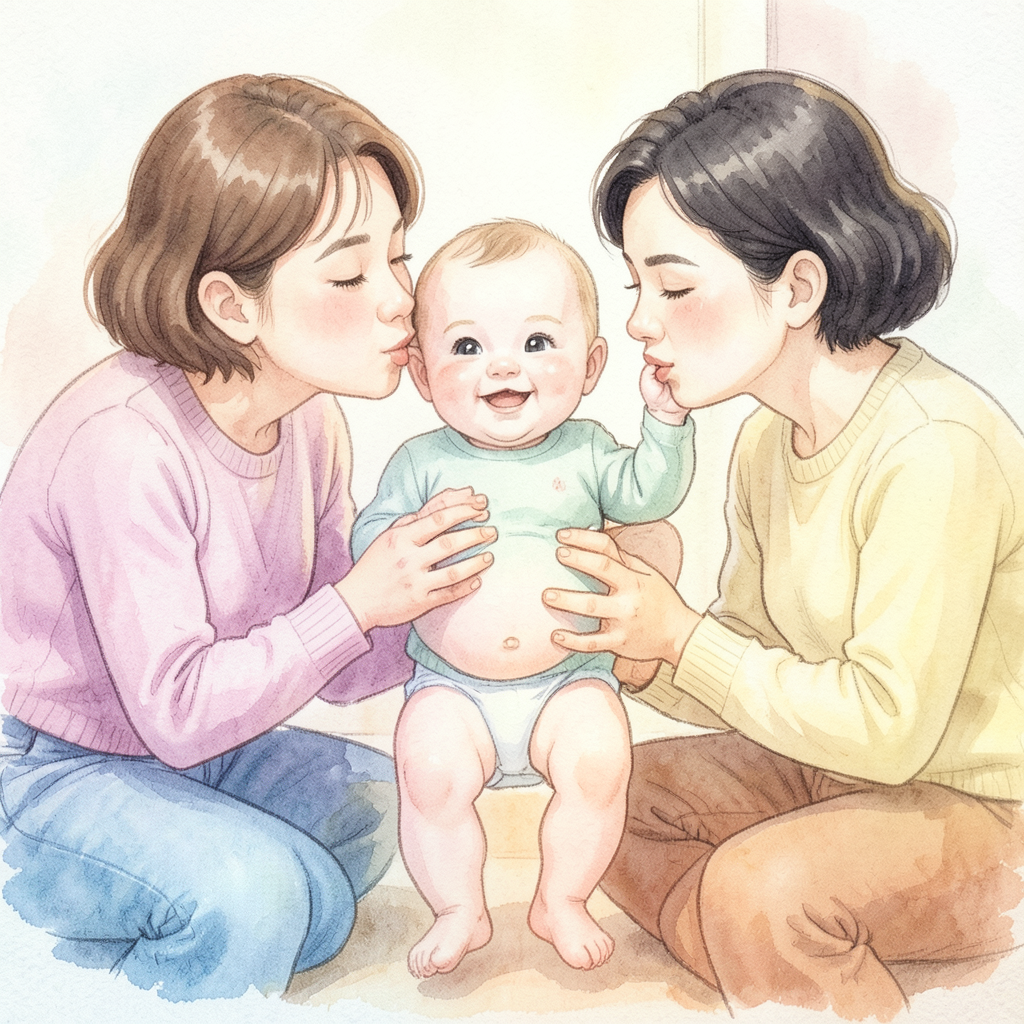
A tired baby gets kisses counted from ten to one — on tiny toes, round knees, a soft belly, and a sleepy nose — as the whole family takes turns sending this little one off to dreamland. Karen Katz's warm, bright illustrations and sweet counting text make this a favourite for bedtime and for learning numbers.
Themes
BedtimeCountingFamily
Best For
- Bedtime routines for babies and toddlers who need a calming wind-down ritual
- Early counting practice with children aged 1 to 3
- New parents looking for a short, lovable book they can recite from memory
- Families who want to make goodnight kisses a playful, numbered game
- Gift-giving for baby showers or a newborn's first library
Why Parents Love This Book
Counting Kisses is one of those rare board books that does two things brilliantly at once: it teaches counting and it wraps a baby in love. Karen Katz counts down from ten to one, with each number landing on a different part of the baby's body — ten kisses on tiny toes, nine on round little knees, and so on up to one big kiss on a sleepy nose. The countdown structure gives the book a natural, calming rhythm that mirrors the winding-down feeling of bedtime itself. Katz's illustrations are bold and warm, with a multicultural family that many children will recognize themselves in. The repetition is perfectly calibrated for babies and toddlers: predictable enough to feel safe, engaging enough to hold their attention. By the time the baby drifts off, young readers often feel drowsy themselves. Over two decades after its publication, this book remains a bedtime shelf staple precisely because it turns the everyday ritual of putting a child to sleep into something that feels tender and joyful.
Reading Tips for Parents
When reading aloud, slow down at each number and pause to actually kiss or point to the corresponding body part on your child. This physical connection turns the book into an interactive game and helps toddlers internalize both the number sequence and body-part vocabulary. The countdown from ten to one is also a useful sleep cue: consider using it as a signal that lights-out follows on the count of one. For babies not yet walking, you can adapt the kisses to whatever body parts are accessible and funny — this kind of play strengthens bonding. If your toddler wants to count along, let them call out the numbers before you turn the page. The book is short enough for even the most overtired bedtime, and the soft, repetitive language makes it easy to recite from memory once you have read it a handful of times.
Awards & Recognition
- New York Times Bestseller
- Featured as a Scholastic Book Club selection
Educational Value
This book helps children develop skills across multiple areas:
- Math: Introduces countdown counting (10 to 1) in a concrete, memorable context, laying early groundwork for understanding number order and subtraction.
- Body Awareness: Names body parts from toes to nose in sequence, helping toddlers build vocabulary for their own bodies.
- Vocabulary: Simple, rhythmic language introduces words like 'tiny,' 'round,' 'soft,' and 'sleepy,' expanding descriptive adjective awareness.
- Social-Emotional: Reinforces that bedtime is safe and loving, reducing anxiety around the sleep transition.
- Family & Belonging: Depicts multiple family members participating in the bedtime ritual, affirming the concept of extended family love and care.
- Phonological Awareness: The rhyming and repetitive text builds early sensitivity to sound patterns, a pre-reading skill.
Discussion Questions
Use these questions to spark conversation before, during, or after reading:
- Can you count from ten all the way down to one with me? Let's try it together.
- Which kiss was your favourite — the one on the toes, the knees, or somewhere else? Why?
- Who in your family gives you kisses at bedtime? Who would you like to give kisses to?
- The baby in the book gets kisses from the whole family. Can you point to the people who love the baby?
- If you could add one more kiss anywhere on the baby, where would you put it?
Content Notes for Parents
There are no scary, sad, or mature elements in this book. It is a wholly gentle bedtime story appropriate for the youngest readers, including newborns.
Frequently Asked Questions
What age is Counting Kisses best suited for?
The book is ideal for babies and toddlers from birth through about age three. Newborns benefit from the soothing rhythm and close-reading time with a caregiver, while one- and two-year-olds can actively point to body parts and begin counting along. By age three, most children will know the countdown by heart and enjoy 'reading' it themselves.
Is this book good for teaching counting, or is it mainly a bedtime story?
It does both genuinely well. The countdown from ten to one is embedded in a warm narrative, so children absorb number sequence naturally rather than through rote drilling. Parents often find that their toddlers start counting backward from ten in other contexts after spending time with this book, which is a sign the concept has stuck.
Are there any content concerns I should know about before reading it with my child?
None at all. The book is entirely gentle — no conflict, no scary moments, no sad themes. It is one of the most universally safe board books for very young children.
My toddler wants to read this every single night. Is that normal, and should I be varying our book choices?
Completely normal. Repetition is how very young children learn and how they feel secure, and a beloved bedtime book often becomes a ritual anchor. You do not need to replace it. You can, however, add variety by doing one new book first and saving Counting Kisses as the closing book, which preserves the ritual while broadening your child's reading diet.
Are there other Karen Katz books similar to this one?
Yes — Karen Katz has a number of warm, bright board books in a similar spirit, including Where Is Baby's Belly Button? and Peek-a-Baby, both of which feature body-part games and the same inclusive, colorful illustration style. If your child loves Counting Kisses, those titles are natural next steps.