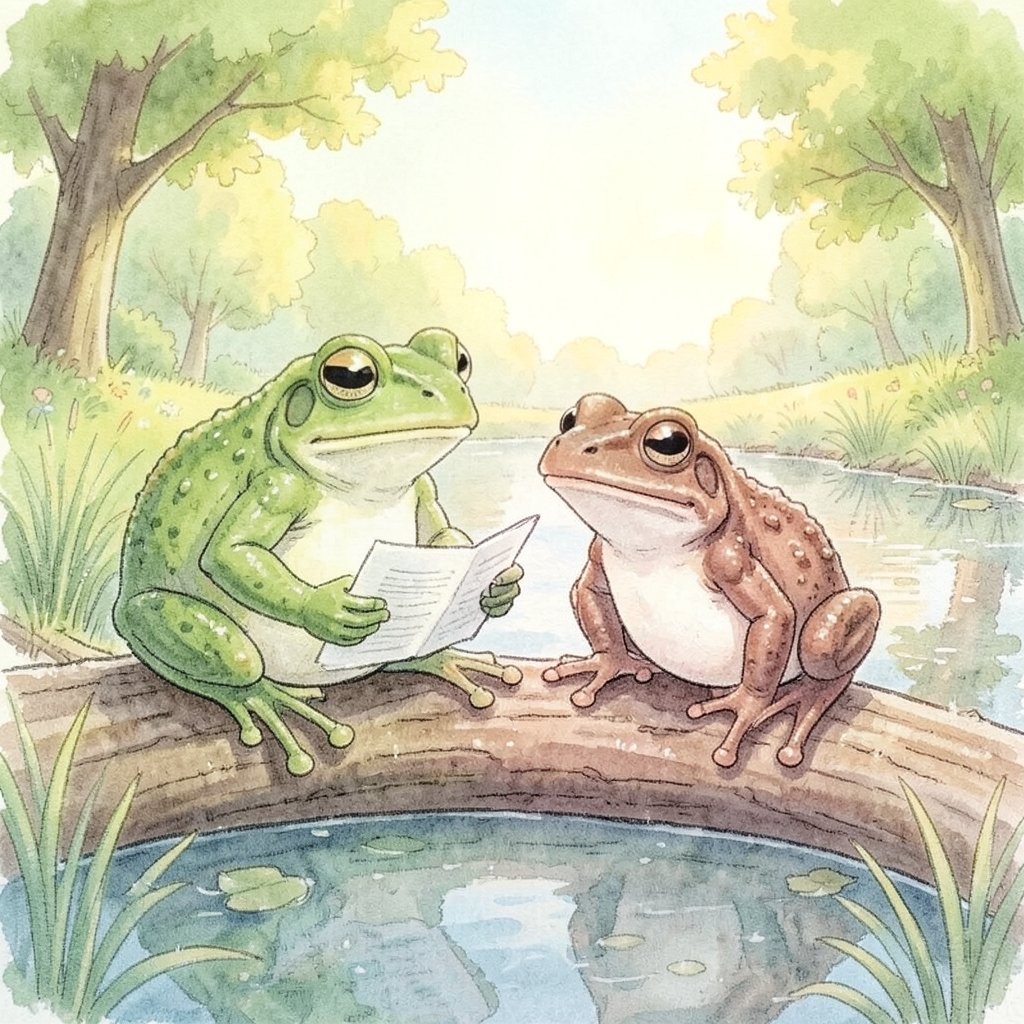
Frog and Toad Are Friends
About This Book
Five gentle stories chronicle the friendship between the cheerful, easygoing Frog and the grumpy, anxious Toad. They wait for spring, search for a lost button, swim at the pond, and wait for the mail together. Their deep, accepting friendship is the heart of every tale.
Themes
FriendshipKindnessPatience
Best For
- Children who are just starting to read chapter books independently and need manageable, rewarding chapters
- Kids who tend to worry or feel anxious and may find Toad's character relatable and reassuring
- Bedtime read-alouds when you have time for one complete short story
- Introducing conversations about what makes a good friend
- Classroom read-alouds for early elementary students exploring friendship themes
Why Parents Love This Book
Arnold Lobel's Frog and Toad Are Friends has earned its place as one of the most beloved beginning readers of all time — and for good reason. What sets it apart is not an exciting plot or a dramatic conflict, but the quiet, true-to-life texture of an enduring friendship. Frog is sunny and optimistic; Toad is anxious, grumpy, and deeply lovable. Their dynamic feels real in a way that young children immediately recognize: one friend who nudges you out of bed, one who writes you a letter just so you will have something to look forward to. Each of the five short chapters works as a complete, satisfying story, which makes the book ideal for children still building reading stamina. Lobel's warm illustrations extend the gentle humor on every page. But most of all, this book quietly teaches children that a good friend accepts you exactly as you are — worries, bad moods, and all. That message lands every single time.
Reading Tips for Parents
Each chapter is a self-contained story, so you can read one per sitting without any cliffhangers — a practical advantage with tired or distracted young readers. Pause at moments where Toad is embarrassed or frustrated and ask your child what they think Toad is feeling; the book rewards slow, conversational reading. The chapter "The Letter" — in which Frog writes Toad a letter so Toad will finally have mail to wait for — is especially rich for discussion about what it means to do something kind for someone else. If your child is a beginning reader, many families use this book as a first independent read; the sentences are short and the vocabulary is manageable, though words like "miserable" and "peculiar" offer natural teachable moments. Returning to this book across multiple years works well; older children pick up on the gentle irony they missed earlier.
Awards & Recognition
- Caldecott Honor Book, 1971
- Newbery Honor Book, 1971
Educational Value
This book helps children develop skills across multiple areas:
- Social-emotional learning: Models how genuine friendship involves patience, acceptance of differences, and doing kind things without being asked.
- Vocabulary: Introduces expressive words like 'miserable,' 'peculiar,' 'impatient,' and 'dreadful' in context, making them memorable and accessible.
- Reading stamina: The chapter structure — five short, complete stories — helps beginning readers experience the satisfaction of finishing a chapter independently.
- Emotional literacy: Toad's anxiety and grumpiness are depicted without judgment, helping children name and normalize difficult feelings.
- Narrative comprehension: Each chapter has a clear beginning, problem, and resolution, giving children practice recognizing story structure.
- Empathy and perspective-taking: Children must track two characters with different personalities and understand why each behaves as they do.
Discussion Questions
Use these questions to spark conversation before, during, or after reading:
- Why do you think Frog went to wake Toad up even when Toad wanted to stay in bed? Have you ever had a friend do something like that for you?
- In the chapter about the button, Toad is upset about losing one small button. Why do you think it mattered so much to him? How did Frog help?
- Frog wrote Toad a letter so Toad would have something to wait for. Can you think of something kind you could do for a friend that might make them happy?
- Toad and Frog are very different — Frog is cheerful and Toad worries a lot. Do you think it is okay for friends to be different from each other? Why?
- If you could spend a day with Frog and Toad, what would you want to do together?
Content Notes for Parents
There are no scary, violent, or upsetting elements in this book. Toad experiences mild anxiety and embarrassment in several chapters, but these moments are handled with warmth and gentle humor, making them reassuring rather than distressing for young readers.
Frequently Asked Questions
What age is this book really right for?
The book is written for ages 4 to 7, but it works across a wider range depending on how you use it. Parents of 4- and 5-year-olds typically read it aloud together. Children around age 6 or 7 who are beginning readers often tackle it independently. Many families return to it at age 8 or 9 and appreciate the humor differently the second time around.
Is this a chapter book or a picture book?
It sits in between — officially an Early Reader or beginning chapter book. It has five illustrated chapters, each roughly 8 to 10 pages, with simple sentences and large print. The illustrations are detailed and expressive enough to engage picture-book fans, while the chapter format makes it feel like a milestone for new independent readers.
Are there any parts that might upset sensitive children?
Nothing in this book is scary or violent. Toad does feel embarrassed in the swimming chapter when other animals laugh at how he looks in his bathing suit, which might resonate with children who are sensitive about body image or being laughed at. The moment passes quickly and Frog is supportive throughout. Overall it is a very gentle book.
What other books are similar to this one if my child loves it?
Arnold Lobel wrote three more books in the series — Frog and Toad Together, Frog and Toad All Year, and Days with Frog and Toad — all equally wonderful. Children who love this format often also enjoy Else Holmelund Minarik's Little Bear series and Cynthia Rylant's Henry and Mudge books, which share the same warm, simple, friendship-centered tone.
Can I use this book to help my child through friendship challenges?
Yes, and many parents find it comes up naturally. The stories offer low-pressure entry points for conversations about patience, accepting a friend who is different from you, and doing kind things without expecting anything in return. You do not need to force the lesson — the stories make the points gently on their own, and children often make the connections themselves.