Goodnight Gorilla
About This Book
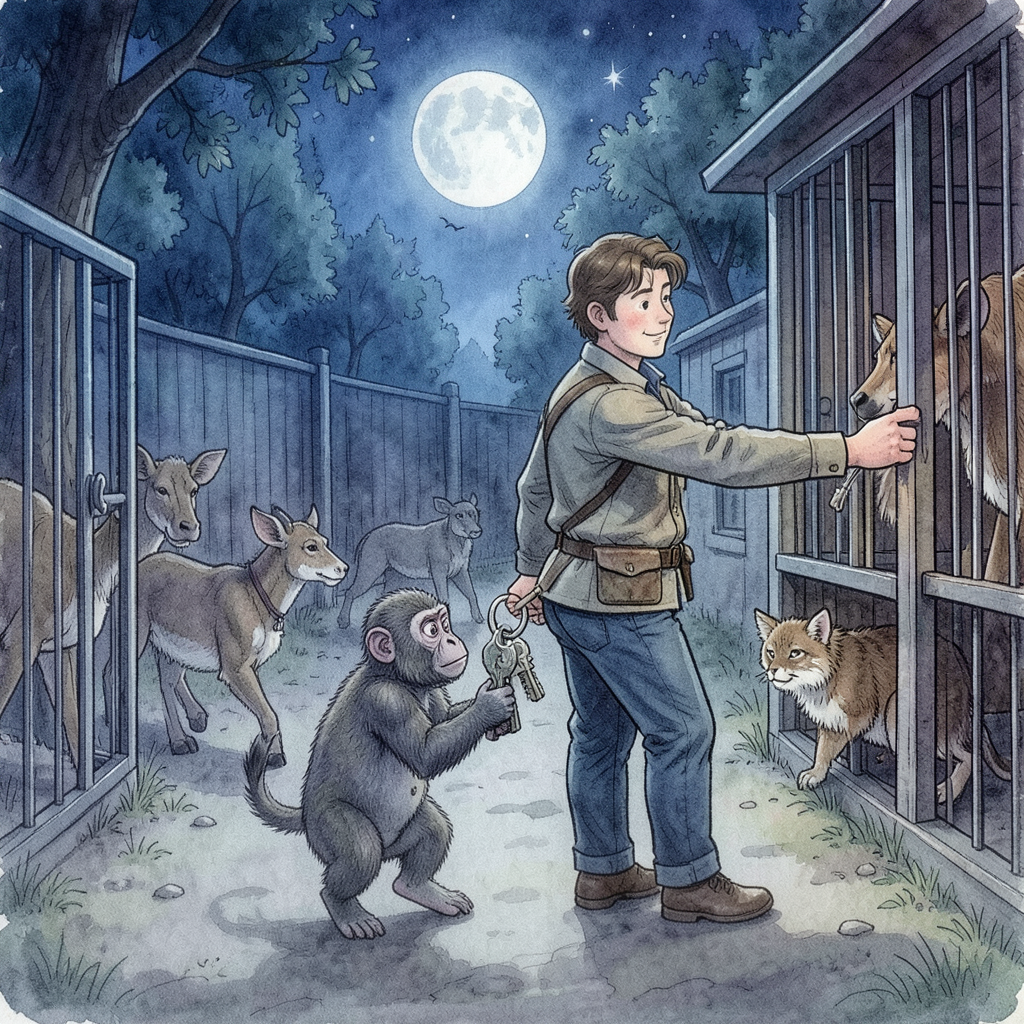
A mischievous little gorilla steals the zookeeper's keys and lets every animal out — following the unsuspecting keeper home in a hilarious, nearly wordless procession. Peggy Rathmann's warm illustrations hide a dozen small jokes for eagle-eyed children, making Goodnight Gorilla one of the most richly re-readable books in any collection.
Themes
BedtimeAnimalsHumour
Best For
- Bedtime routines with toddlers who resist settling down, because the cozy ending naturally cues sleep
- Children who love animals and will delight in naming every creature in the parade
- Families who want a book that grows with the child — babies enjoy the colors and rhythm while older toddlers hunt for hidden details
- Early talkers and pre-readers, since the minimal text invites children to supply the words themselves
- Group storytime with multiple young children, where everyone can shout out animal names together
Why Parents Love This Book
Goodnight Gorilla earns its place as one of the most beloved bedtime books by trusting children as true observers. Peggy Rathmann tells a nearly wordless story — "Goodnight, Gorilla" and the repeated animal names carry nearly all the text — yet the illustrations burst with layered jokes and secrets that reward every re-reading. The mischievous gorilla steals the zookeeper's keys in the very first spread, and sharp-eyed toddlers will notice the growing parade of zoo animals long before the oblivious zookeeper does. A tiny mouse dragging a banana through the dark is easy to miss the first time and utterly delightful the tenth. The warm, glowing palette of nighttime purples and yellows feels genuinely cozy rather than merely decorative, and the climax — all the animals tucked into the zookeeper's bedroom while his wife calmly sends them back — lands with a laugh every single time. This is a book that children actively read rather than passively receive, and that dynamic makes it a special kind of magic.
Reading Tips for Parents
Because the text is so minimal, let your child do the heavy lifting. Point to each animal as you say their name and pause to let your toddler fill in the word — many children begin "reading" this book back to you around 18 months. Slow down on busy spreads and ask "What does the gorilla have?" or "Who else is following?" before turning the page. The mouse and the banana are a running visual gag that spans the whole book; once your child spots it, expect gleeful demands to find it on every page. At the bedroom scene, use a whispered voice to match the sleeping zookeeper's wife, then switch to a surprised voice when she sends everyone home — that vocal play heightens the comedy. This book pairs naturally with a simple good-night routine: after reading, you and your child can say goodnight to stuffed animals the same way.
Awards & Recognition
- New York Times Best Illustrated Children's Book (1994)
- ALA Notable Children's Book
Educational Value
This book helps children develop skills across multiple areas:
- Vocabulary: Introduces zoo animal names — gorilla, elephant, hyena, armadillo, giraffe, lion — in a memorable, repeated context that helps toddlers retain new words.
- Sequencing: The parade of escaping animals follows a clear order that children can narrate, building early understanding of story structure and cause-and-effect.
- Visual literacy: Nearly wordless storytelling requires children to read pictures for plot and emotion, a foundational pre-literacy skill that transfers to understanding all illustrated books.
- Counting and one-to-one correspondence: Parents can count animals as they join the procession, giving a natural context for early number concepts.
- Social-emotional: The zookeeper's wife gently but firmly sends everyone back, modeling calm, loving limit-setting — a reassuring message at bedtime.
- Humor and inference: Spotting running visual gags like the mouse and banana teaches children that pictures carry meaning beyond what words say, and that reading can be funny.
Discussion Questions
Use these questions to spark conversation before, during, or after reading:
- Why do you think the gorilla lets all the other animals out? What do you think he was thinking?
- Can you find the little mouse on every page? What is the mouse carrying?
- The zookeeper says goodnight without knowing the animals are behind him. How do you think he felt when he got home and saw them in his bed?
- If you were the zookeeper's wife, what would you do when you found a gorilla in your bedroom?
- Which animal would you want to sneak home with you for one night, and why?
Content Notes for Parents
There are no scary, sad, or mature elements in this book. The mild mischief of the escaping animals is played entirely for gentle comedy, and the resolution is warm and reassuring — making it a confident choice for even the most sensitive young readers.
Frequently Asked Questions
What age is Goodnight Gorilla best for?
The book is ideal for children from about 9 months through age 4. Infants respond to the bright nighttime colors and the repeated rhythm of animal names, while toddlers engage actively with the wordless humor. Preschoolers often know the book by heart and enjoy "reading" it aloud themselves.
Is this a good book for a child who is afraid of the dark or has trouble at bedtime?
Yes, it is one of the most recommended bedtime books precisely because it treats nighttime as funny and cozy rather than scary. The warm color palette, the gentle resolution, and the comedy of animals tucked into bed all make darkness feel safe and a little silly — a helpful reframe for anxious sleepers.
My child asks for this book every single night. Is that normal?
Completely normal, and actually a great sign. Toddlers build language and comprehension by revisiting the same story repeatedly, noticing new details each time. The hidden visual gags in Goodnight Gorilla reward repeated readings more than almost any other picture book, so the repetition is working exactly as intended.
Are there words in this book? My toddler is very young.
Almost none — the only text is "Goodnight" followed by each animal's name, plus a few words at the end. This makes it an excellent choice for very young children and for caregivers who want to slow down and let the child lead the storytelling by pointing and naming.
What books are similar to Goodnight Gorilla that we might enjoy next?
If your child loves the nearly wordless format, try Peggy Rathmann's other books or classics like Good Night, Owl! by Pat Hutchins. For more animal bedtime fun, Boynton's Moo, Baa, La La La or Mem Fox's Time for Bed share a similar cozy, humorous energy. For slightly older children ready for more text, Bear Snores On by Karma Wilson has a comparable parade-of-animals charm.