If Animals Kissed Good Night
About This Book
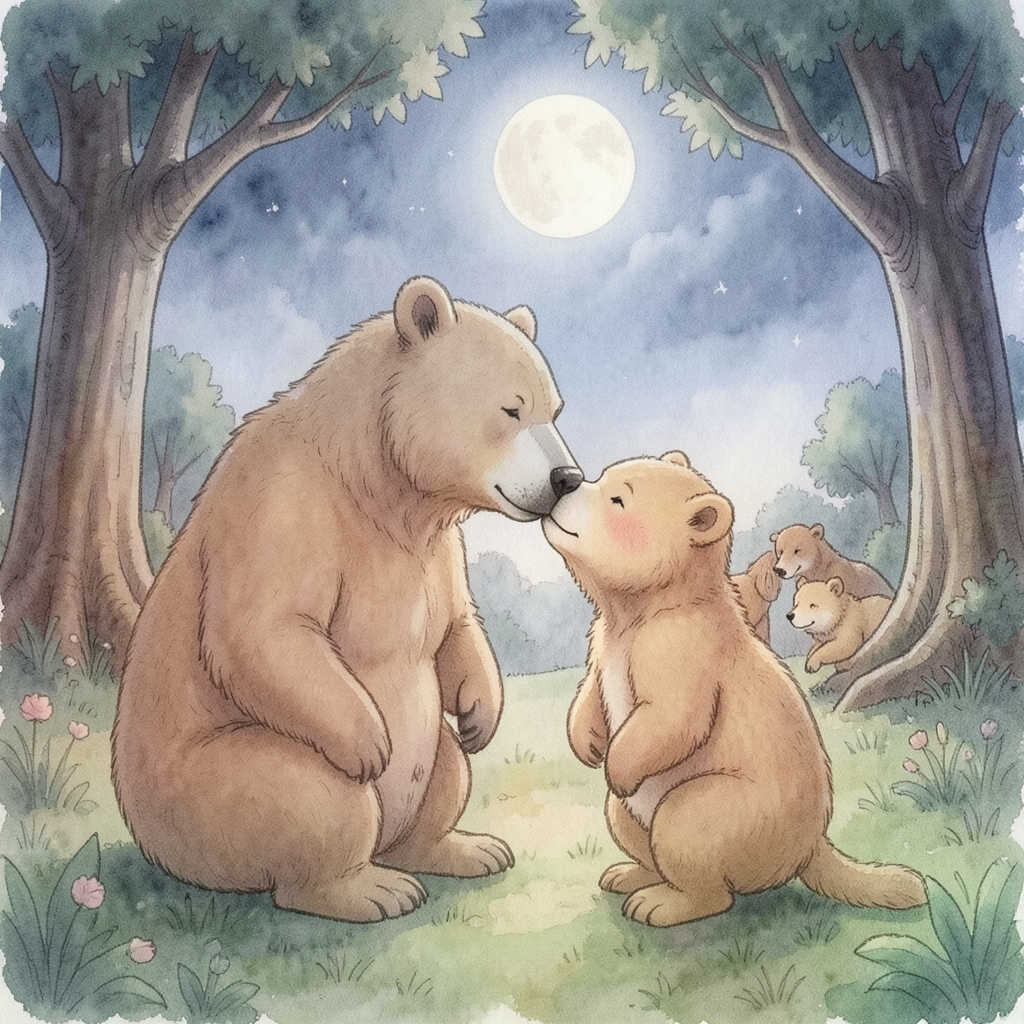
What if a moose kissed a moose good night? What if a bear kissed a bear? From elephants twisting trunks to porcupines touching quills ever so carefully, this warm and funny read-aloud imagines every animal's version of the perfect good-night kiss before settling in for sleep.
Themes
BedtimeAnimalsImagination
Best For
- Families establishing a consistent, calming bedtime routine with babies and toddlers
- Parents who want a read-aloud with built-in audience participation for wiggly toddlers
- Children who love animals and respond well to humor in books
- Gift-giving for baby showers or first birthdays — it works from infancy through preschool
Why Parents Love This Book
If Animals Kissed Good Night is one of those rare bedtime books that works perfectly every single time. Ann Whitford Paul's genius is in the repeating question-and-answer structure — "What if a moose kissed a moose good night?" — which gives toddlers something to anticipate, finish along with you, and giggle about. Each animal pair gets its own creative, species-appropriate send-off: porcupines who must touch quills oh-so-carefully, elephants curling their trunks together, bears giving a big warm squeeze. David Walker's soft, rounded illustrations are cozy and inviting without being saccharine, rendered in muted warm tones that feel genuinely sleepy. The book never rushes to the end; it savors each animal pair the way a good bedtime routine savors each moment. What makes it endure is that it does two things at once: it sparks imagination ("how would YOUR animal say good night?") while also gently winding little ones down for sleep. It is warm, funny, and tender all at once.
Reading Tips for Parents
Lean into the repetitive structure — pause before each animal's good-night and let your toddler supply the answer or finish the phrase. After a few readings, most children ages 2 and up will be chiming in enthusiastically. Point to the illustrations and name each animal before reading the text; this naturally doubles as an animal-identification game. For the porcupine page, slow your voice way down and whisper "ever so carefully" — toddlers love the drama of it. You can extend the fun beyond the book by asking at actual bedtime, "How do YOU want to kiss good night tonight — like a bear or like a moose?" This gives children a sense of ownership over the bedtime ritual, which can ease resistance. The book reads aloud in about four to five minutes, making it an ideal last book before lights out.
Awards & Recognition
- New York Times Bestseller
- Amazon Best Book of the Month (picture books, 2014)
Educational Value
This book helps children develop skills across multiple areas:
- Vocabulary: Introduces animal names (moose, porcupine, elephant, bear) and descriptive words like 'carefully' and 'gently' in meaningful context.
- Phonological awareness: The rhythmic, repeating sentence structure helps toddlers hear patterns in language and anticipate rhyme and repetition.
- Science/Nature: Sparks early curiosity about how different animals look and move, and how their bodies shape the way they interact.
- Social-emotional: Models affection, tenderness, and the comfort of a good-night routine in a way that feels safe and joyful.
- Sequencing: The book's animal-by-animal structure gently builds a child's ability to follow and recall a simple narrative sequence.
- Imagination: The 'What if?' premise encourages creative thinking and invites children to invent their own animal good-night scenarios.
Discussion Questions
Use these questions to spark conversation before, during, or after reading:
- Which animal's good-night kiss was your favorite? Why did you like that one best?
- How do the porcupines have to be careful when they kiss good night? Can you show me with your hands?
- If YOU were an animal, what kind of animal would you be, and how would you kiss good night?
- Why do you think all the animals are going to sleep? What do animals dream about?
- Can you remember all the different animals in the book? Let's try to name them together.
Content Notes for Parents
This book contains no scary, sad, or mature content whatsoever. It is a purely gentle, warm bedtime story suitable from birth onward.
Frequently Asked Questions
What age is this book best for?
The board book format makes it suitable from birth, but children really start engaging with the humor and repetition around 18 months to 2 years. Most kids aged 2 to 4 absolutely love it. It remains enjoyable through age 5 or 6, especially when a child is the one 'performing' the repeating lines for younger siblings.
Is this book too long for very young babies?
At around 40 pages, it is on the longer side for a board book, but the short, rhythmic text on each page means you never feel stuck. For babies under 12 months, you can read just a few animal pages at a time and close the book without any story feeling unfinished. There is no plot to lose track of.
Does this book actually help children fall asleep?
Many parents report that the slow, warm rhythm of the text and the sleepy illustrations do genuinely help wind children down. It works best as the last book in a short bedtime stack rather than the first, since toddlers may want to participate enthusiastically at first. By the final pages, the mood is calm and cozy.
What books are similar to this one?
Parents who love this book often also enjoy 'Goodnight Moon' by Margaret Wise Brown for the classic bedtime ritual feel, 'Time for Bed' by Mem Fox for its similar animal-parents-and-babies good-night structure, and 'Bear Snores On' by Karma Wilson for cozy animal illustrations with a participatory read-aloud style.
Is there anything in this book that might worry sensitive children?
No. The book is entirely gentle with no conflict, no scary imagery, and no sad moments. Even the porcupine page, which could theoretically worry a child about getting poked, is played for gentle humor. It is one of the safest possible choices for anxious or sensitive toddlers.