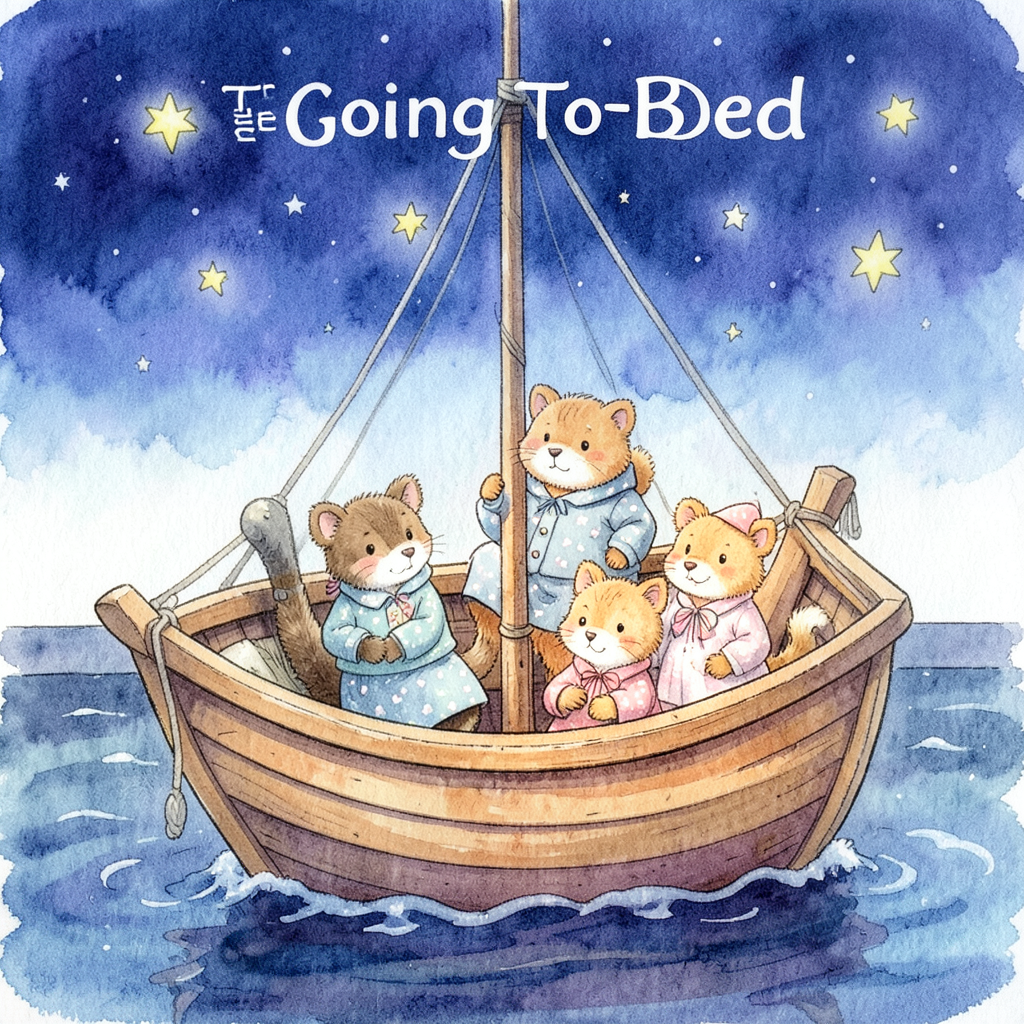
The Going-To-Bed Book
About This Book
A group of animals aboard a boat go through their bedtime routine together — taking a bath, putting on pajamas, brushing teeth, and doing exercises before rocking to sleep. Sandra Boynton's signature humor and charming illustrations make bedtime feel like a silly, shared adventure.
Themes
BedtimeRoutineHumor
Best For
- Children who resist bedtime and need a lighter approach
- Physical wind-down before sleep (the exercise page is intentional)
- Toddlers who love animals and silliness
- Breaking the tension of bedtime battles with humor
- Group storytimes at preschool and daycare
Why Parents Love This Book
Sandra Boynton's bedtime book earns its place in the canon not through sentimentality but through sheer, infectious silliness. A boatload of mismatched animals — hippos, bears, moose, pigs — doing synchronized exercises in their pajamas before climbing into bunk beds is absurd in the best possible way. For parents exhausted by earnest bedtime books, Boynton's humor is a gift. For children who resist sleep, the laughing itself becomes a wind-down mechanism. The genius: it's a bedtime book that makes bedtime fun without making it exciting.
Reading Tips for Parents
This works best when read with physicality — do the exercises along with the animals on the exercise page. Many toddlers and preschoolers love jumping and stretching before settling into bed, and channeling that final burst of energy into the structured movements of the story redirects it toward winding down. Boynton's rhythms read naturally aloud; pick up the pace during the exercises and slow right down for the final "and very, very sleepy" page. The contrast in reading speed models the contrast between active and quiet.
Awards & Recognition
- Over 4 million copies sold
- Sandra Boynton's books have collectively sold over 80 million copies
- Consistently appears on pediatricians' recommended bedtime reading lists
- Preschool teachers' favorite for classroom bedtime-routine discussions
Educational Value
This book helps children develop skills across multiple areas:
- Bedtime routine modeling: bath → pajamas → tooth brushing → exercise → sleep
- Animal vocabulary: hippo, elephant, moose, pig, bear, and more
- Body awareness: the exercise page names body parts in motion
- Rhythm and rhyme: Boynton's meter is ideal for phonological awareness
- Sequencing: the ordered routine teaches that events follow each other in a predictable pattern
- Emotional self-regulation: shows that a routine helps transition from active to calm
Discussion Questions
Use these questions to spark conversation before, during, or after reading:
- Which animal on the boat is your favorite? Why?
- What exercises do the animals do before bed? Can we try them together?
- Do you think animals really go to bed on a boat? What would that be like?
- Why do you think everyone feels "very, very sleepy" after their routine?
- What do YOU do to get ready for bed? Do the animals do the same things?
Content Notes for Parents
No content concerns. This is a cheerful, silly book about a bedtime routine. All content is wholesome, funny, and completely appropriate for young children. No scary elements.
Frequently Asked Questions
How does The Going-To-Bed Book help with bedtime resistance?
The book uses humor rather than instruction to ease bedtime transitions. Children who resist sleep often resist because bedtime feels like a loss of control or fun. Boynton's silly animals doing ridiculous exercises and climbing into bunk beds on a boat make bedtime feel like an adventure worth joining. The laughter itself is calming — and modeling a structured routine (bath → PJs → brush → exercise → sleep) helps children understand the sequence naturally.
What age is this book best for?
Most effective from 18 months to 5 years. Toddlers love the animal characters and physical humor; preschoolers appreciate the silliness and often want to do the exercises themselves. The rhythm is engaging even for younger infants when read aloud, but the interactive humor lands best when children are old enough to find animals doing ridiculous things genuinely funny — usually around 18 months.
Does this book actually help children fall asleep?
Not on its own — no single book is a sleep solution. But it works well as part of a consistent bedtime routine. The routine modeled in the book (activities leading logically to sleep) can give children a framework for understanding their own nighttime sequence. Many families read it as the second-to-last book, followed by a calmer, quieter book like Goodnight Moon as the actual "lights out" signal.
Are there other Sandra Boynton books similar to this one?
"Moo, Baa, La La La!" uses a similar animal-and-silliness formula for daytime. "Blue Hat, Green Hat" is a wonderful companion for slightly younger toddlers learning colors with slapstick humor. "Barnyard Dance!" has the same infectious physical energy as the exercise page in The Going-To-Bed Book. All of Boynton's board books share her signature mix of warmth, humor, and perfect read-aloud rhythm.