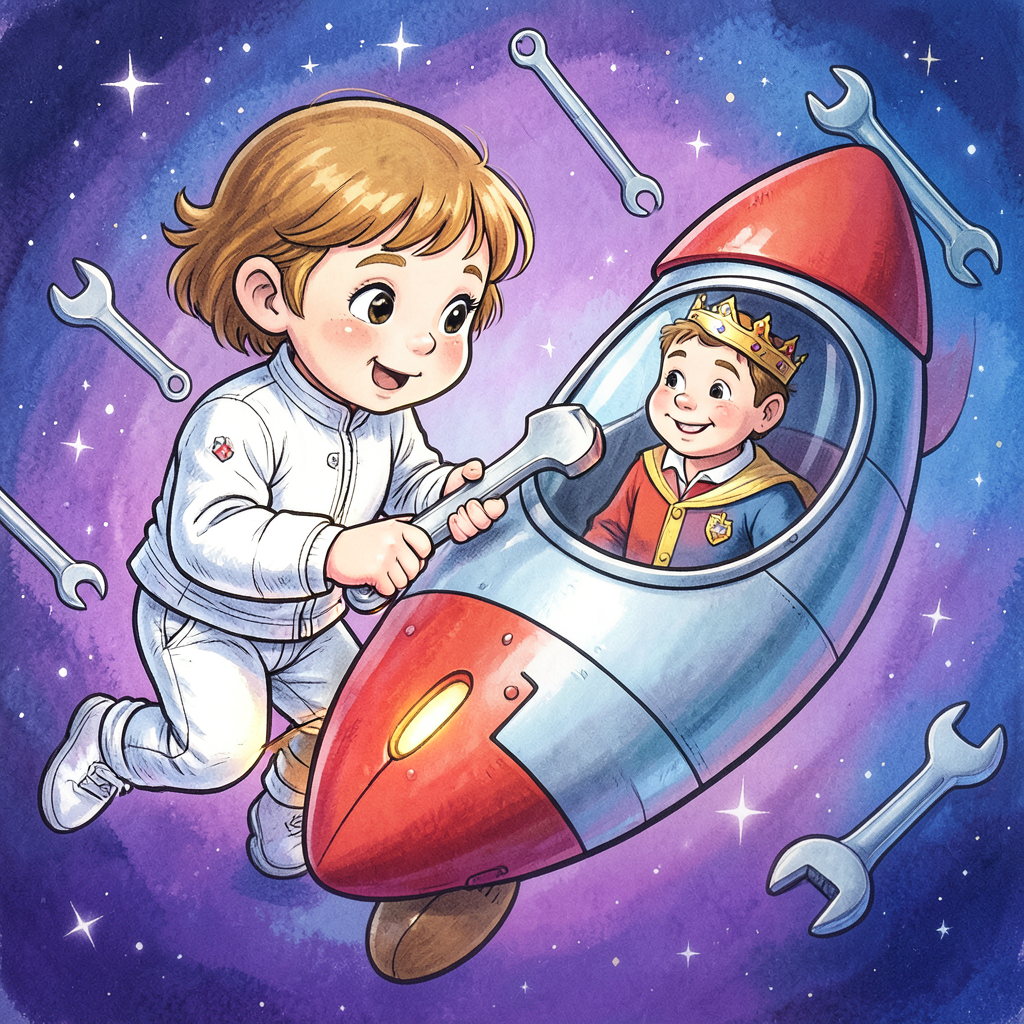
Interstellar Cinderella
About This Book
Cinderella has always dreamed of being a rocket mechanic — not a princess. So when the prince's ship breaks down during the royal space parade and only Cinderella has the skills to fix it, she does, and negotiates an excellent outcome that has nothing to do with marriage. A funny, feminist retelling that celebrates girls who love engines over glass slippers.
Themes
FairytaleSTEMGender
Best For
- Children who love taking things apart or are curious about how machines work
- Read-alouds in preschool or kindergarten classrooms during STEM or fairy tale units
- Families looking for feminist fairy tale retellings that feel fun rather than preachy
- Beginning readers ready to tackle a longer rhyming picture book independently
- Gift-giving for children who feel like they don't fit the traditional princess mold
Why Parents Love This Book
Deborah Underwood's "Interstellar Cinderella" takes the bones of a beloved fairy tale and launches them into orbit — literally. What makes this book genuinely special is how it refuses to swap one narrow ideal for another. Cinderella doesn't become a princess who secretly fixes engines on the side; she simply knows what she wants and negotiates confidently for it. When the prince's rocket sputters to a halt mid-parade, she is the only one with the skills and the toolbox to save the day, and her "happily ever after" is a job as chief rocket mechanic. Meg Hunt's vibrant, retro-futuristic illustrations burst with color and personality, giving the space setting a joyful, almost handcrafted feel that children love to linger over. The rhyming text bounces along at a satisfying read-aloud pace, making the whole book feel like a celebration rather than a lesson. It respects children's intelligence — no one has to be rescued or diminished for Cinderella to shine.
Reading Tips for Parents
This book is a natural conversation-starter, so plan a few extra minutes after the final page. The fairy godfather uses tools instead of a wand, and Cinderella negotiates her own outcome — pause at those moments and ask your child what they noticed is different from the traditional story. The rhyming text has a confident bounce that rewards expressive reading aloud; try slowing down during Cinderella's repair scenes so kids can study Hunt's detailed illustrations of wrenches, bolts, and rocket parts. If your child is already interested in how things work — cars, appliances, construction sites — connect that curiosity to Cinderella's passion for engines. For children who know the original tale, reading both versions back to back sparks great critical thinking about how stories can be retold.
Awards & Recognition
- New York Times Bestseller
- Amazon Best Book of the Month (Children's, 2015)
Educational Value
This book helps children develop skills across multiple areas:
- STEM: Introduces the concept of mechanical problem-solving and engineering work in an accessible, joyful context — wrench, rocket parts, and repair scenes model what real technical jobs look like.
- Vocabulary: Rhyming text builds phonological awareness while naturally introducing words like "mechanic," "negotiate," and space-themed terms children may not encounter elsewhere.
- Social-Emotional: Models self-knowledge and confidence — Cinderella knows her own interests and advocates for them clearly rather than conforming to others' expectations.
- Critical Thinking: Comparing this retelling to the traditional Cinderella story encourages children to analyze narrative structure and question assumptions about endings and rewards.
- Gender Equity: Presents engineering as a natural passion for a girl protagonist without making it feel like a political statement — normalizing diverse aspirations through story.
- Language Arts: The tight, rhyming verse is an excellent model for beginning readers building fluency and predicting word patterns at the end of lines.
Discussion Questions
Use these questions to spark conversation before, during, or after reading:
- What does Cinderella want more than anything, and how is that different from the Cinderella story you already know?
- When the prince's rocket broke down, how did Cinderella feel? Have you ever been really good at something that helped other people?
- Cinderella could have married the prince but chose something else instead. Do you think she made a good choice? Why?
- Look at the pictures of Cinderella's tools and workshop. What kinds of jobs do you think need those same skills in real life?
- If you could be the hero of any fairy tale but change what the hero wants, which story would you pick and what would your hero want instead?
Content Notes for Parents
There are no scary, violent, or sad elements in this book. The tone is lighthearted and comedic throughout, making it suitable for all children in the 4-7 age range without reservation.
Frequently Asked Questions
What age is this book best for?
The publisher targets ages 4-8, and that range feels right in practice. Preschoolers (ages 4-5) will love the read-aloud rhymes and colorful illustrations. Early readers (ages 6-7) can start tackling the text independently. Children up to age 8 or 9 who enjoy fairy tales or space themes will still find it engaging, especially if they are ready to discuss the story's feminist angle.
Do children need to know the original Cinderella story to enjoy this book?
Not at all — the story works completely on its own terms. That said, children who already know the traditional tale will get an extra layer of delight from spotting all the clever twists Underwood has built in. Reading both versions together makes for a wonderful comparative exercise if you have the time.
Is this book too "message-heavy" or preachy about gender?
This is one of the book's genuine strengths: it never lectures. Cinderella simply loves what she loves and goes after it. The feminist message emerges naturally from the plot rather than from characters explaining their values to each other. Most children just enjoy the funny story; the broader ideas tend to surface in conversation afterward.
Are there any scary or upsetting parts parents should know about?
None whatsoever. The tone is cheerful and comedic from start to finish. Even the rocket breakdown is played for laughs rather than tension. This is a low-worry read for sensitive children.
What books are similar to this one that we might enjoy next?
If your child loves this, try "Cece Loves Science" by Kimberly Derting for more girl-led STEM fun, "The Paper Bag Princess" by Robert Munsch for another feminist fairy tale with humor, or "Ada Twist, Scientist" by Andrea Beaty for a picture-book heroine who shares Cinderella's hands-on curiosity.