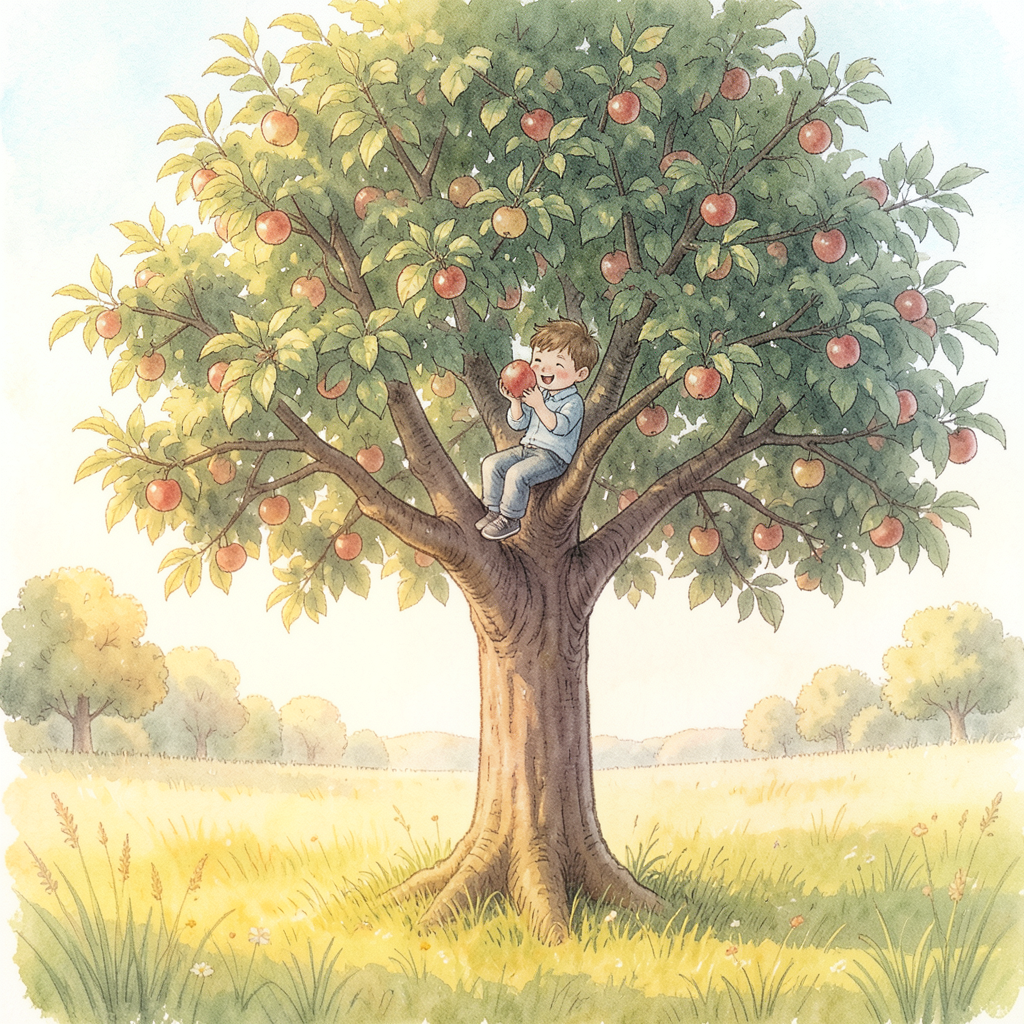
The Giving Tree
About This Book
A tree loves a boy unconditionally, giving him her apples, branches, and trunk as he grows from childhood to old age. This spare, poignant story explores the nature of giving and the complex relationship between generosity and taking.
Themes
LoveGenerosityGrowing Up
Best For
- Bedtime reading when you have time for a quiet, unhurried conversation afterward
- Children going through a transition — a new sibling, a move, or a change in a friendship — where themes of love and change resonate
- Family read-alouds that include multiple generations, since adults and children experience the story very differently
- Classroom discussions on giving, relationships, and what makes someone a good friend
- Children who love animals or nature and connect easily to a non-human main character
Why Parents Love This Book
The Giving Tree has endured for over sixty years because it does something rare in children's literature: it trusts young readers with emotional complexity. Shel Silverstein tells the entire arc of a relationship — childhood wonder, adolescent distance, adult preoccupation, and old-age return — using only simple black-and-white line drawings and a vocabulary a kindergartner can follow. The tree's love is boundless and unwavering, while the boy's relationship with her shifts across every stage of life. That tension is what makes the book stay with readers long after they close it. Children feel the warmth of the tree's affection, while adults often find themselves sitting with harder questions: What does real generosity look like? What do we owe those who love us? The spare artwork and short, rhythmic text also make it exceptionally read-aloud-friendly. It does not moralize or explain itself — it simply lays out a relationship and invites readers of every age to feel it and decide what it means to them.
Reading Tips for Parents
Read this one slowly, with deliberate pauses after each spread. The illustrations carry as much meaning as the words, so give children time to look. On a first read, simply experience the story together without commentary. On a second or third read, follow your child's lead — they may ask why the boy keeps taking, or why the tree is still happy. Resist the urge to give them a tidy answer; those open-ended moments are where the richest conversations happen. For younger children ages 4-5, the focus will naturally land on the tree's love and the boy's childhood play. Older children ages 6-7 may begin to notice the imbalance in the relationship. Both responses are completely valid. Keep a relaxed tone — this story can bring up big feelings, and your calm presence signals that those feelings are welcome.
Awards & Recognition
- New York Times Bestseller — has appeared on bestseller lists across multiple decades since its 1964 publication
- One of the most frequently challenged and most widely read children's books in the United States, cited annually in American Library Association lists
Educational Value
This book helps children develop skills across multiple areas:
- Social-emotional: Builds empathy by asking children to consider how both the tree and the boy might feel throughout the story, introducing the concept of one-sided versus mutual relationships.
- Vocabulary: Introduces words like 'lonely,' 'trunk,' 'stumps,' and 'content' in meaningful context, supporting early reading comprehension.
- Sequencing: The story follows a clear chronological structure across a lifetime, giving children practice identifying beginning, middle, and end in a narrative.
- Critical thinking: The open-ended nature of the tree's happiness invites children to form and defend their own interpretations rather than accept a single 'right' answer.
- Character study: Children can track how the boy's behavior shifts across time, practicing the skill of noticing character change — a foundational literary concept.
- Values exploration: Prompts natural conversations about generosity, gratitude, and what it means to love someone unconditionally.
Discussion Questions
Use these questions to spark conversation before, during, or after reading:
- Why do you think the tree was happy when she gave things to the boy?
- How did the boy change as he grew older? Did you notice anything different about the way he talked to the tree?
- If you had a friend who always gave you whatever you asked for, how would you want to treat them?
- The tree only had a stump left at the end. Do you think she minded? Why or why not?
- If the boy could go back and do something differently, what do you think he might change?
Content Notes for Parents
The story has an undercurrent of sadness — the tree is gradually depleted and the boy rarely expresses gratitude, which some children may find upsetting or which may prompt questions about fairness and loss. There is nothing frightening, violent, or age-inappropriate, but parents should be prepared for emotionally layered conversations, especially with sensitive children.
Frequently Asked Questions
Is this book appropriate for ages 4-5, or is it better for older children?
The text is simple enough for ages 4 and up, and younger children will connect with the warmth of the tree's love and the boy's childhood play. The deeper emotional undercurrents — the one-sided nature of the relationship and the passage of time — tend to land more fully around ages 6-8 and again in adulthood. It genuinely works at multiple ages, just differently each time.
Some parents say this book teaches unhealthy relationship dynamics. Should I be worried?
This is a real and fair debate, and many thoughtful adults disagree about what the book models. The tree does give without limit and without reciprocity, which some readers find troubling. Rather than avoiding the book, many parents use those exact tensions as a starting point for conversation — asking children how they would want to be treated by a friend. The book does not endorse the imbalance; it depicts it, and that distinction opens rich dialogue.
My child was sad after we read it. Is that normal?
Completely normal, and actually a sign the book is working as intended. The story is genuinely bittersweet — the tree ends as a stump, and the boy returns as an old man. Validating your child's feelings and sitting with the sadness together is more valuable than rushing to reassure them that everything is fine. You might say, 'I felt that way too — what part made you feel sad?'
Are there similar books I could pair with this one?
Shel Silverstein's own poetry collection Where the Sidewalk Ends shares his distinctive black-and-white illustration style and emotional range. For similar themes of unconditional love and growing up, Leo Lionni's Frederick and Arnold Lobel's Frog and Toad Are Friends are excellent companions. For children who want a warmer, more reciprocal friendship story as a counterpoint, Charlotte's Web works beautifully for slightly older readers.
How long does it take to read aloud?
About ten to fifteen minutes at a relaxed pace, making it ideal for a single sitting. The book is short enough to read in one session but rich enough that many families return to it repeatedly across different stages of childhood.