Jamberry
About This Book
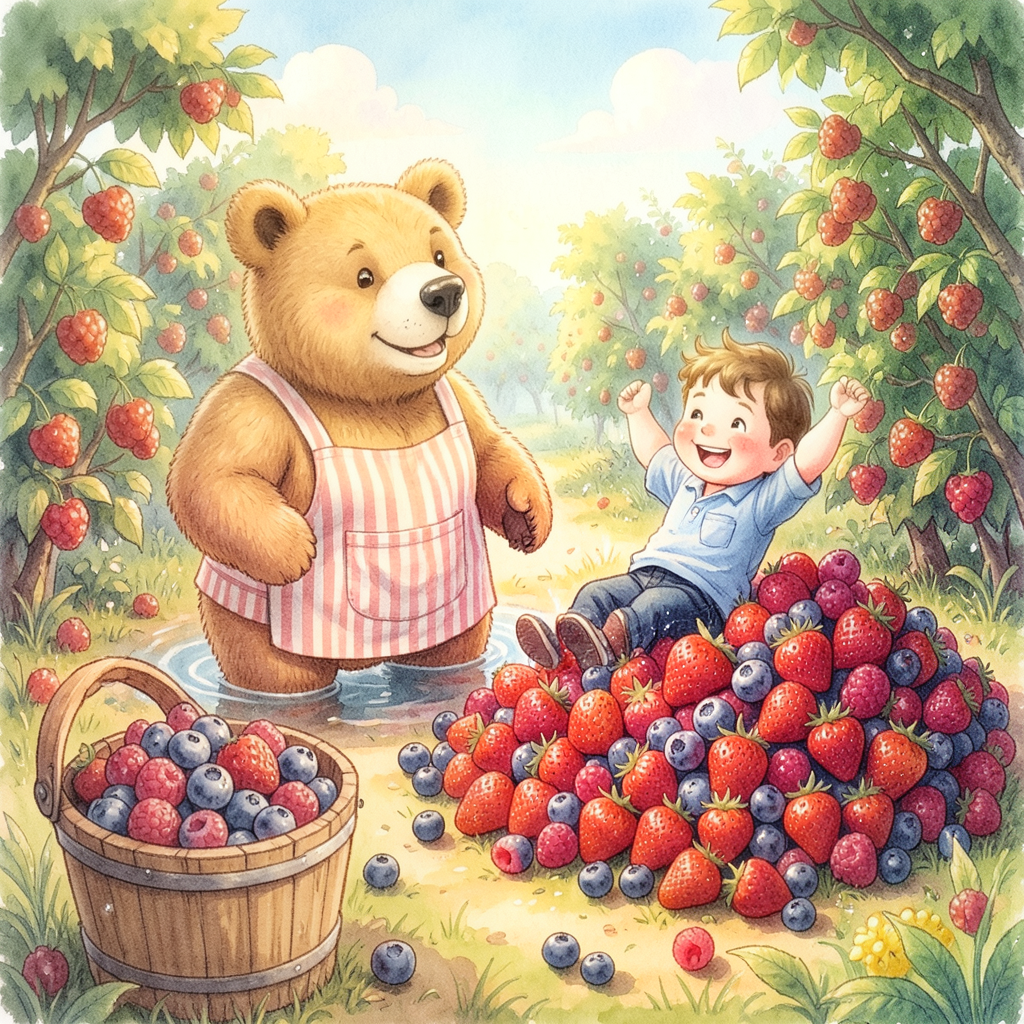
A small boy and a large, enthusiastic bear go on a rhyming, rolling, tumbling adventure through every kind of berry imaginable — hatberry, shoeberry, in a canoeberry. Bruce Degen's exuberant text is pure joy to read aloud, a celebration of language, imagination, and the eternal pleasure of berry-picking.
Themes
ImaginationRhymePlay
Best For
- Bedtime read-alouds when you want a short, rhythmic book that settles a toddler into a calm, happy mood
- Car rides or waiting rooms — the short, punchy text holds attention in fragmented environments
- Early language development sessions with speech therapists or reading specialists working on phonological awareness
- Introducing very young children (6 months and up) to the pleasure of books through sound and color rather than story
- Encouraging a reluctant or shy child to join in, since the repetitive patterns make participation easy and low-stakes
Why Parents Love This Book
Jamberry has enchanted young readers since 1983, and it is easy to understand why. Bruce Degen builds his story almost entirely from made-up compound words — hatberry, shoeberry, canoeberry — that follow real phonetic patterns, which means children can "read" along instinctively even before they know a single letter. The book is not driven by plot in a conventional sense; instead it is driven by pure sonic pleasure, the rollicking momentum of rhyme carrying a boy and a bear from one impossible berry landscape to the next. That lack of a heavy storyline is actually a strength: every page is a fresh invitation to play with sound. The illustrations are lush and warm, bursting with color, and the bear is genuinely joyful rather than threatening. Read aloud, the text has a natural drumbeat that toddlers pick up and start anticipating. After a few readings most children begin to chant along, which makes Jamberry one of the earliest books where a very young child can feel like a real participant in the story.
Reading Tips for Parents
Lean into the rhythm when reading aloud — treat the text like a song rather than sentences, and let your pace speed up as the adventure builds. Pause before each new "-berry" compound word and give your child a half-beat to guess or shout it out; this turns every page into a tiny game. Point to the illustrations and name real berries (strawberry, blueberry) alongside Degen's invented ones to build actual fruit vocabulary alongside the playful nonsense. Because the text is so short and repetitive, this is an ideal book for encouraging a toddler to "read" to you after just a few shared readings — they will have large stretches memorized without realizing it. The board book format makes it safe for independent exploration by very young children.
Awards & Recognition
- Publishers Weekly and American Booksellers Association long-running bestseller, remaining in print continuously since 1983
- Frequently listed on librarian and educator recommended reading lists for pre-readers and toddlers
Educational Value
This book helps children develop skills across multiple areas:
- Phonological awareness: The relentless rhyme scheme trains young ears to hear word endings and sound patterns, a foundational pre-reading skill.
- Vocabulary: Introduces real berry names (strawberry, blueberry, blackberry) embedded naturally among playful invented words.
- Creativity and language play: Degen's nonsense compound words model that language can be stretched and invented, encouraging children to experiment with words themselves.
- Print motivation: The joyful read-aloud experience consistently builds positive associations with books at the earliest age.
- Listening comprehension: The cumulative, rollicking narrative rewards close listening and helps toddlers practice sustained attention.
- Imaginative thinking: The fantastical berry landscapes invite children to visualize impossible scenarios, exercising mental imagery skills.
Discussion Questions
Use these questions to spark conversation before, during, or after reading:
- Can you point to all the different berries you can find on this page? Which one is your favorite?
- The bear and the boy go on a berry adventure together. What would you bring on a berry adventure?
- Bruce Degen made up silly words like hatberry and shoeberry. Can you make up your own berry word?
- The boy and the bear travel in a canoe made of berries! What other silly berry things do you see in the pictures?
- At the end of the adventure, how do you think the boy and the bear feel? How do you feel after you go on an adventure?
Content Notes for Parents
Jamberry contains no scary, sad, or mature content of any kind. The bear is playful and warm, and the entire book is a wholesome celebration of imagination and play — it is suitable for all ages within the toddler and preschool range.
Frequently Asked Questions
What age is Jamberry best for?
The board book edition works beautifully from around 6 months, when babies begin responding to rhythm and color. It remains a favorite through age 4 or 5 because older toddlers and preschoolers enjoy the wordplay and can begin 'reading' it back to you from memory. Most children naturally outgrow it as a new read-aloud around kindergarten, though many keep it on the shelf for nostalgic rereads.
Is there any scary content? My toddler is sensitive.
There is nothing scary in this book. The large bear is cheerful and silly rather than threatening, and the entire narrative is lighthearted fantasy. It is one of the gentlest books available for very young children.
My child wants me to read this every single night. Is that okay?
Absolutely — repetition is exactly how young children internalize language patterns and build early literacy skills. Each time through, your child is reinforcing phonological awareness, vocabulary, and print motivation without it feeling like work. The fact that they want it repeatedly is a very good sign.
What books are similar to Jamberry that we might enjoy next?
If your child loves the rhyme and wordplay, try Dr. Seuss's Hop on Pop or Fox in Socks for more phonics-forward fun. Sandra Boynton's board books (like Moo Baa La La La) share the same joyful, musical energy. For a similar berry and nature theme with gorgeous illustrations, Anno's Counting Book or Blueberries for Sal are natural next steps.
Is this available as a board book or only hardcover?
Jamberry has been published in both a standard hardcover picture book edition and a board book edition. The board book is ideal for babies and toddlers who handle books roughly; the hardcover offers larger, more detailed illustrations that work well for lap reading with slightly older children.