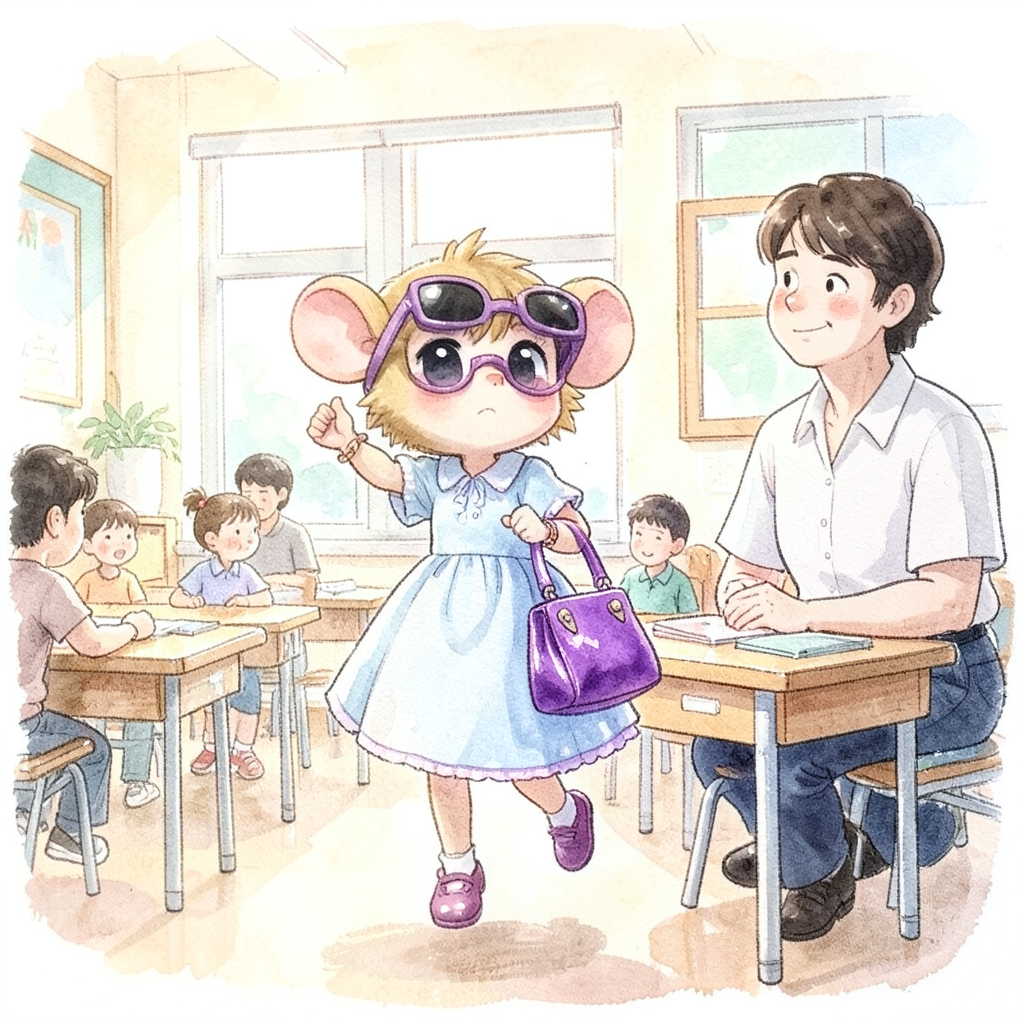
Lilly's Purple Plastic Purse
About This Book
Lilly loves school, loves her teacher Mr. Slinger, and absolutely cannot wait to show everyone her new purple plastic purse. But when she can't wait for the right moment and things go wrong, she must learn about patience, apologies, and the difference between good feelings and bad feelings. One of Kevin Henkes's most richly funny and emotionally honest picture books.
Themes
SchoolImpulse ControlApologies
Best For
- Children starting kindergarten or first grade who are nervous or excited about school
- Families working on impulse control and learning to wait
- Classrooms discussing apologies, feelings, and conflict resolution
- Any child who has a beloved teacher they want to impress
- Read-alouds that spark genuine conversation rather than just entertainment
Why Parents Love This Book
Kevin Henkes has a rare gift for capturing the full emotional life of young children without condescension, and Lilly's Purple Plastic Purse is his finest achievement. Lilly herself is irresistible — her enthusiasm for school, her adoration of Mr. Slinger, and her complete inability to contain her excitement about that shiny new purse feel absolutely true to how young children experience the world. The story does something most picture books avoid: it lets Lilly make a genuinely unkind choice, feel the sting of its consequences, and then work her way toward a real apology. Mr. Slinger is the ideal teacher character — warm, patient, and wise without being a saint — and his simple act of kindness after Lilly's bad behavior makes one of the most moving moments in contemporary picture books. Henkes's illustration style, with its expressive mouse faces and careful visual storytelling, rewards rereading. This book has stayed in print for nearly three decades because it gets children exactly right.
Reading Tips for Parents
Read this one slowly and pause at the moment Lilly sees the note Mr. Slinger left inside her bag — let children sit with that emotional turn before moving on. Before reading, you can prime the conversation by asking your child about something they found very hard to wait for. After reading, resist the urge to lecture about impulse control; the story does that work on its own. This book is a natural opener for practicing apology language — you might ask, "What exactly did Lilly say when she apologized? Was it a good apology?" Children who have recently started kindergarten or first grade will connect especially strongly with the school setting and the desire to impress a favorite teacher.
Awards & Recognition
- New York Times Best Illustrated Children's Book of the Year (1996)
- ALA Notable Children's Book
- School Library Journal Best Book of the Year (1996)
Educational Value
This book helps children develop skills across multiple areas:
- Social-emotional learning: Models the full arc of a conflict — impulsive action, regret, repair — giving children a realistic template for making and recovering from mistakes.
- Vocabulary: Introduces expressive words like 'unbearable,' 'cranky,' and 'resentful' in clear context, expanding emotional vocabulary.
- Impulse control: Illustrates in concrete, child-relatable terms why waiting for the right moment matters and what happens when we don't.
- Literacy: Henkes uses visual storytelling alongside text — details in the illustrations add meaning not stated in the words, building close-reading habits.
- Ethics and empathy: Prompts children to consider how their actions affect others, especially people they care about like teachers and friends.
Discussion Questions
Use these questions to spark conversation before, during, or after reading:
- Why do you think Lilly found it so hard to wait to show everyone her purse?
- How did Mr. Slinger feel when Lilly did something unkind about him? How do you know?
- Have you ever done something when you were excited or upset that you later wished you hadn't? What happened?
- What made Lilly's apology a real one? What are the ingredients of a good apology?
- If you were Lilly's classmate, would you want to sit next to her? Why or why not?
Content Notes for Parents
No scary or mature content. Lilly draws an unkind picture of her teacher when she is angry, which briefly depicts a child acting meanly toward an adult — this is handled honestly and resolved warmly, making it a productive rather than troubling moment.
Frequently Asked Questions
What age is this book best for?
The publisher recommends ages 4 to 8, and that range holds up well. Children around 5 and 6 tend to connect most deeply because the school setting and the desire to please a teacher feel immediately real to them. Confident 4-year-olds will enjoy it too, and 7- to 8-year-olds can engage with the more nuanced emotional questions the story raises.
Is there anything in the book that might upset a sensitive child?
The main potential sticking point is that Lilly draws a mean picture of Mr. Slinger when she is angry at him, which could feel uncomfortable for children who strongly dislike seeing anyone be unkind to a teacher. However, the story handles this honestly — Lilly feels bad, apologizes, and is forgiven — so it resolves in a reassuring way. There is nothing scary or violent.
How can I use this book to talk about apologies with my child?
After reading, ask your child what Lilly actually said and did to make things right. You can compare a vague 'sorry' to Lilly's more deliberate apology and discuss what makes one feel real. This works especially well if your child is navigating a situation at school where they need to repair a friendship or address something they did wrong.
Are there other Kevin Henkes books similar to this one?
Yes — Kevin Henkes has a whole series of picture books featuring mouse characters navigating big feelings. Chrysanthemum (about teasing and self-acceptance), Julius, the Baby of the World (sibling jealousy), and Wemberly Worried (anxiety about starting school) are all closely related in tone and theme and work well read alongside Lilly's Purple Plastic Purse.
Does Lilly appear in other Kevin Henkes books?
Lilly first appears as a side character in Julius, the Baby of the World, where she is the neighbor who actually loves Julius while his sister resents him. Reading that book first gives a fun bonus for children who then meet her as the star of her own story.