Chrysanthemum
About This Book
Chrysanthemum loves her name — until she starts school and the other children tease her about having thirteen letters, a number, and a flower attached to her forever. Kevin Henkes' beloved classroom staple handles teasing, belonging, and self-confidence with humour and deep emotional truth that children recognise immediately.
Themes
SchoolSelf-EsteemKindness
Best For
- Children starting kindergarten or a new school who are anxious about fitting in
- Any child who has come home upset after being teased by classmates
- Classroom read-alouds during the first week of school
- Parents looking for a natural conversation-starter about names, identity, and self-esteem
- Children who need to see that the adults in their life — at home and at school — are on their side
Why Parents Love This Book
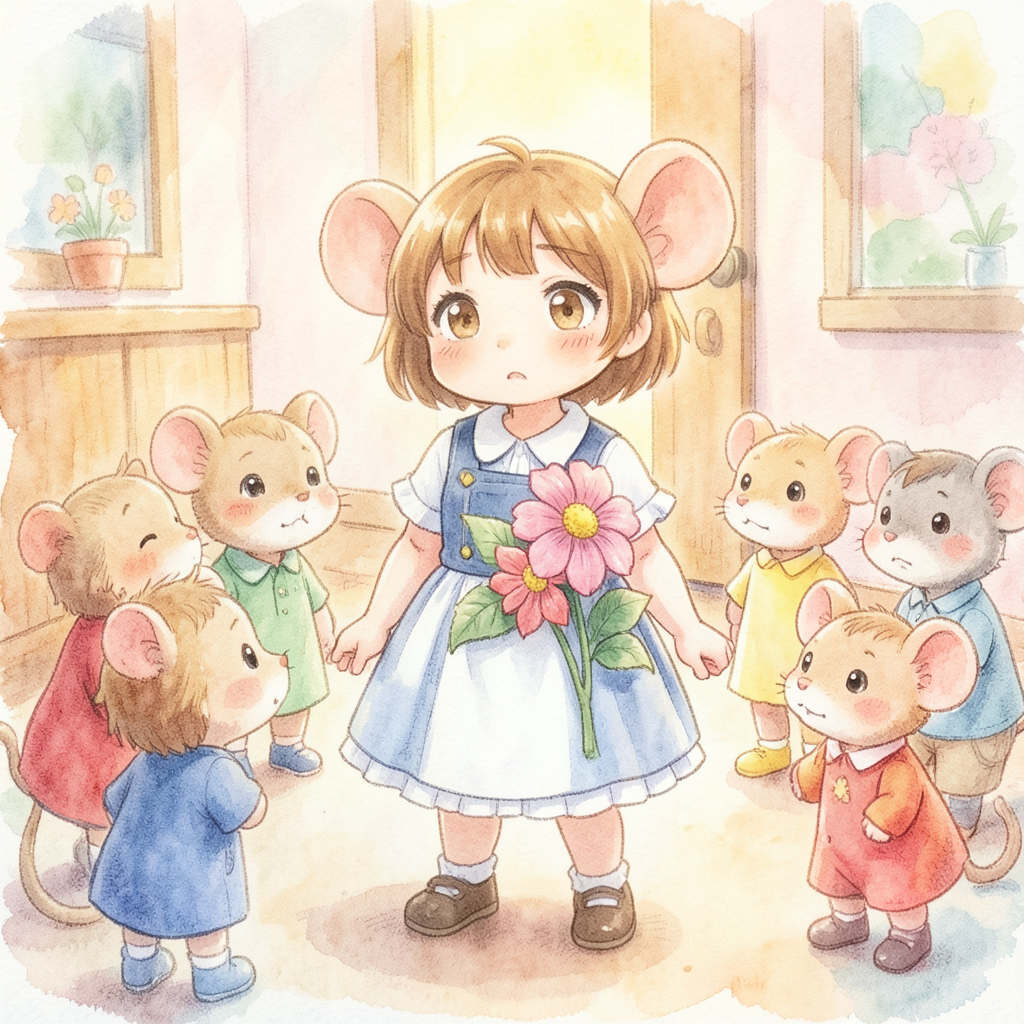
Kevin Henkes delivers something rare in Chrysanthemum: a back-to-school story that takes teasing seriously without being heavy-handed. Chrysanthemum adores her name — it is absolutely perfect, her parents tell her — until the first day of school reveals that not everyone agrees. Victoria and her classmates count the letters, laugh about a flower being a name, and suddenly Chrysanthemum wilts. Henkes captures that specific, gut-punch feeling of being singled out in front of peers with astonishing precision. His illustrations do half the storytelling, showing Chrysanthemum literally curling in on herself when embarrassed and blooming again when she finds her footing. What elevates this above a simple anti-bullying lesson is the resolution: it does not arrive through a lecture but through an unexpected role model — music teacher Mrs. Twinkle — who makes Chrysanthemum's name feel magical again. The humour is gentle and real, and parents will recognize Chrysanthemum's nightly dinner-table debriefs with sympathetic parents who respond with exactly the right warmth.
Reading Tips for Parents
Before reading, ask your child to spell out their own name and count the letters — it makes the opening pages immediately personal. As Victoria's teasing begins, pause and ask your child how Chrysanthemum's face looks, letting the illustrations guide the conversation rather than telling children what to feel. Notice how Henkes shows the parents listening and validating every evening; this is a quiet model for your own post-school conversations. When Mrs. Twinkle appears, slow down — children often need a beat to understand why the classroom reaction shifts so completely. After finishing, consider revisiting what your child likes about their own name (or a nickname they have chosen). This book pairs well with the first week of school or any time a child comes home upset about something a peer said.
Awards & Recognition
- ALA Notable Children's Book (1992)
- School Library Journal Best Book of the Year (1991)
- Consistently listed among the most frequently read back-to-school picture books in American classrooms
Educational Value
This book helps children develop skills across multiple areas:
- Social-emotional learning: Builds vocabulary for feelings like embarrassment, belonging, and pride, and models healthy ways to process being teased
- Literacy: Rich vocabulary including the word 'chrysanthemum' itself gives early readers a satisfying challenge to decode and remember
- Counting and number sense: Counting the thirteen letters in Chrysanthemum's name turns a plot point into a natural, motivated math activity
- Empathy: Seeing a teasing dynamic from the target's perspective — across home and school settings — helps children recognize similar situations in their own lives
- Family communication: The recurring dinner-scene structure shows children that talking to parents about hard school moments is both normal and helpful
- Name and identity: Prompts children to explore the meaning and origin of their own name, supporting a positive sense of self
Discussion Questions
Use these questions to spark conversation before, during, or after reading:
- Why do you think Chrysanthemum loved her name at the beginning of the story, and what made her start to feel differently about it?
- Have you ever felt embarrassed by something about yourself at school? What happened?
- What did Chrysanthemum's parents do each evening when she came home upset? Did it help? What would you want your parents to say?
- Why do you think Mrs. Twinkle's opinion changed how the other children felt about Chrysanthemum's name?
- If you could pick any name for yourself, what would you choose and why?
Content Notes for Parents
The teasing Chrysanthemum experiences is realistic and may resonate strongly with children who have felt singled out; it is not graphic or scary, but sensitive children might need extra reassurance. There are no scary, violent, or mature elements in this book.
Frequently Asked Questions
What age is Chrysanthemum best suited for?
The book is written for children ages 4 to 7. The emotional content is most resonant just before or during the kindergarten and first-grade years, when children are navigating peer dynamics for the first time. Older children in early elementary school who are dealing with teasing will also connect with it strongly.
Is the teasing in the book too upsetting for sensitive children?
The teasing is realistic enough that some sensitive children may feel it keenly, especially if they have had similar experiences. Henkes keeps it age-appropriate and never cruel — it reads more as thoughtless than malicious. Reading alongside a parent and pausing to talk through Chrysanthemum's feelings makes the experience manageable and even therapeutic for sensitive kids.
How can I use this book if my child is the one doing the teasing, not the one being teased?
The book works well from either side. Because the story stays inside Chrysanthemum's point of view the entire time, children who tease are gently invited to feel what their words do to another person. After reading, you might ask, 'Have you ever said something like what Victoria said?' without accusation — the story does the heavy lifting.
Are there similar books you would recommend alongside Chrysanthemum?
Kevin Henkes' own Wemberly Worried covers school anxiety from a slightly different angle and pairs naturally with this one. The Name Jar by Yangsook Choi explores name identity and belonging from the perspective of a child with a Korean name in an American school, making it an excellent companion for diverse classrooms. Both books reward the same kind of slow, conversation-rich reading.
Does the book have a satisfying ending for children?
Yes. The resolution feels earned rather than sudden — it grows from a real plot development rather than a lecture — and most children find it genuinely cheering. Henkes ends on a note of restored confidence, and the final image of Chrysanthemum standing tall is a clear visual payoff that young readers notice and enjoy.