Little Blue Truck
About This Book
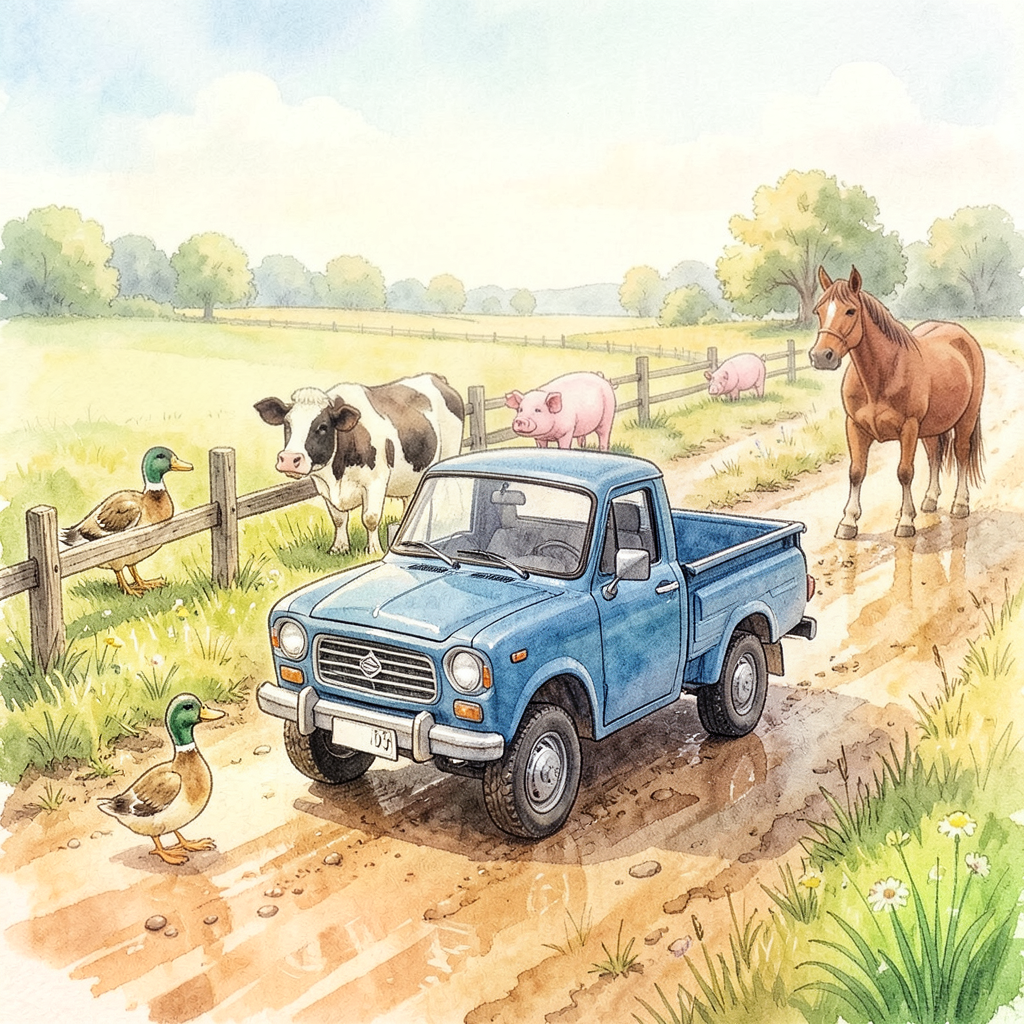
Little Blue Truck beeps a friendly hello to all the animals on the road — the sheep, the cow, the horse. But a big Dump Truck zooms past without a word. When Dump gets stuck in the mud, the animals he ignored won't help — until Little Blue gets stuck trying to push him, and everyone comes to the rescue.
Themes
FriendshipKindnessCommunity
Best For
- Toddlers who love trucks, vehicles, or farm animals
- Teaching the concept of kindness and saying hello to others
- Bedtime read-alouds that invite participation without overstimulating
- Playdates or group story times where call-and-response engagement keeps attention
- First books for babies transitioning to simple narrative stories
Why Parents Love This Book
Little Blue Truck has earned its place as a genuine classic of early childhood reading, and the reasons are easy to see. Alice Schertle's text has an irresistible musicality — the cheerful "beep beep beep" that Blue calls to each animal invites young children to chime in on every page, turning a read-aloud into a performance. Jill McElmurry's warm, folk-art illustrations give each animal a distinct personality, so even the youngest toddler can follow the story by reading faces and body language alone. The moral at the heart of the book — that kindness comes back around, and that community beats going it alone — never feels preachy. It unfolds naturally from the plot: Dump Truck's arrogance gets him stuck, Blue's big heart gets him stuck too, and then the animals Blue befriended rush in to save them both. That satisfying circular structure gives children a felt understanding of reciprocity long before they can name the concept. More than fifteen years after its publication, the book still sells because it works every single time.
Reading Tips for Parents
Use the repeated "beep beep beep" as your cue to pause and let your child fill in the sound — most toddlers are doing this independently by the second or third read. Point to each animal as Blue greets it and name them together, making animal sounds as you go. When Dump Truck zooms past without a word, drop your voice to a low rumble and contrast it with Blue's cheerful tone; this helps children hear the difference between rude and kind behavior before you have to explain it. After the story, ask "Why did the animals want to help Blue but not Dump Truck?" with genuine curiosity — toddlers often have surprisingly clear answers. The book pairs naturally with outdoor play: if your child has toy trucks or farm animals, act the story out together to reinforce the sequence and theme.
Awards & Recognition
- New York Times Bestseller
- Publishers Weekly Bestselling Children's Book
Educational Value
This book helps children develop skills across multiple areas:
- Vocabulary: Introduces farm animal names (sheep, cow, horse) and vehicle-related words like "dump truck" and "mud" in meaningful context.
- Social-emotional: Models kindness, reciprocity, and community care — showing children that treating others well creates a network of support.
- Phonological awareness: Schertle's bouncy rhymes and repeated "beep beep beep" refrain train early ears to hear rhythm, rhyme, and repetition.
- Sequencing: The circular plot (greet animals, Dump gets stuck, Blue gets stuck, animals help both) gives children practice following cause-and-effect story order.
- Counting: Parents can count animals on each page, making the book an easy introduction to one-to-one correspondence for the youngest readers.
Discussion Questions
Use these questions to spark conversation before, during, or after reading:
- Why do you think the animals wanted to help Little Blue Truck but not Dump Truck?
- How do you think Dump Truck felt when he got stuck in the mud and nobody helped him at first?
- Little Blue always says hello to his friends. Who do you say hello to every day?
- What would you do if a friend needed help getting unstuck?
- Can you remember all the animals Little Blue greeted? Let's count them together!
Content Notes for Parents
There are no scary, sad, or mature elements in this book. The brief moment where Dump Truck is stuck and ignored is mild and quickly resolved with a warm, community-minded ending.
Frequently Asked Questions
What age is Little Blue Truck best for?
The book is ideal for children ages 1 to 4. Babies as young as 10-12 months enjoy the bright illustrations and sound effects, while 2- and 3-year-olds engage most deeply with the story and its moral. Many 4-year-olds still request it regularly because the participatory read-aloud style is genuinely fun.
Is this a board book or a picture book?
Little Blue Truck was originally published as a hardcover picture book in 2008. Board book editions are also available, making it suitable for the youngest readers who may be rough on pages. Check the edition before purchasing if durability is a priority.
Are there other books in the series?
Yes — Alice Schertle and Jill McElmurry created several sequels, including Little Blue Truck Leads the Way, Little Blue Truck's Christmas, Little Blue Truck's Halloween, and Little Blue Truck's Springtime, among others. The characters and warm tone carry through every title in the series.
Does the book have any content I should be aware of before reading it to my child?
There is nothing concerning in this book. The only mildly tense moment is when Dump Truck is ignored after being rude, but it resolves quickly and positively. The overall tone is warm, cheerful, and reassuring throughout.
How can I use this book to talk about kindness with my toddler?
The story naturally opens the conversation — after reading, simply ask your child why the animals helped Blue but hesitated with Dump Truck. Most toddlers understand intuitively that Blue had been kind to them. You can connect it to real moments in your child's day: "You said hi to your friend at the park, just like Blue says hi to all the animals!"