No, David!
About This Book
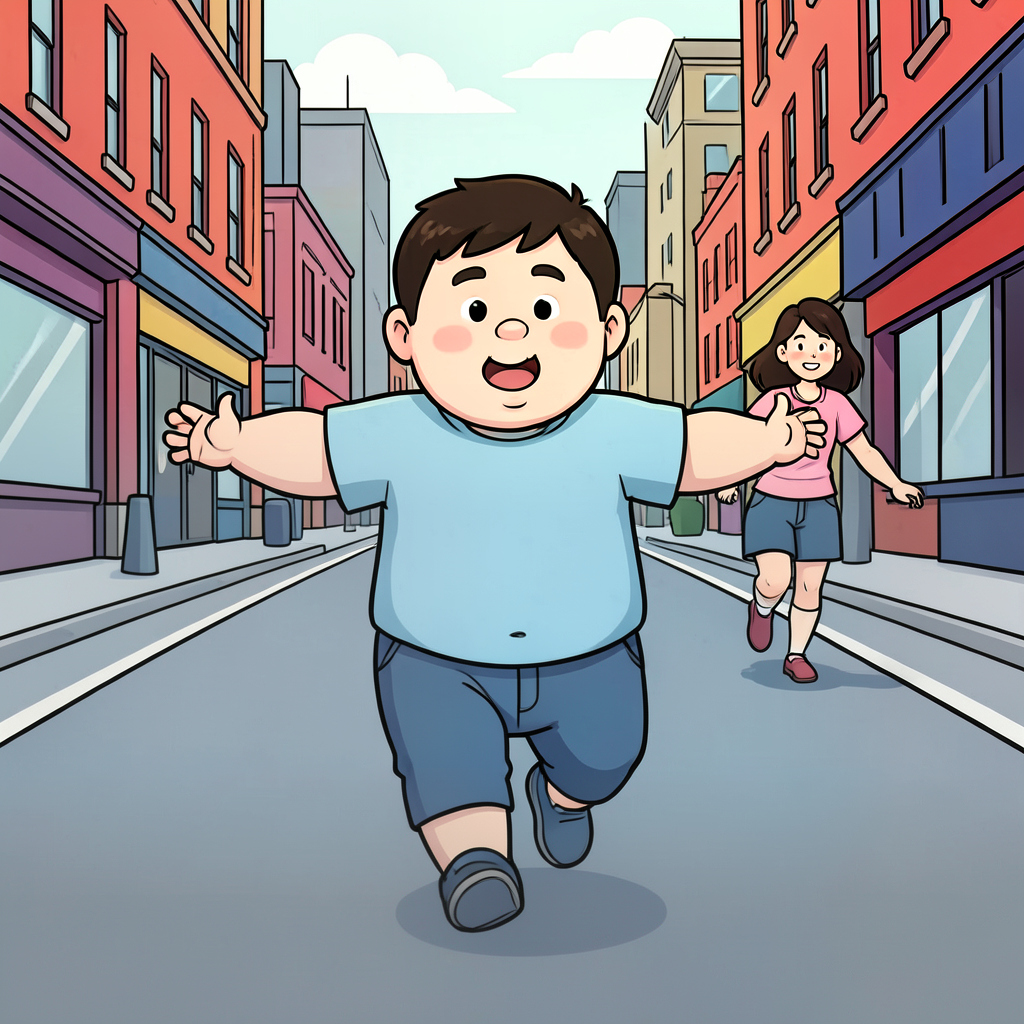
David is always getting into trouble — tracking mud, playing with food, running naked down the street, banging pots, and breaking vases. Every page rings with the familiar refrain 'No, David!' But the book ends with a warm embrace and 'Yes, David — I love you,' capturing the unconditional love behind every 'no.'
Themes
LoveBoundariesHumor
Best For
- Toddlers going through a boundary-testing phase who need to feel understood
- Bedtime reading when you want to end with a reassuring message of unconditional love
- Children who are visual learners and respond to bold, expressive illustration
- Parents looking for a gentle, humorous way to open conversations about rules and consequences
- Classrooms and daycare settings introducing the concept of community expectations
Why Parents Love This Book
No, David! has charmed families since 1998 for a simple reason: it tells the truth about toddler life with humor, warmth, and zero judgment. David Shannon based the book on drawings he made as a young child, when the only words he could write were "no" and "David" — and that autobiographical root gives the story an authenticity that children instantly recognize. The art is bold, expressive, and intentionally child-like, with David's exaggerated rubbery limbs and wide-eyed mischief practically leaping off every page. Children laugh because David does exactly what they know they should not do — run naked down the street, play with his food, track mud through the house — and they feel wonderfully understood. But the genius of the book is its ending: after a page full of "no," a tearful David is scooped into a hug and told "I love you." That arc, from correction to unconditional love, is exactly what young children need to hear. Parents love it too, because it lets them laugh at the daily chaos of toddlerhood while reinforcing the message they want their children to hold onto.
Reading Tips for Parents
Read this one with full theatrical energy — give David's mischief a mischievous voice and the final "I love you" a warm, slow delivery. Let your child turn the pages and name what David is doing wrong before you say "No, David!" together; that call-and-response builds vocabulary and keeps toddlers actively engaged. After reading, try asking "Have you ever done something like David?" — many children will laugh and confess. The book is also a gentle, low-pressure way to reinforce household rules: if your child is going through a "no" phase themselves, framing it around David ("Remember what happened to David when he did that?") can ease power struggles. Keep it in rotation; toddlers often request it repeatedly, and each re-reading builds new language and self-awareness.
Awards & Recognition
- Caldecott Honor Book, 1999
- New York Times Bestseller
Educational Value
This book helps children develop skills across multiple areas:
- Social-emotional learning: Helps children understand that being loved and being corrected can happen at the same time — a foundational concept for emotional security.
- Language development: The repetitive 'No, David!' refrain builds early print awareness and gives pre-readers a predictable text structure to follow.
- Vocabulary: Introduces action words (tracking, banging, breaking) through vivid illustrations, building descriptive language in young readers.
- Self-regulation: Prompts conversations about rules, boundaries, and why limits exist — making abstract concepts concrete through relatable situations.
- Visual literacy: Shannon's expressive, child-like illustrations encourage children to read emotion and story through pictures before they can decode words.
Discussion Questions
Use these questions to spark conversation before, during, or after reading:
- Why do you think David keeps getting into so much trouble? Does he mean to be naughty?
- How does David look on the last page when he gets a hug? How do you think he feels?
- Which thing David does is the funniest to you? Have you ever done something like that?
- Why does David's mom say 'I love you' even after all the 'No, David!' moments? What does that tell you about love?
- If you drew a book about yourself like David did, what would be on the pages?
Content Notes for Parents
No content concerns for the target age group. David briefly appears running naked, which is depicted in a purely comedic, child-like way that is universally age-appropriate. The book contains no scary, sad, or mature themes.
Frequently Asked Questions
What age is No, David! best suited for?
The book is ideal for children ages 2 to 5. The simple, repetitive text and large expressive illustrations are perfectly matched to toddlers and preschoolers. Many children in this range request it repeatedly, and the emotional message about unconditional love resonates well into the early elementary years.
Is the naked page appropriate for young children?
Yes, without reservation. David streaking through the neighborhood is depicted in a cartoonish, clearly comedic way — consistent with how young children themselves draw figures. It is one of the funniest moments in the book and has never been considered inappropriate for the target age group. The American Library Association has never listed the book as challenged on those grounds.
How can I use this book to talk about rules without making it feel like a lecture?
Let the book do the work. Read it with humor and let your child laugh at David's antics first. After reading, ask open-ended questions like 'Why do you think his mom kept saying no?' This approach lets children arrive at the reasoning themselves rather than being told. The ending — the hug and 'I love you' — naturally models that rules come from love, not punishment.
Are there other books like No, David! if my child loves it?
David Shannon wrote several sequels, including David Goes to School and David Gets in Trouble, which follow the same character and format. For a similar mix of humor and heart, Mo Willems' Pigeon series and Jon Klassen's I Want My Hat Back series also feature relatable characters making questionable choices with charming results.
Why does the book feel so authentic compared to other picture books about behavior?
Because it literally is authentic — David Shannon recreated the drawings he made as a child, including his own name and the only words he knew how to write at the time. That origin story means the art and perspective are genuinely a child's view of the world, which children sense and respond to immediately.