Shiloh
About This Book
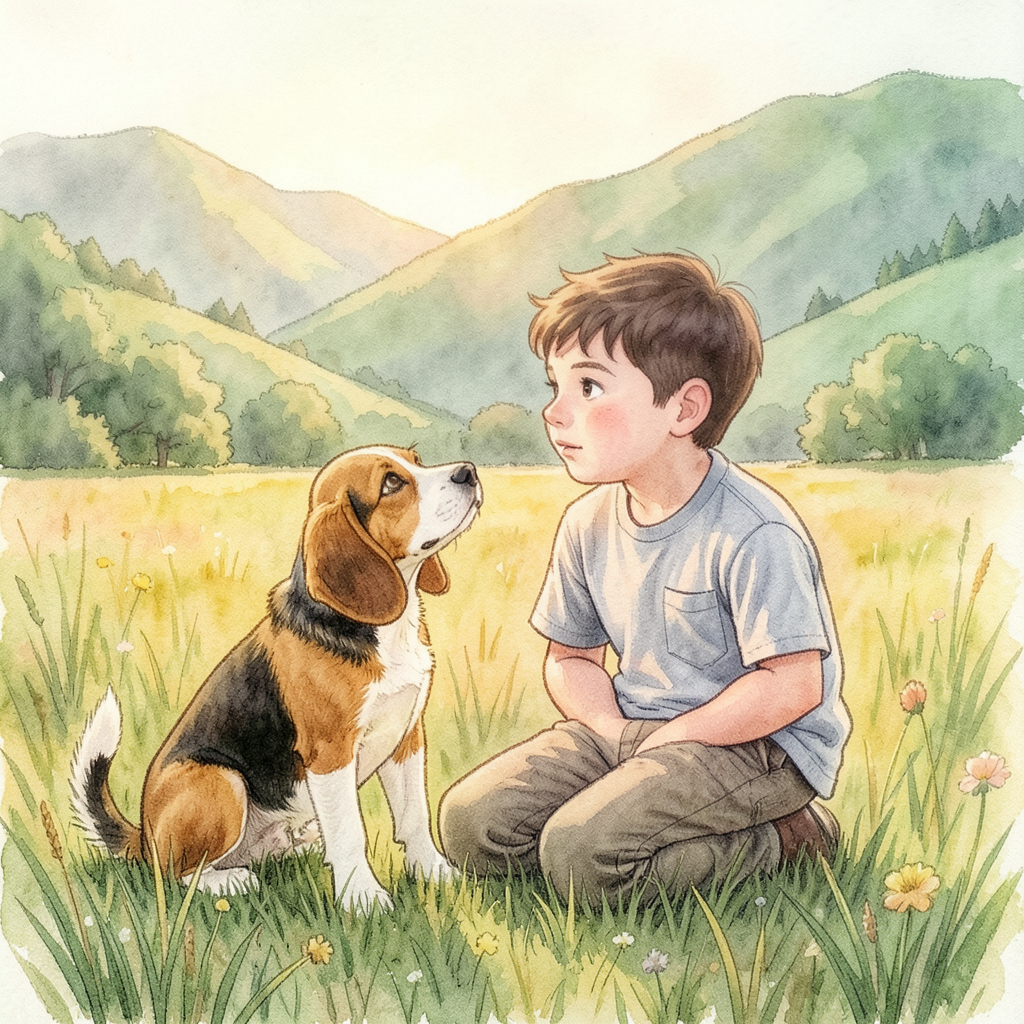
When eleven-year-old Marty finds a mistreated beagle he names Shiloh, he hides the dog from its abusive owner, Judd Travers. Marty must grapple with lying to his family, breaking the law, and the moral complexities of doing the right thing when no option feels entirely right.
Themes
CompassionEthicsCourage
Best For
- Children who love animals, especially dogs, and want a story with genuine emotional stakes
- Readers ready to move beyond clear-cut heroes and villains into more complex moral territory
- Family read-alouds where parents want to spark conversations about honesty and ethics
- Book clubs for ages 9-12 looking for a story with multiple defensible perspectives
- Children who have experienced a situation where following the rules felt wrong
Why Parents Love This Book
Shiloh endures because it refuses to let children off the hook with easy answers. Phyllis Reynolds Naylor places eleven-year-old Marty Preston in a situation where every choice he makes is morally compromised — hiding an abused beagle from its legal owner means lying to his parents, breaking the law, and violating his family's deep code of honesty. Yet doing nothing means leaving Shiloh to Judd Travers's cruelty. That tension is what makes this book remarkable. Naylor writes rural West Virginia with quiet authenticity, and Marty's voice is utterly convincing — a kid who knows right from wrong but discovers that real life rarely offers a path that is simply right. The relationship between Marty and Shiloh is earned slowly and tenderly, making the reader feel every risk Marty takes. This is a story that lingers, prompting children to think about loyalty, justice, and what it means to act with conscience when the rules themselves seem unjust.
Reading Tips for Parents
Before starting, let children know the book contains depictions of animal mistreatment — framing it as a story about how one boy responds to injustice can help set expectations. Read aloud the scenes where Marty lies to his parents and pause to ask what your child would do; these are the richest conversations the book offers. Marty's father is a central moral counterweight — pay attention to how his perspective evolves, as it models adult integrity in a nuanced way. The West Virginia dialect in the text is light but present; a quick note that characters speak in regional patterns can help younger readers. If your child has a pet, especially a dog, expect strong emotional investment. The ending is hopeful but not tidy, which is a gift — resist the urge to smooth it over.
Awards & Recognition
- Newbery Medal, 1992
- ALA Notable Children's Book
Educational Value
This book helps children develop skills across multiple areas:
- Social-emotional: Explores moral ambiguity and ethical decision-making, helping children understand that doing the right thing is rarely simple
- Critical thinking: Challenges readers to weigh competing values — honesty, loyalty, compassion, and law — without providing a single correct answer
- Vocabulary: Introduces rural Appalachian dialect and context-rich words such as 'reckoning,' 'commence,' and 'oblige' in natural dialogue
- Empathy: Builds perspective-taking through Marty's internal conflict and his growing understanding of why Judd Travers behaves as he does
- Civic and legal awareness: Raises accessible questions about animal rights, property law, and what recourse individuals have when the law seems unjust
- Writing craft: Naylor's first-person present-tense narration models strong voice-driven storytelling, useful for young writers studying point of view
Discussion Questions
Use these questions to spark conversation before, during, or after reading:
- Why does Marty decide to hide Shiloh even though he knows it means lying to his parents? Do you think he made the right choice?
- Marty's dad says a deal is a deal, even with someone like Judd. Do you agree? Are there times when a promise doesn't have to be kept?
- How does Marty feel about himself while he is keeping his secret? Have you ever kept a secret that made you feel uncomfortable?
- By the end of the story, has Judd Travers changed at all? What do you think caused any change in him?
- If you were in Marty's situation and found an abused animal, what would you do differently — or the same?
Content Notes for Parents
The book depicts animal abuse — Shiloh is hit and mistreated by his owner, and one scene involves a dog fight that injures Shiloh seriously. There is no graphic gore, but the emotional weight is real and may be upsetting for sensitive animal lovers or younger readers.
Frequently Asked Questions
What age is Shiloh best suited for?
The book is written for ages 8-12 and is most commonly read by children in grades 4-6. Confident readers as young as 8 can handle the text level, but the ethical complexity is best appreciated around ages 9-11. Younger or more sensitive children may find the animal mistreatment scenes distressing.
Is the animal abuse depicted in graphic detail?
No. Naylor shows that Shiloh is mistreated and hungry, and there is a scene where Shiloh is attacked by another dog and seriously injured. The focus is on Marty's emotional response rather than graphic description, but the distress is real. Parents of very sensitive children may want to preview those chapters.
Does Shiloh have a happy ending?
Yes, though it is a earned and imperfect one. Marty finds a way to keep Shiloh legally, but the resolution involves compromise and doesn't fully resolve every moral question the story raises. Most children find the ending satisfying while adults appreciate that it doesn't wrap up too neatly.
Are there sequels?
Yes — Naylor wrote two sequels, Shiloh Season (1996) and Saving Shiloh (1997). The trilogy follows Marty and Shiloh as their relationship with Judd Travers continues to evolve. Many families read all three back to back once they finish the first book.
What books are similar to Shiloh that my child might enjoy next?
Old Yeller by Fred Gipson and Where the Red Fern Grows by Wilson Rawls share the boy-and-dog emotional core, though both have more tragic endings. For a similar ethical complexity without the animal focus, Holes by Louis Sachar is an excellent next step. Sounder by William H. Armstrong also touches on justice and poverty in a rural setting.